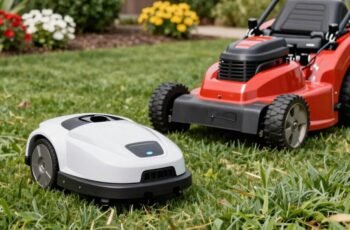
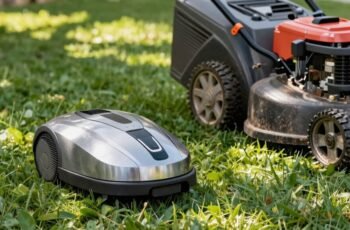
Many people believe that switching to a robot mower is a simple upgrade, but the truth is more nuanced. While these devices promise convenience and eco-friendliness, whether they truly fit your lawn depends on factors like size, shape, and terrain. Before making a decision, it’s important to evaluate if a robot mower can handle your yard’s unique features and how it stacks up against traditional equipment. Let’s explore what really matters.
Key Takeaways
- Ideal for small to medium, flat, obstacle-free lawns to maximize efficiency and performance.
- Saves time, reduces effort, and promotes healthier grass with minimal supervision.
- Higher initial cost but long-term savings on fuel, maintenance, and professional services.
- Not suitable for uneven terrain, heavy debris, or irregularly shaped lawns with obstacles.
- Environmentally friendly, quiet, and low-maintenance, making it ideal for eco-conscious homeowners.
Is a Robot Mower Right for Your Lawn?
Wondering if a robot mower is suitable for your lawn? The answer depends on your yard’s size, shape, and terrain. If you have a small to medium lawn with a regular shape, a robot mower can work wonders. It’s ideal for maintaining a neat, consistent cut without much effort on your part. However, if your lawn is very large, irregularly shaped, or has steep slopes, a robot mower might struggle or require multiple units. Additionally, consider obstacles like trees, flower beds, or outdoor furniture—these can impact the mower’s ability to operate smoothly. Think about how much time and effort you want to spend on lawn care. If you value convenience and a well-maintained lawn, a robot mower could be a great fit.
Top Benefits of Using a Robot Mower
Using a robot mower saves us time and effort, giving us more freedom to enjoy our outdoor space. It also guarantees our lawn stays perfectly maintained with consistent care. These benefits make a robot mower an attractive option for busy homeowners.
Time-Saving Convenience
One of the biggest advantages of switching to a robot mower is the significant time it saves you. Instead of spending weekends pushing a traditional mower or rushing to finish before rain, a robot mower works quietly in the background, automatically maintaining your lawn. You can set it to mow at specific times, freeing up your schedule for more important or enjoyable activities. With minimal supervision, it handles regular trimming, so you don’t have to carve out hours for lawn care. This convenience means less stress and more free time to relax or focus on other tasks. Over time, the consistent mowing schedule also prevents overgrowth and keeps your lawn looking neat without demanding your attention. It’s a smart investment in your time and peace of mind.
Consistent Lawn Care
Maintaining a consistently well-manicured lawn can be challenging with a traditional mower, especially during busy seasons or unpredictable weather. Robot mowers help solve this problem by providing regular, automatic trimming, ensuring your lawn stays even and tidy. Because they operate daily or as scheduled, they prevent overgrowth and patchy areas, resulting in a healthier, more uniform appearance. With consistent cutting, grass stays at the ideal height, promoting better growth and preventing weeds. This reliability means we don’t have to worry about forgetting to mow or dealing with uneven patches. Plus, the quiet operation allows us to maintain our lawn without disturbing the family or neighbors. Overall, a robot mower helps us achieve a neat, well-kept lawn with minimal effort and maximum consistency.
How Do Robot Mowers Work and What Features Matter
Robot mowers operate through a combination of sensors, navigation systems, and cutting mechanisms that allow them to efficiently maintain your lawn with minimal input. They use boundary wires or GPS to stay within designated areas, avoiding obstacles and preventing overlap. Sensors detect objects and adjust their path to prevent collisions, while some models feature rain sensors to pause mowing during wet conditions. The cutting mechanism typically involves rotating blades that trim grass evenly. Key features that matter include battery life, mowing schedule options, and smart connectivity, which allows remote control via apps. Advanced models may include anti-theft systems and programmable mowing zones. Overall, understanding these features helps us choose a robot mower that best fits our lawn size, terrain, and desired level of automation.
Is Your Lawn Suitable for a Robot Mower?
Before investing in a robot mower, it’s important to assess whether your lawn is suitable for this technology. Robot mowers work best on even, well-maintained lawns without many obstacles. If your yard has steep slopes, uneven terrain, or a lot of garden beds and trees, a robot mower may struggle or require extra setup. Large, flat areas are ideal, as they allow the mower to operate efficiently without frequent interruptions. Conversely, very small or irregularly shaped lawns might not justify the investment. Additionally, lawns with heavy debris, such as sticks or toys, can hinder the mower’s performance. Overall, a smooth, obstacle-free, moderately sized yard is most suitable for a robot mower, ensuring best performance and longevity.
How Much Does a Robot Mower Cost and Is It Worth It?
Robot mowers can range widely in price, so it’s important to take into account the upfront cost versus long-term savings. We also need to factor in maintenance and accessory expenses to see if the investment pays off. Let’s explore whether the convenience and efficiency of a robot mower make it worth the initial and ongoing costs.
Upfront Purchase Price
While the idea of replacing your traditional mower with a robot model sounds appealing, the upfront cost can be a significant factor to contemplate. Robot mowers typically range from $1,000 to over $3,000, depending on features, size, and brand. High-end models with advanced navigation, larger cutting areas, and smart technology tend to be more expensive. This initial investment is *particularly* higher than traditional push or riding mowers, which often cost a few hundred dollars to around $1,500. It’s important to weigh whether the convenience and time saved justify the purchase price. While some may see it as a worthwhile investment, others might find the initial cost steep compared to the savings on maintenance or fuel over time.
Long-Term Cost Benefits
Although the initial cost of a robot mower might seem high, considering its long-term expenses reveals significant savings. Over time, these machines reduce costs in several ways:
- Lower fuel expenses, since most are electric and cost less to operate.
- Less need for professional lawn care services, saving on labor costs.
- Decreased wear and tear, which extends the mower’s lifespan and reduces replacement frequency.
- Fewer maintenance visits, as the robot’s simplified design often requires fewer repairs.
These factors add up, making a robot mower a cost-effective choice in the long run. While the upfront price can be intimidating, the ongoing savings and convenience often outweigh those initial expenses.
Maintenance and Accessories
When considering the cost of a robot mower, it’s important to look beyond the initial purchase price and understand ongoing expenses for maintenance and accessories. Robot mowers generally require minimal maintenance, like blade replacements and occasional cleaning, which are relatively inexpensive. However, costs for replacement blades, batteries, and software updates can add up over time. Accessories such as boundary wires, charging stations, and spare parts might also be necessary, especially if your lawn undergoes changes. While these ongoing costs are typically lower than traditional mower upkeep, they shouldn’t be overlooked. Overall, the maintenance and accessory expenses are manageable and often less than those of gas-powered mowers, making robot mowers a convenient, cost-effective option for many homeowners.
Installing and Maintaining Your Robot Mower
Installing and maintaining your robot mower requires careful attention to detail, but it’s straightforward once you understand the basics. First, you’ll set up the boundary wire to define your lawn’s edges and obstacles. Next, you’ll install the charging station in a sheltered, accessible spot. Third, you’ll program the mower with a schedule that suits your yard’s needs. Finally, regular maintenance involves checking for debris, cleaning the blades, and updating software. Here’s what to keep in mind:
- Properly position the boundary wire to prevent escapes.
- Make sure the charging station is on a flat, shaded surface.
- Set a mowing schedule that covers all areas evenly.
- Routinely inspect and clean the mower to keep it running smoothly.
With these steps, installation and upkeep become simple, guaranteeing your mower operates efficiently.
Environmental and Cost Benefits of Robot Mowers
Robot mowers offer significant environmental and cost benefits that make them an attractive alternative to traditional gas-powered models. They run on electricity, producing zero emissions and reducing your carbon footprint. Over time, they save you money on fuel, oil, and maintenance costs associated with gas mowers. Their energy-efficient operation also means lower electricity bills. Additionally, robot mowers tend to be quieter, minimizing noise pollution and making them more neighbor-friendly. Their precise cutting habits promote healthier grass, which can lead to less water and fertilizer use. By maintaining your lawn consistently, they prevent overgrowth and reduce the need for harsh chemicals. Overall, robot mowers provide a greener, more economical way to keep your yard tidy while supporting environmental sustainability.
Should You Upgrade to a Robot Mower? Making the Decision
Considering the environmental and cost advantages of robot mowers, it’s natural to wonder if upgrading is the right move for your lawn. To decide, we recommend evaluating a few key factors:
- Lawn Size: Larger lawns benefit more from automation, making the investment worthwhile.
- Maintenance Time: If mowing takes up hours weekly, a robot mower can free up your schedule.
- Budget: Consider initial costs versus long-term savings on fuel, gas, and maintenance.
- Lawn Care Needs: If you want a consistently well-kept lawn with minimal effort, a robot mower excels.
Frequently Asked Questions
Can Robot Mowers Handle Uneven or Hilly Terrains?
Robot mowers can handle uneven or hilly terrains, but their effectiveness depends on the model. We recommend choosing one specifically designed for challenging landscapes, ensuring it has strong wheels and adaptive cutting systems for peak performance.
How Loud Are Robot Mowers Compared to Traditional Lawnmowers?
Robot mowers are considerably quieter than traditional lawnmowers, often operating at noise levels comparable to a human conversation. This means we can mow early mornings or late evenings without disturbing neighbors or our peace.
What Safety Features Do Robot Mowers Include?
Robot mowers include safety features like obstacle detection, automatic shut-off when lifted, and boundary sensors to prevent accidents. We think these features make them quite safe, giving you peace of mind while they take care of your lawn.
Are Robot Mowers Suitable for Large or Complex Lawns?
Robot mowers are suitable for large lawns, especially with their extended battery life and smart navigation. However, complex landscapes with numerous obstacles might require manual control or additional adjustments for ideal mowing results.
How Long Do Robot Mowers Typically Last Before Needing Replacement?
Like a faithful companion, robot mowers typically last around 3-8 years, depending on use and maintenance. We see them as durable tools, but we also know they eventually need replacing, just like any trusted friend.
Conclusion
Ultimately, whether we switch to a robot mower depends on the truth behind its efficiency. Some say it’s a game-changer for saving time and energy, while others believe it struggles with complex lawns. We think, with the right yard, it’s worth testing the theory ourselves. If it proves reliable, we’ll enjoy a greener, more effortless landscape. So, let’s explore and see if this innovative technology truly lives up to its promise.