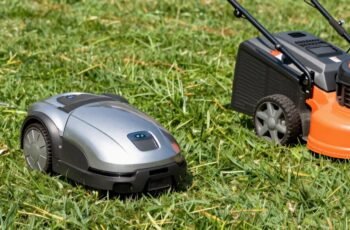
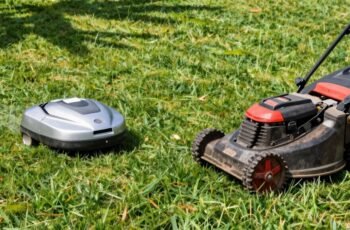
Like the tale of the tortoise and the hare, choosing between a robot mower and a lawn tractor isn’t just about speed—it’s about strategy. As we explore the differences in design and function, we’ll uncover which option best suits your yard’s unique needs. Whether you’re managing a small patch or an expansive landscape, understanding these tools can make all the difference. Curious to see which one fits your lawn best?
Key Takeaways
- Robot mowers are ideal for small to medium, flat lawns, offering quiet, energy-efficient, and precise daily trimming.
- Lawn tractors are better suited for large, rugged, or uneven terrains, providing faster coverage for extensive yards.
- Robot mowers have lower upfront costs and maintenance but limited battery life and navigation on steep slopes.
- Lawn tractors are more expensive, require regular maintenance, and produce emissions, but handle tough, large-scale tasks efficiently.
- Combining both tools can optimize lawn care by matching equipment to specific yard conditions and needs.
How Do Robot Mowers and Lawn Tractors Differ in Design and Function?
While both robot mowers and lawn tractors are designed to maintain lawns, they differ considerably in their design and how they function. Robot mowers are compact, autonomous devices that move around your yard on their own, guided by sensors and boundary wires. They cut grass in small, precise sections, often daily, to keep the lawn consistently tidy. Lawn tractors, on the other hand, are larger, engine-powered machines operated manually or with a steering wheel. They require human effort to drive and typically handle larger areas quickly with wide mowing decks. The key difference is automation: robot mowers work quietly and independently, while lawn tractors rely on human control and power. Each suits different yard sizes and maintenance preferences, shaping their distinct roles in lawn care.
Which Yard Sizes Are Best for Robot Mowers?
Robot mowers work best on small to medium-sized yards, typically ranging from under 1,000 square feet up to about 0.5 acres. They’re ideal for maintaining lawns that don’t require frequent, heavy-duty trimming. Larger yards can be challenging due to battery life and navigation limits, but smaller spaces allow the mower to operate efficiently without interruption.
Here’s a quick visual:
| Yard Size | Suitability for Robot Mowers |
|---|---|
| Under 1,000 sq ft | Excellent for compact yards |
| 1,000-0.25 acres | Great for small to medium lawns |
| 0.25-0.5 acres | Still manageable, but monitor battery |
| Over 0.5 acres | Less ideal, may need multiple units |
When Is a Lawn Tractor the Right Choice for Your Yard?
Lawn tractors become the right choice when you have a larger yard that demands more power and coverage than smaller mowers can provide. If your property spans several acres or has uneven terrain, a lawn tractor offers the durability and strength needed to handle thick grass and challenging conditions. They’re ideal for those who want quick, efficient mowing without sacrificing performance. Additionally, if you need to tow attachments like carts, aerators, or snow blowers, a lawn tractor provides the versatility to do so. For homeowners who prefer a manual, hands-on mowing experience with greater control over larger areas, a lawn tractor is a reliable, long-term solution. Overall, when your yard exceeds the capacity of smaller mowers, a lawn tractor becomes the practical and effective choice.
How Do Costs Compare: Robot Mowers vs. Lawn Tractors?
Have you ever wondered whether a robot mower or a lawn tractor offers better value for your money? Generally, robot mowers have a lower upfront cost, often ranging from $500 to $2,000, depending on features and yard size. Lawn tractors tend to be more expensive initially, typically costing $1,500 to $4,000 or more. However, robot mowers can save money over time because they’re energy-efficient and require less fuel or oil. Lawn tractors may incur higher ongoing expenses due to maintenance, fuel, and repairs. While robot mowers have a higher initial investment, their lower operating costs and minimal maintenance can make them more economical in the long run. Ultimately, your yard size and budget will influence which option offers the best value.
How Maintenance and Battery Life Influence Your Lawn Equipment Decision?
When choosing between a robot mower and a lawn tractor, battery durability and how long the batteries last are key factors. We also consider the maintenance required and the costs involved, as these can impact overall savings. Finally, understanding how maintenance and battery life affect each machine’s lifespan helps us make a smarter, long-term decision.
Battery Durability and Longevity
Since battery life substantially impacts how often you’ll need to recharge or replace your equipment, understanding durability and longevity is essential in choosing between a robot mower and a lawn tractor. Robot mowers rely on rechargeable batteries, which tend to degrade over time, reducing runtime and efficiency. High-quality lithium-ion batteries usually last several years with proper use, but their capacity diminishes gradually. Lawn tractors, on the other hand, typically use gas engines, so their “battery” is often just for electrical components, meaning longevity isn’t a primary concern for the engine itself. When comparing the two, consider how long each type’s battery or power source remains effective before replacement or significant performance decline. Overall, battery durability influences not just convenience but also long-term costs and equipment reliability.
Maintenance Requirements and Costs
Maintenance requirements and costs play a crucial role in deciding between a robot mower and a lawn tractor, as ongoing upkeep can substantially impact your overall expenses and effort. Robot mowers typically require less maintenance—mainly blade sharpening, occasional cleaning, and battery replacements—making them cost-effective over time. Lawn tractors, however, need more frequent oil changes, filter replacements, tire maintenance, and engine tune-ups, which can add up in both time and money. Battery replacements in robot mowers are usually infrequent but essential, impacting long-term costs. While robot mowers have lower ongoing maintenance, initial setup and replacement parts can be pricier. Ultimately, understanding these requirements helps you weigh the convenience and cost of each option to fit your budget and effort.
Impact on Equipment Lifespan
Have you ever considered how the upkeep and battery life of your lawn equipment can shape its longevity? Maintenance directly impacts how long your mower stays reliable, with regular care preventing costly repairs and early replacements. Robot mowers typically have batteries that degrade over time, reducing their efficiency and coverage. Replacing batteries can extend the lifespan, but it adds to maintenance costs. Lawn tractors, on the other hand, often have more durable engines designed for longer use, provided they’re well-maintained. Ultimately, a machine’s longevity depends on consistent upkeep and quality components. Choosing equipment with easier maintenance or longer-lasting batteries can mean fewer replacements and better value over time. Proper care ensures your investment lasts, regardless of whether you pick a robot mower or a lawn tractor.
Are Robot Mowers or Lawn Tractors More Eco-Friendly?
When considering the environmental impact of lawn care equipment, robot mowers generally come out ahead of traditional lawn tractors. They typically use less energy, often running on rechargeable batteries rather than fossil fuels, which reduces emissions. Robot mowers also operate quietly, minimizing noise pollution and disturbance to wildlife. Additionally, because they are designed to mow in small, precise sections, they use energy more efficiently and avoid unnecessary waste. Lawn tractors, on the other hand, usually rely on gas-powered engines that emit greenhouse gases and other pollutants. They consume more fuel and produce higher carbon footprints. Overall, robot mowers are a more eco-friendly option, aligning better with sustainable lawn care practices while still maintaining neat, well-kept lawns.
What Features Matter When Buying a Robot Mower or Lawn Tractor?
Choosing the right robot mower or lawn tractor depends on several key features that suit your specific needs and lawn conditions. First, consider cutting width and deck size; larger decks cover more ground quickly, ideal for bigger lawns. Next, look at battery life or fuel efficiency—longer runtimes mean less frequent recharging or refueling. Safety features are vital, especially for households with kids or pets; sensors that detect obstacles and prevent accidents are a must. Ease of use matters too: intuitive controls, programmable schedules, and simple maintenance can save time and frustration. Additionally, think about terrain adaptability—does your lawn have slopes or uneven patches? Finally, check for smart technology options like app control or GPS navigation, which can enhance precision and convenience.
How Do Lawn Size and Terrain Impact Your Equipment Choice?
Lawn size and terrain are critical factors that directly influence which mower will work best for your yard. For large, flat lawns, a lawn tractor offers power and efficiency, covering vast areas quickly. They’re ideal if you have expansive spaces and need durability. Conversely, robot mowers excel in smaller to medium-sized yards, especially if the terrain is relatively even. They are quiet, low-maintenance, and can handle regular, precise trimming without much oversight. However, if your terrain is hilly or uneven, a lawn tractor with four-wheel drive or a larger robot mower designed for rough ground might be necessary. Steep slopes or rocky patches can challenge robot mowers, making traditional lawn tractors better suited. Ultimately, understanding your yard’s size and terrain helps you select the most effective, long-lasting equipment.
Can You Use Robot Mowers and Lawn Tractors Together for Better Results?
Using robot mowers and lawn tractors together can be a practical way to optimize your yard maintenance, especially if your lawn has diverse areas or varying needs. Combining both tools allows you to maximize efficiency, with robot mowers handling regular, low-maintenance sections and lawn tractors tackling large, rugged, or overgrown areas. This hybrid approach reduces workload and guarantees a well-maintained lawn. Consider factors like terrain, grass type, and mowing frequency to determine the best combination. Here’s a quick comparison:
| Feature | Robot Mower | Lawn Tractor | Complementary Use |
|---|---|---|---|
| Ideal for | Flat, small to medium lawns | Large or uneven terrains | Use robot for daily trims, tractor for heavy-duty work |
| Maintenance | Minimal | Regular, more involved | Use tractor for major tasks, robot for routine mows |
| Cost | Moderate | Higher | Balance budget and needs |
| Cutting Speed | Slow | Fast | Use tractor for quick coverage |
| Terrain Suitability | Flat, smooth | Hilly, rough | Use both for diverse terrain |
Frequently Asked Questions
How Long Does It Take for a Robot Mower to Complete a Lawn?
It usually takes a robot mower a few hours to finish a lawn, depending on its size and the mower’s battery life. We find that most models efficiently cover small to medium-sized yards within this timeframe.
Are Robot Mowers Suitable for Sloped or Uneven Terrain?
Yes, robot mowers can handle sloped or uneven terrain, but their effectiveness depends on the model’s capabilities and the degree of the slope. We always recommend checking specifications and testing to guarantee safe, efficient mowing.
Can Lawn Tractors Handle Mulching and Fertilizing Tasks?
Lawn tractors can handle mulching and fertilizing tasks efficiently, especially with compatible attachments. We often recommend them for larger areas, as they’re versatile and powerful enough to manage various yard maintenance chores effectively.
How Noisy Are Robot Mowers Compared to Lawn Tractors?
Robot mowers are surprisingly quiet, practically whispering their way across your yard, while lawn tractors sound like a lawn party gone wild. We prefer the stealth mode—less noise, less drama, more peace.
What Safety Features Do Robot Mowers Have for Children and Pets?
Robot mowers have safety features like blade sensors, lift and tilt sensors, and PIN codes, ensuring children and pets are safe. We believe these features make robot mowers a secure choice for family-friendly lawns.
Conclusion
In the end, choosing between a robot mower and a lawn tractor is like selecting the right brush for a masterpiece—each has its unique stroke. By understanding their differences and how they complement your yard’s needs, we can craft a landscape that’s both beautiful and efficient. Remember, the right tool isn’t just about the size of the job, but about creating harmony—where technology and nature work together in perfect balance.