Did you know that choosing the right mower can substantially impact your lawn’s health and your time? Many homeowners overlook how terrain and yard size influence which mower suits them best. Whether you prefer automated precision or manual control, understanding these differences could save you money and effort in the long run. There’s more to take into account than just price—so, let’s explore which mower type aligns best with your outdoor space.
Key Takeaways
- Robot mowers are ideal for small, flat lawns, offering low maintenance and quiet operation, while ride-on mowers suit large, uneven terrains for faster coverage.
- Initial costs are higher for robots, but they save on fuel and upkeep; ride-ons typically have higher ongoing expenses due to fuel and mechanical maintenance.
- Robots provide precise edging and autonomous scheduling, whereas ride-on mowers require manual operation and active control.
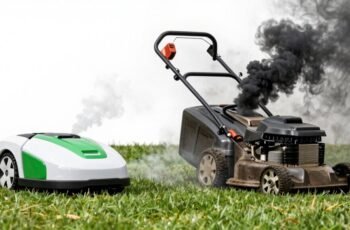
- Robot mowers are eco-friendly with zero emissions and minimal noise, unlike traditional ride-ons that rely on gasoline and produce more pollution.
- Choice depends on lawn size, terrain, budget, and preference for automation versus active manual mowing.
Which Mower Is Best for Your Yard Size and Terrain?
When deciding between a robot lawn mower and a ride-on mower, the size and terrain of your yard are essential factors. For smaller, flat lawns, a robot mower works wonders, effortlessly handling routine trimming without much effort. Its compact size and precise navigation make it ideal for maintaining neat edges on manageable terrain. Conversely, larger or uneven yards often call for a ride-on mower, which covers ground quickly and handles rough terrain better. Ride-ons are designed for expansive spaces, offering power and stability on hills or challenging surfaces. While a robot mower is perfect for low-maintenance, small lawns, a ride-on mower provides the durability and capacity needed for bigger, more complex yards. Choosing based on your yard’s size and terrain guarantees efficient, effective mowing.
How Much Do Robot and Ride-On Mowers Cost: Upfront and Long-Term?
The initial investment for a mower varies considerably depending on its type and features, influencing your long-term expenses. Robot lawn mowers are generally more affordable upfront, with prices ranging from around $500 to $2,000, depending on size and smart features. Ride-on mowers, on the other hand, can cost between $1,500 and $4,000 or more, especially for models with advanced capabilities. Over time, robot mowers often save money on fuel and maintenance since they operate quietly and efficiently. Ride-on mowers may have higher ongoing costs due to fuel, oil changes, and repairs. While the upfront cost is a key factor, it’s crucial to evaluate long-term expenses like maintenance, fuel, and potential repairs to get a full picture of each mower’s total cost of ownership.
How Do Robot and Ride-On Mowers Differ in Design and Features?
Robot and ride-on mowers differ markedly in their design and features, especially in power sources and cutting mechanisms. Their size and maneuverability also vary, with robots being compact and precise, while ride-ons are larger and more flexible. Additionally, their technology and controls set them apart, as robots rely on automation and smart features, unlike the manual controls of ride-on mowers.
Power and Cutting Mechanisms
While both robot and ride-on mowers are designed to cut grass efficiently, their power sources and cutting mechanisms differ markedly. Robot mowers run on rechargeable batteries, making them quiet and eco-friendly, with blades that spin rapidly underneath the unit. They typically use rotary blades or oscillating blades to trim grass evenly. Ride-on mowers, on the other hand, are powered by gasoline engines or large electric motors, providing more raw power for thicker or taller grass. Their cutting decks are larger, with multiple blades that rotate at high speeds to cover broad areas quickly. The ride-on’s mechanical design allows for more aggressive cutting and handling of dense growth, whereas robot mowers focus on precise, consistent trimming suited for regular maintenance.
Size and Maneuverability
Since size and maneuverability directly influence how effectively a mower navigates your lawn, understanding their differences is key. Robot and ride-on mowers are designed quite differently, impacting their ability to handle various terrains.
- Size: Robot mowers are compact and low-profile, allowing them to access tight spaces and easily navigate around obstacles. Ride-on mowers are larger, requiring more space to turn and maneuver.
- Turning Radius: Robots typically have a small turning radius, enabling them to navigate complex layouts effortlessly. Ride-on mowers often need wider turns, especially on uneven terrain.
- Mobility: Robots move autonomously, adjusting their path seamlessly, while ride-ons rely on the operator’s steering, which can be limited in tight spots.
These differences considerably influence how well each mower covers your lawn.
Technology and Controls
The design and features of robot and ride-on mowers differ markedly, shaping how each one operates and offers convenience. Robot mowers rely on advanced technology like GPS, boundary wires, and sensors to navigate and cut grass autonomously. They can be scheduled and controlled via smartphone apps, providing seamless automation. In contrast, ride-on mowers feature traditional manual controls—levers, pedals, and dashboards—that require user input to operate. They often include modern features like electronic speed controls, adjustable cutting heights, and sometimes even digital displays for monitoring performance. While robot mowers focus on automation and minimal user input, ride-on mowers emphasize ease of operation with more manual control options. Both incorporate technology, but their control systems are tailored to their distinct design philosophies.
What Performance and Cutting Quality Can You Expect?
When comparing performance and cutting quality, we focus on how precisely each mower can trim your lawn, how quickly they work, and how evenly they finish the job. Robot mowers often excel in consistency and efficiency, while ride-on mowers may offer faster coverage for larger areas. Ultimately, understanding these points helps you choose the best option for your lawn’s specific needs.
Precision of Cuts
Robot lawn mowers and ride-on mowers differ considerably in their cutting precision, which directly impacts the appearance of your lawn. Robot mowers tend to deliver consistent, even cuts along the edges and in tight spots, thanks to their automated navigation. However, they may struggle with uneven terrain or tall grass, leading to occasional uneven patches. Ride-on mowers, on the other hand, generally produce a more uniform cut across larger areas, especially with adjustable blades and manual control. To compare:
- Robot mowers excel in precision around obstacles and edges, creating a clean, manicured look.
- Ride-on mowers provide a more consistent cut on uneven terrain due to manual steering.
- Overall, ride-on mowers often deliver a smoother finish on large, open lawns, while robot mowers are better for detailed work.
Cutting Speed and Efficiency
While the precision of cuts varies between robot and ride-on mowers, their speed and efficiency also play a significant role in lawn maintenance. Robot mowers typically work steadily, covering small sections repeatedly, which guarantees thoroughness but can take longer overall, especially on larger lawns. Ride-on mowers, on the other hand, are designed for quick, high-speed cuts, making them ideal for expansive areas. They can mow large sections in less time but may require more manual effort for maneuvering and turning. Overall, ride-on mowers excel in efficiency and speed, reducing total mowing time, while robot mowers focus on consistent, automated operation with moderate pace. Your choice depends on your lawn size, desired speed, and how much manual effort you’re willing to invest.
Consistency in Lawn Finish
The quality of the lawn finish depends heavily on the precision and consistency of the cutting mechanisms in both types of mowers. Robot mowers tend to produce a very even cut, thanks to their programmed paths and adjustable blades. However, their finish may vary on uneven terrain or in areas with tall grass. Ride-on mowers generally give a faster, more uniform cut across large lawns but can leave slight variations if not carefully operated. To compare:
- Robot mowers excel in creating a uniform, manicured look with minimal effort.
- Ride-on mowers deliver consistent results on flat, well-maintained lawns.
- Both can produce high-quality finishes but require proper maintenance and skill for superior results.
Ultimately, your lawn’s terrain and your maintenance routine influence the finish quality.
How Easy Are Robot and Ride-On Mowers to Use and Maintain?
Although both robot and ride-on mowers are designed to simplify lawn care, they differ markedly in ease of use and maintenance. Robot mowers are generally straightforward: set up a boundary, schedule runs, and let them do the work. Maintenance involves occasional blade sharpening and software updates. Ride-on mowers, however, require more hands-on effort: regular oil changes, filter replacements, and physical storage.
| Aspect | Robot Mower | Ride-On Mower | Ease of Use |
|---|---|---|---|
| Setup | Simple boundary setup | Requires manual controls | Robot: easy; Ride-on: moderate |
| Maintenance | Minimal, mostly software updates | Regular oil, blade, and filter | Robot: low; Ride-on: high |
| Operation | Automated scheduling | Manual driving | Robot: very easy; Ride-on: moderate |
| Troubleshooting | App-based, less often needed | More mechanical checks needed | Robot: easier; Ride-on: complex |
| Storage | Compact, minimal space required | Larger, needs garage or shed | Both manageable with space |
What Is the Environmental Impact of Each Mower Type?
Electric robot mowers typically have a smaller environmental footprint than traditional ride-on mowers because they produce zero emissions during operation. This means they don’t release greenhouse gases, helping reduce air pollution and combat climate change. Ride-on mowers, on the other hand, rely on gasoline or diesel, which emit carbon dioxide, nitrogen oxides, and particulate matter. To understand the difference, consider these points:
- Emissions: Robot mowers generate no tailpipe emissions; ride-on mowers contribute notably to air pollution.
- Energy Use: Electric mowers often use renewable energy sources, while traditional mowers depend on fossil fuels.
- Noise Pollution: Robot mowers are quieter, reducing noise pollution and disturbance to wildlife and neighbors.
How to Decide Between a Robot and Ride-On Mower for Your Lawn?
Choosing between a robot mower and a ride-on mower depends on several key factors that influence how well each option fits your lawn care needs. First, consider your lawn’s size and terrain. Smaller, flat lawns are ideal for robots, which are quiet and low-maintenance. Larger or hilly lawns may require a ride-on mower for efficiency and power. Next, think about your time and effort. Robots handle daily mowing automatically, saving you time, while ride-on mowers require more active involvement. Budget also plays a role; robots tend to be more costly upfront, but reduce ongoing labor. Finally, consider your preferences for convenience versus control. If you want minimal effort and a well-maintained yard, a robot might be best. For more control and versatility, a ride-on mower is often preferable.
Frequently Asked Questions
Can Robot and Ride-On Mowers Handle Uneven or Steep Slopes?
Yes, some robot and ride-on mowers can handle uneven or steep slopes, but it depends on their specifications. We recommend checking the mower’s incline capacity and features to guarantee safe, effective operation on your specific terrain.
What Safety Features Are Included in Each Mower Type?
Did you know 85% of mower accidents involve human error? Both robotic and ride-on mowers include safety features like emergency stops, obstacle sensors, and blade guards, ensuring safer mowing experiences for users and bystanders alike.
Are Robot Mowers Suitable for Very Tall or Thick Grass?
Robot mowers struggle with very tall or thick grass, as they’re designed for regular maintenance. We recommend using a ride-on mower for such conditions, since it handles denser, taller growth more effectively and efficiently.
How Long Does It Take to Mow a Typical Lawn With Each Type?
Back in the day, mowing times varied wildly. Today, robot mowers typically take a couple of hours for a standard lawn, while ride-on mowers can finish faster, often under an hour, depending on size and grass density.
Do Both Mower Types Require Professional Installation or Setup?
We find that robot lawn mowers usually require professional setup to install boundary wires and program settings, while ride-on mowers often need less formal installation but may need some assembly and basic adjustments.
Conclusion
Ultimately, choosing between a robot and ride-on mower is like selecting the perfect brush for your garden masterpiece. Each has its own rhythm and style, shaping your yard into a lush, green canvas. Whether you prefer the quiet, precise strokes of a robot or the bold, sweeping motions of a ride-on, it’s about finding what makes your outdoor space thrive. Together, we can turn your lawn into a vibrant, inviting retreat that feels just right.