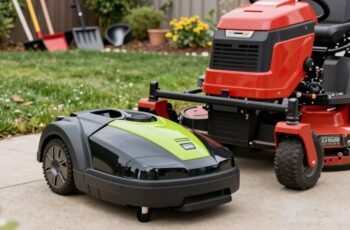
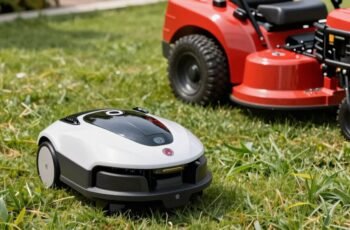
When it comes to maintaining a lawn, choosing the right mower can make a significant difference. We recognize that each yard has unique needs, and the decision between robot and ride-on mowers isn’t always straightforward. There are benefits and drawbacks to both, depending on your lawn size, terrain, and budget. Let’s explore how these options compare, so you can determine which one might be best suited for your outdoor space.
Key Takeaways
- Robot mowers are ideal for small to medium yards, offering low maintenance and quiet operation, while ride-on mowers suit large, uneven lawns for faster coverage.
- Robots operate autonomously using sensors and boundary wires, whereas ride-on mowers require manual control and provide more power and versatility.
- Cost varies: robots typically range from $500 to $2,500, while ride-on mowers cost $1,500 to $4,000, with maintenance impacting long-term expenses.
- Robots are best for flat, simple terrain; ride-on mowers handle complex landscapes, thick grass, and larger areas more efficiently.
- Choosing depends on lawn size, terrain, budget, and desired level of automation and effort.
What Mower Is Best for Your Lawn Size?
When choosing between a robot lawn mower and a ride-on mower, the size of your lawn plays a crucial role. For smaller yards, typically under a quarter-acre, a robot mower often works best. It’s compact, easy to set up, and handles regular maintenance effortlessly. For larger lawns, especially over half an acre, a ride-on mower becomes more practical. It covers ground faster, can handle uneven terrain, and offers comfort during longer mowing sessions. Smaller yards benefit from the automation and low effort of robots, while bigger spaces demand the power and efficiency of ride-on machines. Ultimately, matching your lawn size with the mower’s capacity ensures you get a clean cut without unnecessary hassle or time investment.
How Do Robot and Ride-On Mowers Work?
Robot and ride-on mowers operate quite differently, each designed to make lawn maintenance more efficient. Robot mowers are autonomous; they use sensors, boundary wires, and navigation algorithms to mow your lawn systematically. Once programmed, they move around your yard, trimming grass evenly without human intervention. Ride-on mowers, on the other hand, are operated manually. You sit on them, steering and controlling speed as you mow. They typically have larger engines and cutting decks, allowing for faster, more aggressive cutting. While robot mowers work quietly and automatically, ride-on mowers require active control but offer more power and versatility for tackling tough or larger areas. Both systems aim to reduce your effort, but they function very differently based on design and operation.
How Much Do They Cost and What Are the Maintenance Needs?
The costs of robot and ride-on mowers vary considerably, influenced by features, size, and brand quality. Robot mowers typically range from $500 to $2,500, depending on the model’s sophistication and coverage area. Ride-on mowers are more expensive, usually between $1,500 and $4,000, with larger, commercial-grade models costing even more. Maintenance for robot mowers generally involves regular blade sharpening, battery replacement, and occasional software updates, which are relatively low-cost but can add up over time. Ride-on mowers require more intensive upkeep, including oil changes, air filter replacements, and blade sharpening, often costing more in parts and service. Overall, initial investment and ongoing maintenance should be factored into your decision, as these costs can substantially impact long-term affordability.
Advantages and Disadvantages of Robot vs. Ride-On Mowers
Choosing between robot and ride-on mowers depends on weighing their respective strengths and weaknesses. Robot mowers are quiet, energy-efficient, and require minimal effort, making them ideal for small to medium lawns. They operate automatically, saving time and effort, but can struggle with complex terrain or tall grass. Conversely, ride-on mowers are powerful and versatile, capable of handling large, uneven areas with thicker grass. However, they tend to be louder, more expensive, and require more maintenance and storage space. While robot mowers excel in convenience and low noise, they lack the raw power and adaptability of ride-on models. Ride-on mowers, on the other hand, offer speed and versatility but demand more involvement from the user. Ultimately, your choice depends on the size, terrain, and your personal preferences.
Which Mower Should You Choose for Your Lawn?
Deciding which mower is right for your lawn depends on several key factors, including the size, terrain, and your personal preferences. For small, flat yards, a robot mower is often ideal—it’s low-maintenance and quiet. If your lawn is large or uneven, a ride-on mower might be the better choice, offering more power and speed. Consider how much time you’re willing to spend on mowing and whether you prefer automation or manual control. Also, think about storage space and budget. For those seeking convenience and minimal effort, robots excel. But if you want a mower that handles tougher terrain and bigger areas quickly, a ride-on mower is more suitable. Ultimately, matching your lawn’s needs with your lifestyle will help you make the best decision.
Frequently Asked Questions
Are Robot Mowers Suitable for Uneven or Hilly Terrains?
We think robot mowers aren’t the best for uneven or hilly terrains because their design struggles with steep slopes and rough patches. For challenging terrains, ride-on mowers provide the stability and power needed to handle those conditions effectively.
How Long Do Robot and Ride-On Mowers Typically Last?
Robot and ride-on mowers usually last between 5 to 10 years, depending on usage and maintenance. We recommend regular servicing and proper care to extend their lifespan and guarantee peak performance over the years.
Can Robot Mowers Handle Thick or Tall Grass Effectively?
Sure, robot mowers can manage thick or tall grass, but they work best with moderate growth. We recommend regular maintenance and, if needed, trimming to guarantee they perform efficiently without getting overwhelmed.
What Safety Features Are Included in Modern Robot Lawn Mowers?
Modern robot lawn mowers include safety features like obstacle detection, lift and tilt sensors, and automatic shut-offs to prevent accidents. We feel confident using them because these safeguards help guarantee safe operation around people, pets, and objects.
Are There Environmental Benefits to Choosing One Mower Type Over the Other?
Did you know electric mowers produce up to 60% fewer emissions? We believe robot lawn mowers are more eco-friendly, as they run quietly, use less energy, and eliminate fuel spills, benefiting both the environment and our neighborhoods.
Conclusion
Ultimately, choosing between a robot and a ride-on mower depends on your lawn’s size and terrain. For example, a family with a small, flat yard might love the convenience of a robot mower, while a homeowner with a large, uneven field could benefit from a ride-on. We recommend evaluating your yard’s needs carefully—think about size, terrain, and your budget—to find the perfect fit, making lawn care easier and more efficient for you.