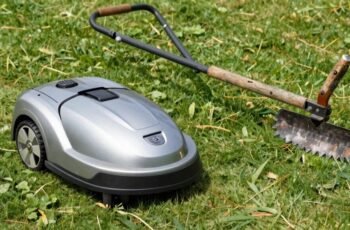
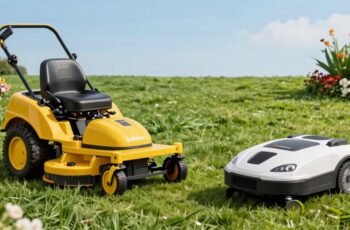
When taking into account lawn care options, we often wonder if robotic mowers can handle larger or more complex terrains that typically call for ride-on machines. While robotic mowers are excellent for small, flat, and obstacle-free lawns, their limits become clear when facing rugged or extensive areas. We believe understanding these differences is key to choosing the right equipment, and there are important factors to consider before making a switch. Let’s explore what makes each option suitable for different landscape needs.
Key Takeaways
- Robotic mowers excel on flat, large lawns but struggle with steep slopes and uneven terrain.
- They are suitable for open, obstacle-free areas, reducing the need for ride-on mowers.
- Complex landscapes with thick vegetation or irregular shapes often require ride-on mowers.
- Robotic mowers are cost-effective for maintaining expansive, flat lawns with minimal obstacles.
- Ride-on mowers provide the power and maneuverability needed for hilly or rugged terrains.
Are Robotic Mowers a Good Choice for Large Lawns?
Are robotic mowers a good choice for large lawns? Absolutely. They’re designed to handle expansive areas efficiently, often covering several thousand square feet with ease. These mowers can work continuously, reducing the time and effort you’d spend with traditional equipment. Plus, they’re quiet, so you won’t disturb neighbors during operation. Modern models often feature smart navigation and boundary-setting capabilities, ensuring thorough coverage without missing spots. They also adapt to different grass types and terrain, making them versatile for various large properties. Maintenance is minimal compared to ride-on mowers, and they’re eco-friendly, producing no emissions. For those with large lawns, robotic mowers offer a practical, cost-effective, and convenient solution that saves time and effort while keeping your yard looking pristine.
Top Features Making Robotic Mowers Suitable for Bigger Properties
The key features that make robotic mowers ideal for larger properties center around their advanced navigation and operational capabilities. They use GPS mapping and boundary sensors to efficiently cover extensive areas without missing spots or overlapping. Multiple mowing zones are managed seamlessly, reducing manual intervention. Smart sensors detect obstacles, preventing damage and ensuring safety. Additionally, their longer battery life and rapid charging enable sustained operation over vast lawns. These features enhance efficiency and reliability, making robotic mowers suitable for bigger spaces.
| Feature | Benefit | Technology Used |
|---|---|---|
| GPS Navigation | Precise coverage of large areas | GPS/Mapping systems |
| Obstacle Detection | Prevents accidents and damage | Sensors and cameras |
| Extended Battery Life | Longer mowing sessions without interruption | High-capacity batteries |
Limitations of Robotic Mowers on Heavy-Duty or Complex Terrain
While robotic mowers excel on well-maintained lawns with open spaces, they often face challenges when tackling heavy-duty or complex terrain. Steep slopes, uneven ground, and thick, dense vegetation can cause these mowers to struggle or even get stuck. They rely on sensors and simple navigation systems that aren’t designed for intricate landscapes or obstacles like rocks, tree roots, or garden features. Additionally, their blades may not handle thick grass or weeds effectively, leading to inconsistent cutting and potential damage. Complex terrain can also slow down mowing cycles and increase the risk of wear and tear. Overall, while robotic mowers work well on flat, open lawns, heavy-duty or rugged landscapes often require more robust equipment or manual intervention.
When Should You Consider a Robotic Mower Over a Ride-On?
Deciding between a robotic mower and a ride-on depends on your lawn’s size, terrain, and maintenance needs. If your yard is medium-sized or smaller, a robotic mower can save you time and effort by handling regular trimming automatically. They’re ideal if your lawn is relatively flat and free of obstacles, as they work best on even terrain. Consider a robotic mower if you prefer consistent, daily trimming for a healthy, lush appearance without the noise and bulk of a ride-on tractor. Additionally, robotic mowers are great for those who want a low-maintenance, eco-friendly option that reduces your workload. However, if your lawn is extensive, hilly, or has complex landscaping, a ride-on may still be the better choice for all-encompassing coverage and power.
How to Use Robotic Mowers Effectively on Difficult Landscapes
When working with robotic mowers on tough landscapes, we need to carefully navigate uneven terrain and obstacles. Adjusting the cutting settings helps us manage different grass heights and tricky areas more effectively. With the right approach, we can keep even the most challenging lawns well-maintained.
Navigating Complex Terrain
Contouring complex terrain can be challenging for robotic mowers, but with the right strategies, they can effectively handle difficult landscapes. First, confirm your mower’s boundary wire follows the natural shape of your terrain, avoiding sharp turns or steep slopes. Second, clear debris and obstacles that could block the mower’s path, preventing it from getting stuck. Third, consider dividing your yard into zones, allowing the mower to focus on smaller sections for better coverage. Finally, monitor the mower during initial runs to identify trouble spots and adjust the boundary wire or mowing pattern accordingly. These steps help your robotic mower navigate tricky terrain confidently, ensuring a well-manicured lawn without the need for ride-on equipment.
Adjusting Cutting Settings
Adjusting the cutting settings on your robotic mower plays a vital role in managing challenging landscapes effectively. First, check the grass height adjustment to verify it’s set appropriately for the terrain. On uneven or thick grass, set the mower to cut slightly higher to prevent strain and guarantee a clean cut. If your mower has variable speed or power modes, switch to a higher setting for dense patches or slopes. Regularly monitor the cutting height and adjust as needed to avoid scalping or missed spots. Using the right settings not only improves the mower’s efficiency but also helps maintain a healthy, even lawn. Experiment with small adjustments until you find the best configuration for your difficult landscape.
Robotic vs. Ride-On Mower Costs and Maintenance Explained
Robotic mowers typically cost less upfront and require less ongoing maintenance compared to ride-on mowers, making them an attractive option for many homeowners. They have lower purchase prices and fewer parts that wear out, reducing long-term expenses.
Robotic mowers are affordable, low-maintenance, and save time compared to traditional ride-on lawn equipment.
Here are four key points:
- Initial Cost: Robotic mowers are generally more affordable than ride-on models.
- Maintenance Needs: They need minimal maintenance—mostly blade sharpening and occasional software updates.
- Operational Costs: They consume less energy and have fewer parts prone to breakdown.
- Time and Effort: Robotic mowers operate autonomously, saving you time and effort on lawn care.
Will Robotic Mowers Replace Ride-On Machines in the Future?
As robotic mowers become more affordable and easier to maintain, many homeowners wonder if they’ll eventually replace traditional ride-on machines altogether. While robotic mowers are perfect for small to medium lawns and require less effort, ride-ons still excel for larger, uneven terrains or complex landscaping. The future might see a hybrid approach, combining both technologies based on lawn size and features. Here’s a quick comparison:
| Feature | Robotic Mower | Ride-On Machine | Ideal Use Case |
|---|---|---|---|
| Maintenance | Low | Higher | Small, flat lawns |
| Terrain Compatibility | Moderate | High | Large, uneven lawns |
| Cost | Lower over time | Higher initial investment | Extensive lawns with obstacles |
| Efficiency | Automated, minimal effort | Manual operation | Heavy-duty, large-area mowing |
Frequently Asked Questions
Can Robotic Mowers Handle Very Steep Slopes Safely?
Yes, robotic mowers can handle very steep slopes safely, but it depends on the model. We recommend checking the mower’s maximum incline rating and ensuring it has appropriate safety features for steep terrain.
How Do Robotic Mowers Perform in Heavy Rain or Wet Conditions?
Like a boat in rough seas, robotic mowers struggle in heavy rain or wet conditions. We find they often slip or clog, so it’s best to avoid mowing during wet weather to keep them working safely and efficiently.
Are Robotic Mowers Suitable for Uneven or Rocky Terrains?
Robotic mowers aren’t ideal for uneven or rocky terrains because they can struggle with stability, navigation, and potential damage. We recommend using models specifically designed for rough terrain to guarantee effective mowing and longevity.
What Is the Typical Battery Life of a Robotic Mower?
We find that robotic mowers typically last around 60 to 90 minutes on a single charge, depending on the model and lawn size. They’re convenient, but larger yards might require multiple sessions or models with bigger batteries.
Do Robotic Mowers Require Regular Programming or Manual Intervention?
Robotic mowers generally need regular programming updates, like setting mowing schedules, but often require little manual intervention. For example, a homeowner might adjust the schedule seasonally, letting the mower operate independently most of the time.
Conclusion
In the end, choosing between a robotic and ride-on mower is like selecting the right tool for a job—each has its place. While robotic mowers are perfect for simple, manageable lawns, tough terrains call for the strength of ride-on models. We believe understanding your landscape is key; like a good captain reading the seas, knowing your terrain guides you to the best mower, ensuring your lawn stays healthy and beautiful with the right approach.