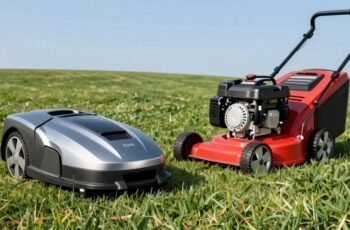
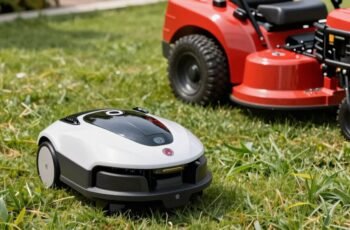
Imagine your lawn as a stage, and the mower as the performer; the way they operate can tell us a lot about cost and efficiency. When it comes to fuel, choosing the right actor can make a significant difference in your budget over time. But which performer truly costs less—the silent, battery-powered robot or the traditional, gas-powered ride-on? Understanding their differences might just change how you care for your yard—and your wallet.
Key Takeaways
- Robot mowers consume less energy and often operate on rechargeable batteries, reducing overall fuel costs compared to ride-on mowers.
- Ride-on mowers have larger engines, resulting in higher fuel consumption, especially on large or complex lawns.
- Electric robot mowers eliminate fuel costs entirely, offering significant savings over gas-powered ride-on models.
- Fuel costs for ride-on mowers increase with lawn size, terrain complexity, and mowing frequency.
- Long-term operational expenses favor electric robot mowers due to lower fuel and maintenance costs.
How Do Robot and Ride-On Mowers Work?
Have you ever wondered how robot and ride-on mowers operate? Robot mowers are autonomous devices that navigate your yard using sensors and boundary wires. They cut grass automatically, adjusting their path to avoid obstacles and stay within designated areas. These mowers rely on rechargeable batteries, returning to a charging station when power is low. Ride-on mowers, on the other hand, are larger, gas-powered machines operated manually. You sit on them and steer while they cut the grass in a pattern you control. They typically have larger blades and higher horsepower, making them suitable for bigger lawns. Both types of mowers serve different needs, but they fundamentally work by cutting grass—robot mowers doing so independently, and ride-ons requiring human control.
Comparing Fuel Efficiency of Lawn Mowers
When we compare fuel efficiency, we look at how much fuel each mower consumes per hour of operation. We also consider how quickly they cover the lawn, affecting overall operational time. By examining these points, we can better understand potential cost savings with each type of mower.
Fuel Consumption Rates
Evaluating fuel consumption rates reveals significant differences in the efficiency of robot mowers compared to traditional ride-on mowers. Robot mowers generally use less fuel because they operate more efficiently, often running on low power and requiring less energy to complete their tasks. They are designed to mow in small sections repeatedly, which minimizes wasted effort and fuel. In contrast, ride-on mowers tend to consume more fuel due to their larger engines and the need to cover bigger areas quickly. Additionally, ride-on mowers often run at higher speeds and may idle more frequently, increasing fuel use. Overall, robot mowers’ optimized operation translates into lower fuel consumption, making them a more fuel-efficient option for lawn maintenance.
Operational Time Efficiency
While both robot mowers and ride-on mowers are designed to trim lawns efficiently, their operational time considerably impacts overall fuel efficiency. Robot mowers often operate in short, frequent sessions, reducing fuel consumption per use. Ride-on mowers, however, tend to run longer, which can increase fuel costs if not managed properly. Imagine the difference in effort and fuel used when a robot completes small patches daily versus a ride-on covering the entire yard in one go. Here’s a quick comparison:
| Aspect | Robot Mower | Ride-On Mower |
|---|---|---|
| Typical Operation Time | Short, frequent sessions | Longer, continuous sessions |
| Fuel Efficiency Impact | Higher due to less idle time | Lower as it runs longer |
| Overall Efficiency | Better for small yards | Suitable for large lawns |
This difference in operational timing shapes fuel costs notably.
Cost Savings Potential
The way each mower consumes fuel directly influences potential cost savings over time. Understanding their fuel efficiency helps us decide which option saves us more money in the long run.
Here are some key points:
- Robot mowers typically use less energy because they operate efficiently and are designed to mow gradually.
- Ride-on mowers generally consume more fuel due to higher engine capacities and longer operation times.
- Fuel efficiency varies with workload; larger lawns can increase fuel costs for ride-on mowers.
- Electric robot mowers eliminate fuel costs altogether, offering significant savings if you’re aiming to cut operational expenses.
What Factors Impact Mower Fuel Consumption?
We understand that mower type and efficiency play a big role in fuel consumption, but other factors matter too. Terrain and lawn size can considerably impact how much fuel a mower uses during operation. Understanding these elements helps us choose the best mower for our needs and budget.
Mower Type Efficiency
Whether comparing fuel efficiency between robot mowers and ride-on mowers, several key factors influence how much fuel each type consumes. First, the engine size matters—larger engines typically burn more fuel. Second, mowing frequency impacts efficiency; more frequent cuts can reduce overall fuel use. Third, the mower’s power settings or cutting speed affect fuel consumption, with higher settings using more fuel. Lastly, the mower’s overall design, including blade type and drive system, influences efficiency. By understanding these factors, we can better gauge which mower type might save us more money on fuel. It’s essential to consider how these variables interact to determine overall efficiency and cost-effectiveness in your lawn care routine.
Terrain and Lawn Size
How do terrain and lawn size influence a mower’s fuel consumption? Larger lawns naturally require more time and energy to mow, increasing fuel use regardless of mower type. Uneven or hilly terrain adds to this, as the mower must exert more effort to navigate slopes and rough patches. For ride-on mowers, this means higher fuel consumption because they cover more ground at once, often with less efficiency on challenging terrain. Robot mowers, however, tend to be more efficient on smaller or relatively flat lawns, but struggle on steep inclines or complex landscapes. Overall, the more demanding the terrain and the larger the lawn, the greater the fuel costs, making terrain and size vital factors when choosing between a robot mower and a ride-on model.
How Much Fuel Do Different Mowers Use?
Different mowers vary considerably in their fuel consumption, which directly impacts ongoing operating costs. Understanding these differences helps you choose the most economical option.
Here’s what you should know:
- Ride-on mowers typically consume between 1 to 3 gallons of fuel per hour, depending on size and engine power.
- Robot mowers use minimal fuel, often just a few ounces of electricity or gasoline annually, since they operate continuously at low power.
- Larger ride-on models with heavier engines burn fuel faster than smaller, more efficient ones.
- Electric robot mowers don’t use fuel at all, but their electricity consumption varies based on battery size and usage hours.
Knowing these figures helps you estimate ongoing costs accurately.
Are Robot Mowers Cheaper to Operate Long-Term?
Robot mowers often prove to be more economical over the long run compared to traditional ride-on mowers, primarily because they consume markedly less energy and require less maintenance. They run on rechargeable batteries, which are cheaper to charge than fueling a gas-powered mower regularly. Additionally, robot mowers have fewer moving parts, reducing repair costs and downtime. Since they operate autonomously, they cut grass more frequently, keeping the lawn healthier and potentially reducing the need for fertilizer or other treatments. Over time, these savings in energy, maintenance, and lawn health can make robot mowers a more cost-effective choice. While the initial investment might be higher, the lower ongoing operating costs often offset this, making them a smarter choice financially in the long run.
How Lawn Size and Terrain Affect Fuel Use
Lawn size and terrain play significant roles in determining fuel consumption for traditional ride-on mowers. Larger lawns require more time and fuel, especially if mowing frequently. Hilly or uneven terrain also increases fuel use because the mower works harder to navigate slopes and obstacles. Flat, smooth surfaces tend to be more fuel-efficient. To understand how these factors impact fuel consumption, consider:
- The total acreage of your lawn
- The presence of hills or slopes
- Obstacles like trees or flower beds
- The type of grass and its density
These elements influence how much fuel your mower needs per session. Recognizing how size and terrain affect fuel use can help you choose the most economical mower for your yard.
Other Costs to Consider When Choosing a Mower
When choosing a mower, it’s important to take into account costs beyond just fuel, as these can add up over time. Maintenance expenses, like oil changes, blade replacements, and tire repairs, can greatly impact your budget. Additionally, consider the upfront purchase price and whether the mower requires special attachments or accessories that may incur extra costs. Storage is another factor—some mowers need a secure, sheltered space, which might mean investing in a shed or storage unit. Battery replacements for electric models can also add to long-term costs. Finally, think about potential repair costs if the mower breaks down or suffers damage. All these factors contribute to the total ownership cost, helping you make a more informed decision.
Which Mower Is Better for Your Eco-Footprint and Budget?
Choosing the right mower depends heavily on both your environmental impact and your budget. To make an informed decision, consider these key factors:
- Fuel Efficiency: Robot mowers use electricity, which can be greener if sourced sustainably, while ride-on mowers typically rely on gasoline or diesel.
- Initial Cost: Robot mowers usually cost more upfront but save on fuel and maintenance over time.
- Operating Costs: Electric robots have lower ongoing expenses, reducing your eco-footprint and expenses.
- Maintenance & Longevity: Ride-on mowers may require more frequent repairs, impacting both your budget and environmental impact.
Frequently Asked Questions
How Often Do Robot Mowers Need Battery Replacements?
We find that robot mowers generally need battery replacements every 2 to 4 years, depending on usage and battery quality. Regular maintenance and proper charging habits help extend the battery life, saving us money long-term.
Can Robot Mowers Operate During Rain or Wet Conditions?
Like a brave sailor facing storms, our robot mowers can sometimes handle light rain, but we recommend avoiding heavy wet conditions, as moisture can impair their sensors and blades, ensuring safety and peak performance for your lawn.
What Is the Average Lifespan of a Ride-On Mower?
The average lifespan of a ride-on mower is around 8 to 10 years. We find that with regular maintenance and proper care, these mowers can serve us reliably for quite a long time.
Do Electric Ride-On Mowers Have Different Fuel Costs?
Electric ride-on mowers don’t have fuel costs since they run on batteries, unlike gas-powered models. We find that their lower operating costs and quieter operation make them a more economical choice for many users.
How Does Mower Maintenance Affect Overall Fuel Costs?
Maintenance impacts overall fuel costs because well-maintained mowers run more efficiently, consume less fuel, and have fewer breakdowns. We find regular tune-ups, blade sharpening, and oil changes save us money and keep our mowers running smoothly.
Conclusion
In the end, choosing between a robot mower and a ride-on comes down to what we value most—cost, convenience, or eco-friendliness. Like a well-tuned engine, understanding their fuel efficiencies helps us make smarter decisions. Whether we opt for the quiet, energy-efficient robot or the robust ride-on, we’re shaping a greener future, one lawn at a time. After all, isn’t a healthier planet the best yard we could ever tend?