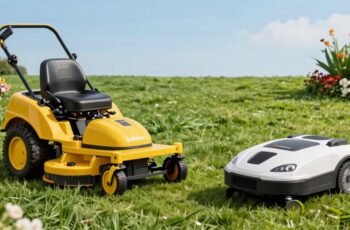
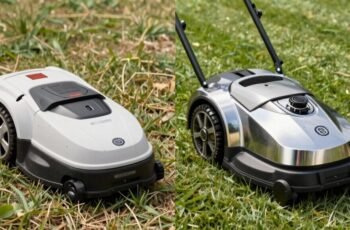
Imagine a quiet, neatly trimmed lawn at dusk, thanks to a machine working tirelessly in the background. As we compare the costs of robot mowers and garden tractors, it becomes clear that choosing the right one depends on more than just the initial price. Factors like long-term expenses and your yard’s size influence the decision. To truly understand which option offers better value, we need to look beyond the sticker price and consider the bigger picture.
Key Takeaways
- Robot mowers typically cost between $600–$2,500, while garden tractors start around $2,000 and can exceed $5,000.
- Long-term, robot mowers have lower maintenance and energy costs compared to higher fuel and repair expenses of garden tractors.
- Robot mowers are suitable for small to medium yards with obstacles, whereas garden tractors are better for large, complex terrains.
- Initial investment in robot mowers can be higher for advanced features, but they offer savings through automation and low upkeep.
- Garden tractors offer durability and heavy-duty performance for larger properties but involve higher ongoing maintenance costs.
How Do Robot Mower and Garden Tractor Costs Compare?
When comparing the costs of robot mowers and garden tractors, it’s clear that price differences are significant and can influence your decision. Robot mowers typically cost between $600 and $2,500, depending on features and size. These prices are generally lower upfront but vary based on brand and capabilities. Garden tractors, on the other hand, usually start around $2,000 and can go well over $4,000 for larger, more powerful models. While the initial investment for a garden tractor is higher, they often offer more versatility and power for larger lawns or multiple tasks. The key takeaway is that robot mowers are more budget-friendly initially, but garden tractors can provide more value over time if you need a machine that handles a broader range of yard work.
What Is the Upfront Price for a Robot Mower or Garden Tractor?
The upfront price for a robot mower or garden tractor varies widely based on features, size, and brand. Entry-level robot mowers typically start around $300 to $800, suitable for small lawns with basic features. Mid-range models range from $800 to $1,500, offering better cutting precision, larger batteries, and smart technology. High-end robot mowers can cost between $1,500 and $3,500, with advanced navigation, app control, and longer battery life. Garden tractors, on the other hand, usually start at $2,000 for basic models and can go up to $5,000 or more for larger, feature-rich units with attachments. The initial investment varies considerably, so it’s important to take into account your lawn size and desired features when choosing between the two options.
How Much Do Maintenance and Operating Expenses Cost Over Time?
Over time, maintenance and operating costs can considerably impact the total expense of a robot mower or garden tractor. We’ll look at how long-term upkeep, repairs, and energy use add up for each option. Knowing these costs helps us make smarter decisions for our yard care budget.
Long-Term Maintenance Costs
Long-term maintenance costs can considerably influence the overall expense of using either a robot mower or a garden tractor. Robot mowers typically require less maintenance, mainly needing blade replacements and occasional software updates, which keeps costs predictable. They have fewer moving parts, reducing the chance of breakdowns. Garden tractors, however, involve more extensive maintenance: oil changes, belt replacements, tire care, and engine repairs can add up over time. These costs tend to be higher and less predictable, especially if repairs are needed for major components. Regular servicing is essential for both, but the ongoing expense for a garden tractor is generally more substantial. Ultimately, maintenance costs over time tend to favor robot mowers, especially for smaller or more straightforward lawns.
Operating Expenses Over Time
Although initial purchase prices vary, operating expenses over time considerably impact the total cost of maintaining a lawn with either a robot mower or a garden tractor. Robot mowers typically have lower ongoing costs—they consume less energy and require minimal maintenance. Their electric motors are efficient, and replacement parts tend to be affordable. In contrast, garden tractors often use gasoline, leading to higher fuel expenses and more frequent oil changes, blade sharpening, and engine tune-ups. Additionally, tractor parts and repairs can be costly over time. While robot mowers may have higher upfront costs, their lower operating expenses make them more economical in the long run. Understanding these ongoing costs helps us make smarter choices when selecting the best mower for our lawn and budget.
Which Offers Better Long-Term Value for Your Budget?
When comparing long-term value, we need to account for initial costs, ongoing maintenance, and how durable each option is over time. Robot mowers often have a higher upfront price but lower maintenance expenses, while garden tractors typically cost less initially but may require more repairs. Ultimately, we should weigh these factors to see which provides better savings and reliability over the years.
Initial Purchase Costs
Choosing between a robot mower and a garden tractor often comes down to initial purchase costs, which can substantially impact your budget. Robot mowers tend to be more affordable upfront, usually costing between $1,000 and $3,000 depending on size and features. Garden tractors, on the other hand, are markedly pricier, often ranging from $2,500 to over $5,000. While the initial investment for a tractor might seem steep, it often includes attachments and capabilities that could justify the cost for large or complex lawns. Conversely, robot mowers are simpler machines designed for smaller or straightforward lawns. Ultimately, your budget and lawn size will determine which option offers better value initially, but affordability and specific needs should guide your decision.
Maintenance Expenses
Maintenance expenses play a crucial role in determining which lawn care option offers better long-term value for your budget. Robot mowers generally have lower ongoing maintenance costs because they have fewer moving parts and are designed for easy upkeep. They mainly require blade replacements and occasional cleaning, which are simple and inexpensive. In contrast, garden tractors often need more frequent maintenance, including oil changes, belt replacements, tire rotations, and engine tune-ups, all of which can add up over time. Additionally, garden tractors may require more costly repairs if parts wear out or break. While robot mowers might have a higher initial investment, their lower maintenance costs make them more economical in the long run. Overall, robot mowers tend to be more budget-friendly regarding ongoing expenses.
Long-Term Durability
While maintenance costs are important, long-term durability considerably impacts which lawn care option ultimately provides better value over time. Garden tractors are built for heavy-duty use and often last many years with proper care. They’re typically more robust, with sturdy frames and powerful engines that withstand tough terrain. Robot mowers, on the other hand, may have shorter lifespans due to their electronic components and lighter build. While they require less maintenance, they might need replacement sooner if exposed to harsh weather or frequent use. Over the long run, a durable garden tractor can be a better investment, offering consistent performance and longevity. However, if your yard’s conditions are less demanding, a robot mower’s durability might be sufficient, potentially saving money on repairs and replacements.
What Factors Affect the Total Cost of Your Lawn Mower?
The total cost of your lawn mower is influenced by several key factors that can considerably impact your overall investment. First, the mower’s size and cutting width determine how quickly you can cover your yard, affecting both efficiency and price. More advanced features like automatic height adjustment, mulching capabilities, or smart technology can also drive up costs. Material quality and build durability matter too; higher-grade metals and components tend to last longer but cost more upfront. Additionally, brand reputation and warranty coverage influence pricing, as trusted brands often charge a premium for reliability and support. Finally, whether you opt for a gas-powered, electric, or robotic mower impacts initial purchase price and ongoing maintenance expenses. All these factors combine to shape the total cost you’ll ultimately pay.
Is a Robot Mower Better for Small Yards?
For small yards, a robot mower can often be the most practical and efficient choice. These compact devices are designed to handle limited spaces with ease, keeping your lawn consistently trimmed without the need for manual effort. They work quietly, so you won’t be disturbed during your day, and they can operate autonomously, saving you time. For those with tight or irregularly shaped yards, robot mowers navigate around obstacles better than larger machines, making them more adaptable. Maintenance is usually straightforward, and many models are energy-efficient, helping you save on electricity. Overall, if your yard is small and you want a low-maintenance, reliable solution, a robot mower is often the better option. It combines convenience with cost-effectiveness for small-scale lawn care.
Which Lawn Mower Makes the Most Financial Sense for Your Needs?
Choosing the most financially sensible lawn mower depends on your specific needs, yard size, and budget. For small to medium yards, a robot mower can be cost-effective over time, saving on labor and fuel costs. It requires an upfront investment but minimizes ongoing expenses. Conversely, a garden tractor is often more economical upfront, especially for larger properties or thicker grass, and may handle heavy-duty tasks better. Consider maintenance costs—robot mowers typically have lower maintenance than tractors, but parts can be pricier if replacements are needed. If your yard is irregular or has obstacles, a garden tractor might be more practical despite higher initial costs. Ultimately, selecting the best mower balances initial investment, ongoing expenses, and how well it suits your yard’s size and terrain.
Frequently Asked Questions
Are There Additional Costs for Accessories or Upgrades?
Yes, there are typically extra costs for accessories or upgrades like boundary wires, spare blades, or smart features. We recommend budgeting for these extras to guarantee your mower or tractor operates efficiently and meets all your gardening needs.
How Do Replacement Parts Impact Long-Term Expenses?
Replacement parts are like replacing worn-out tires on a car—they’re essential for smooth operation and can add up over time. We’ve found that with proper maintenance, long-term expenses stay manageable, ensuring our investment pays off.
Can Financial Incentives or Rebates Apply to Robotic Mowers?
Yes, financial incentives or rebates often apply to robotic mowers, helping reduce upfront costs. We recommend checking local programs, utility companies, or government initiatives that promote eco-friendly technology, making these advanced mowers more affordable for everyone.
What Are the Resale Values of Robot Mowers Versus Garden Tractors?
Like vintage records, garden tractors tend to hold their value better over time, while robot mowers often depreciate faster. We see this in resale markets, making garden tractors a more stable investment for those seeking long-term value.
How Do Warranty Periods Influence Overall Cost Considerations?
Warranty periods considerably impact overall costs because longer warranties reduce potential repair expenses, offering peace of mind. We consider warranty length when budgeting, knowing that extended coverage can save us money on repairs and replacements long-term.
Conclusion
In the end, choosing between a robot mower and a garden tractor really depends on our yard size and budget. While robot mowers are more affordable upfront and save on maintenance, they might not handle challenging terrains as well. Conversely, garden tractors are pricier but excel in larger, complex yards. It’s worth considering that a smaller yard might not need the power of a tractor, making a robot mower the smarter, more cost-effective choice for many of us.