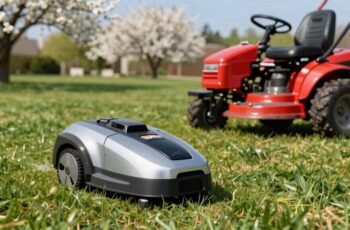
Choosing between a robot mower and a traditional lawn mower depends on many factors that can substantially impact your yard’s upkeep. We recognize how important it is to find the right fit for your specific needs, whether it’s ease of use, terrain challenges, or budget considerations. There are advantages and drawbacks to each option, and knowing which one aligns best with your yard’s features can make all the difference. Let’s explore what makes each mower type unique.
Key Takeaways
- Traditional mowers are more effective for large, uneven, or complex terrains, while robot mowers excel on flat, well-maintained lawns.
- Robot mowers offer automation, convenience, and lower manual effort, ideal for homeowners prioritizing low-maintenance yards.
- Manual mowers tend to be more durable, cost-effective long-term, and better suited for tough or thick grass.
- Robot mowers have higher initial costs and shorter lifespans but require less ongoing maintenance.
- The best choice depends on yard size, terrain complexity, and homeowner preferences for automation versus manual control.
Which Mower Is Right for Your Lawn? A Quick Guide
How do you decide which mower is best for your lawn? First, consider your lawn’s size. Smaller lawns, under a quarter-acre, often suit traditional push mowers, which are affordable and easy to maneuver. Larger areas might benefit from riding or lawn tractors, saving you time and effort. Next, evaluate terrain. Flat, even lawns are straightforward, but uneven or hilly yards may require sturdier equipment. Think about grass type; thicker or taller grass might need a more powerful mower. Also, factor in your maintenance preference—some prefer the simplicity of manual mowers, while others want automated features. In conclusion, consider your budget and storage space. Choosing the right mower depends on balancing your lawn’s needs with what you’re comfortable managing regularly.
How Do Robot Mowers and Traditional Lawn Mowers Work?
While traditional lawn mowers rely on manual operation, cutting grass with a blade powered by a motor, robot mowers take a different approach by moving autonomously across your yard. They use built-in sensors and boundary wires to navigate and stay within designated areas. Once programmed, robot mowers automatically detect obstacles, adjust their paths, and cut grass in a systematic pattern. They operate on rechargeable batteries, returning to their charging stations when power runs low. In contrast, traditional mowers require a human to push or ride them, with manual control over cutting height and direction. Both types of mowers perform the essential task of grass cutting, but their mechanisms and operation methods differ considerably, impacting ease of use and maintenance.
What Are the Main Benefits of Robot Mowers?
Robot mowers offer several compelling benefits that make yard maintenance easier and more efficient. They operate quietly, so you won’t be disturbed during your day or evening activities. Their automated nature means you don’t have to spend hours pushing a traditional mower around your yard, saving time and effort. Consistent mowing helps keep your lawn healthier, promoting even growth and reducing weeds. Many models are equipped with smart features, allowing them to navigate your yard precisely and avoid obstacles. They also adapt to your schedule—mowing regularly without your intervention—ensuring a neat, well-kept lawn at all times. Additionally, robot mowers are eco-friendly, producing no emissions and consuming less energy. All these benefits combine to make maintaining your yard simpler, quicker, and more sustainable.
Why Choose a Traditional Lawn Mower?
Traditional lawn mowers can be more cost-effective to maintain over time, especially if you prefer simple repairs. They also offer greater cutting power, making them suitable for thicker or tougher grass. If these factors matter to you, a classic mower might be the better choice.
Cost-Effective Maintenance
Because maintenance costs can quickly add up, many homeowners find that traditional lawn mowers offer a more predictable and affordable option. With a standard mower, you generally know what to expect regarding repairs and part replacements. They often have simpler mechanics, making repairs easier and cheaper. Plus, replacement parts like blades and belts are widely available and inexpensive. Unlike robotic mowers, which may require specialized service or costly repairs, traditional mowers usually have a longer lifespan if properly maintained. Regular tune-ups, oil changes, and blade sharpening keep them running efficiently without breaking the bank. Overall, their straightforward design and readily available parts make traditional lawn mowers a cost-effective solution for long-term upkeep.
Greater Cutting Power
While maintenance costs are often lower for traditional mowers, their real advantage lies in the power they deliver. They handle thick, tough grass with ease, providing a cleaner cut and faster results. Imagine:
- A robust engine that slices through dense patches without bogging down.
- Heavy-duty blades that shred even the most stubborn grass blades.
- Greater torque that maintains cutting performance on uneven terrain.
- Consistent power, ensuring you won’t miss a spot or struggle with overgrown areas.
This raw power means a more even, professional-looking lawn. It’s ideal for larger yards or those with challenging grass types. For serious cutting performance, traditional lawn mowers stand out as the more powerful option.
How Do Costs, Maintenance, and Durability Compare?
When comparing robot mowers and traditional lawn mowers, we consider initial costs, ongoing maintenance, and how long each tool lasts. Robot mowers usually have a higher upfront price but lower maintenance needs, while traditional mowers can be cheaper to buy but may require more frequent servicing. Both options’ durability varies, so understanding these factors helps us choose the best fit for our lawns and budgets.
Initial Purchase Expenses
Initial purchase expenses for robot mowers and traditional lawn mowers can vary considerably, influencing how much homeowners are willing to invest upfront. For example, imagine:
- A basic push mower costing around $150—simple but manual.
- A mid-range gas mower priced between $300 and $500—more power, more features.
- An advanced robot mower starting at $800—automated, smart tech included.
- High-end robotic models exceeding $2,000—premium features and durability.
Traditional mowers often have lower initial costs but may require extra spending on fuel, oil, and replacement parts. Robot mowers, while pricier initially, eliminate ongoing fuel costs and reduce manual effort, which can balance out over time.
Upkeep and Servicing
Upkeep and servicing costs play a significant role in the overall value of both robot and traditional lawn mowers. Robot mowers generally require less maintenance—no oil changes, fewer moving parts, and self-cleaning blades reduce the need for regular servicing. However, when repairs are needed, they can be costly due to specialized parts or warranty issues. Traditional mowers, on the other hand, often need regular blade sharpening, oil changes, and occasional engine tune-ups, which can add up over time. Durability varies widely depending on brand and model; high-quality traditional mowers tend to last longer with proper care, while robot mowers may need replacement sooner if they encounter frequent obstacles or harsh conditions. Overall, both systems involve ongoing costs, but robot mowers typically demand less hands-on maintenance.
Longevity and Wear
Robotic and conventional lawn mowers differ markedly in their longevity and how they handle wear over time. Robotic mowers generally have a shorter lifespan, often around 3-5 years, due to constant exposure to the elements and frequent use. In contrast, traditional mowers can last 8-10 years or more with proper care. Imagine these scenarios:
- The robotic mower’s blades become dull after hundreds of small cuts.
- Its wheels may wear down faster on rough terrain.
- The motor might weaken with continuous operation.
- The conventional mower’s engine, however, can be rebuilt or replaced, extending its life considerably.
Ultimately, robotic mowers tend to require more frequent replacements or repairs, while conventional mowers, though more durable, need regular maintenance to keep running smoothly.
Which Mower Works Best for Your Yard Size and Terrain?
Choosing the right mower depends heavily on your yard’s size and terrain. For small to medium lawns with flat terrain, a traditional push mower is often sufficient, offering control and affordability. If your yard is larger, a riding mower can save time and reduce fatigue. For uneven or hilly terrain, a robust lawn tractor with four-wheel drive provides better stability and power. Robot mowers excel in flat, well-maintained yards, especially if you prefer automation and minimal effort. However, they might struggle on steep slopes or complex landscapes. Understanding your yard’s dimensions and features helps determine the most effective mower. By matching the mower’s capabilities to your terrain, you guarantee efficient mowing, longer equipment lifespan, and a well-maintained lawn.
What Are the Main Drawbacks of Robot Mowers?
While robot mowers offer convenience and automation, they also come with notable limitations. First, they can struggle with uneven terrain, getting stuck or missing patches. Second, their small size means frequent charging, causing interruptions during mowing sessions. Third, obstacles like garden furniture or pet toys can confuse the mower, requiring constant supervision. Fourth, the initial cost can be high, making it a significant investment. Additionally, they may not handle thick, tall grass well and often need regular maintenance. These drawbacks can limit their effectiveness, especially for larger or more complex yards. So, while robot mowers are great for low-maintenance lawns, they might not be suitable for every yard or homeowner seeking a hassle-free solution.
Frequently Asked Questions
Can Robot Mowers Handle Uneven or Hilly Terrain Effectively?
Robot mowers can handle uneven or hilly terrain, but their effectiveness depends on the model. We recommend choosing one with adjustable cutting heights, good traction, and a sturdy design to navigate challenging landscapes efficiently.
Are Robot Mowers Suitable for All Grass Types and Climates?
Robot mowers suit most grass types and climates, but they perform best on even terrain and in moderate weather. We recommend checking specific models for compatibility, especially in extreme heat, cold, or very thick grass.
How Do Robot Mowers Perform in Wet or Rainy Conditions?
They say “a rainy day is an opportunity,” and robot mowers handle wet conditions surprisingly well, but we recommend avoiding prolonged exposure to heavy rain to prevent slipping and electrical issues, ensuring peak performance and safety.
What Safety Features Do Robot Mowers Include to Prevent Injuries?
Robot mowers include safety features like obstacle detection, blade shut-off when lifted, and boundary sensors to prevent injuries. We find these features help keep users safe while enjoying automatic lawn care with minimal risk.
Can Robot Mowers Be Programmed for Specific Mowing Patterns or Schedules?
Yes, robot mowers can be programmed for specific patterns or schedules, allowing us to customize their routes like a choreographed dance across our lawns. We set the times and paths, ensuring a neat, consistent cut every time.
Conclusion
Ultimately, whether we choose a robot mower or a traditional one, it’s like finding the right fit for our yard’s personality. Sometimes, we stumble upon a solution that surprises us—like how a small, quiet robot might become our favorite new helper for a perfectly manicured lawn. It’s all about matching our needs and yard quirks. After all, the best mower is the one that makes our outdoor time easier and more enjoyable.