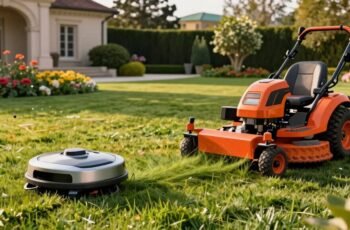
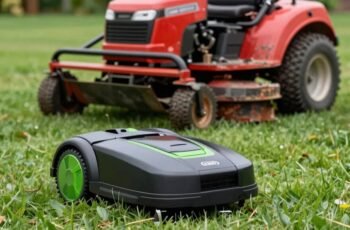
Did you know that despite their smaller size, robot mowers often take considerably longer to finish a job compared to traditional ride-on mowers? This isn’t just about speed; many factors influence how long each type needs to complete the task. Understanding these differences can help you choose the right mower for your lawn’s size and terrain. Curious about what really impacts mowing efficiency and how to optimize your setup?
Key Takeaways
- Ride-on mowers typically complete large lawns faster due to higher speeds and larger blades.
- Robot mowers are slower but excel in precision and autonomous operation, especially on small to medium lawns.
- Terrain and obstacles significantly decrease mowing efficiency for both mower types, affecting total mowing time.
- Frequent maintenance and charging requirements can extend robot mower total mowing duration.
- Lawn size, shape, and terrain are critical factors influencing whether a robot or ride-on mower is more time-efficient.
How Do Robot Mowers and Ride-On Mowers Differ in Mowing Speed?
While both robot mowers and ride-on mowers are designed to efficiently handle large lawns, they differ considerably in their mowing speeds. Robot mowers typically work at a slower pace, moving steadily to cover the grass over time. Their focus is on consistent, precise trimming rather than quick coverage. In contrast, ride-on mowers are built for speed, allowing users to cover large areas much faster. They can mow large sections of lawn in a shorter period, thanks to their larger blades and higher travel speeds. However, speed isn’t the only factor; ride-on mowers often require more setup and manual effort, while robot mowers operate autonomously at a steady, deliberate pace. Understanding these differences helps us choose the right mower based on our lawn size and time constraints.
What Factors Influence Mowing Time for Both Mower Types?
The size and shape of your lawn play a big role in how long mowing takes, no matter which type of mower you choose. Additionally, how often you mow and your preferred speed can speed up or slow down the process. Understanding these factors helps us better estimate and plan for efficient mowing sessions.
Lawn Size and Shape
Lawn size and shape are critical factors that directly impact how long it takes to mow a yard, regardless of whether you’re using a robot mower or a ride-on machine. Larger lawns naturally require more time, but the shape also matters. Irregularly shaped yards with many corners or narrow strips can slow down mowing, especially for ride-on mowers that need to navigate tight spots. Conversely, open, rectangular lawns are quicker to mow, whether robot or ride-on. The complexity of the shape can increase maneuvering time and reduce efficiency. Additionally, the layout influences how easily the mower can cover the area without needing frequent adjustments or complex paths. Overall, both the size and shape of your lawn play a significant role in determining mowing duration for both mower types.
Mowing Frequency and Speed
Mowing speed and how often you cut the grass directly influence the total time it takes to finish the job for both robot and ride-on mowers. Faster mowing speeds cover more ground quickly, reducing overall mowing time. However, the frequency of mowing also plays a role; mowing more often keeps the grass shorter, allowing for quicker passes. Robot mowers typically run at a steady, slower pace, which extends mowing time but offers consistent coverage without manual effort. Ride-on mowers can operate faster, especially on larger lawns, but may require more setup and breaks. Ultimately, balancing mowing speed and frequency depends on your lawn size, grass growth rate, and personal preferences, impacting how long each mower type takes to complete the task.
How Long Does a Robot Mower Take to Cover Your Lawn?
When considering how long a robot mower takes to cover your yard, it’s important to understand that several factors influence its efficiency. The mower’s size, battery capacity, and cutting pattern all play essential roles. Smaller lawns typically get mowed more quickly, often within an hour or two, while larger areas might take several hours spread over multiple sessions. The mower’s path planning and mowing schedule also impact timing—some models mow more methodically, while others cover the yard more randomly. Weather conditions, such as rain or high humidity, can slow down the process or cause delays. Overall, a robot mower’s goal is to maintain consistent coverage, so it may take a bit longer than traditional methods, but it does so more frequently and efficiently over time.
How Does Lawn Size Affect Mowing Time With Different Mowers?
As the size of your yard increases, the time it takes to mow with different types of equipment varies considerably. Ride-on mowers typically handle large lawns quickly due to their powerful engines and wide cutting decks. In contrast, robot mowers may take longer on expansive areas because of their slower pace and limited battery capacity. The efficiency of each mower depends heavily on the lawn’s size and the mower’s capacity.
- Larger lawns benefit from ride-on mowers’ speed and coverage
- Robot mowers are more suited for small to medium areas due to their precision and autonomy
- Mower charging times and cutting cycles become critical factors as lawn size grows
How Do Terrain and Obstacles Impact Mowing Efficiency?
Terrain and obstacles considerably influence mowing efficiency because they can slow down equipment and complicate the cutting process. Uneven ground, slopes, and thick patches challenge both robot mowers and ride-ons, reducing their speed and coverage. Obstacles like trees, flower beds, and furniture force us to slow down or navigate carefully, wasting time. For ride-on mowers, rough terrain increases the risk of tipping or damaging the machine, leading to delays. Robot mowers, while precise, may struggle with complex layouts or steep inclines, requiring manual intervention. Overall, the more obstacles and unevenness present, the more it impacts the efficiency of mowing, regardless of the type of equipment. Understanding the terrain helps us choose the right mower and plan mowing strategies accordingly.
Which Mower Saves More Time for Small, Medium, and Large Lawns?
Choosing the right mower often depends on the size of the lawn, as each type offers distinct advantages in saving time. For small lawns, a robot mower is usually quicker because it can operate autonomously and cover the area efficiently without manual effort. Medium lawns benefit from a ride-on mower, which can traverse larger areas faster than pushing mowers or robots. Large lawns see the biggest time savings with ride-on mowers, as their larger decks and higher speeds cut mowing time significantly.
- Robot mowers excel in small, flat, obstacle-free areas
- Ride-on mowers are more suitable for medium to large, varied terrains
- Larger lawns tend to favor ride-on mowers for speed and efficiency
How Do Maintenance and Charging Schedules Affect Mowing Turnaround?
Charging frequency can directly influence how quickly a robot mower gets back to work, especially on larger lawns. Maintenance delays, like blade sharpening or battery issues, can also cause unexpected downtime. Together, these factors considerably impact overall mowing turnaround times.
Charging Frequency Impact
Since regular maintenance and timely recharging are essential for ideal mowing performance, understanding how often a robot mower or ride-on mower needs to be charged directly influences how quickly your lawn gets mowed. Robot mowers generally require frequent recharges—often every few hours—meaning they might take multiple runs to finish large yards, extending overall mowing time. Ride-on mowers, with larger fuel tanks or batteries, tend to run longer between charges, allowing for faster completion of extensive lawns.
- Battery life and recharge time directly impact how quickly each mower can resume work.
- Charging station placement affects how swiftly the robot can return to mowing after a recharge.
- Mowing schedule flexibility determines how often recharging interrupts the mowing process.
Maintenance Delays Effect
Regular maintenance and well-planned charging schedules can considerably influence how quickly your lawn gets mowed. When maintenance is delayed, robot mowers can experience unexpected breakdowns, leading to longer downtime and missed mowing windows. Similarly, neglecting charging schedules results in low battery levels, forcing the mower to stop and recharge, delaying the task. To visualize, think of these factors as:
| Maintenance Status | Charging Level | Mowing Progress |
|---|---|---|
| Well-maintained | Fully charged | On schedule |
| Delayed repairs | Partially charged | Slight delay |
| Ignored issues | Low battery | Significant delay |
Keeping up with maintenance and charging guarantees your mower stays on track, providing a quicker, more efficient mowing turnaround.
Tips to Maximize Mowing Efficiency With Robot and Ride-On Mowers
To boost your mowing efficiency, it’s essential to optimize the way you set up and operate both robot and ride-on mowers. Proper planning and adjustments can significantly reduce mowing time and improve results. Start by mapping out the lawn to identify the most efficient mowing path, minimizing overlaps and missed spots. Regularly sharpen blades to ensure clean cuts and prevent strain on the mower. Adjust cutting height based on grass type and growth stage to avoid unnecessary passes.
- Create a mowing pattern that minimizes turns and overlaps
- Schedule mowing during ideal weather conditions for faster growth and easier cutting
- Regularly inspect and maintain equipment to prevent breakdowns and downtime
What Conditions Make Robot or Ride-On Mowing the Better Choice?
Choosing between robot and ride-on mowers depends largely on the specific conditions of your lawn and your mowing needs. For small, flat, or obstacle-free lawns, a robot mower shines—it’s quiet, efficient, and low-maintenance. Conversely, larger or uneven terrains often favor ride-on mowers, which handle rough patches and steep slopes more effectively.
| Condition | Ideal Mower Type |
|---|---|
| Small, flat lawns | Robot mower |
| Large, hilly lawns | Ride-on mower |
| Obstacle-filled yards | Ride-on mower |
| Regular, quick cuts | Robot mower |
| Long, dense grass | Ride-on mower |
These scenarios guide us to the best choice based on your lawn’s unique features.
Frequently Asked Questions
Can Robot Mowers Operate Effectively in All Weather Conditions?
Robot mowers don’t operate effectively in all weather conditions. Heavy rain, snow, or thick debris can hinder their performance, so we recommend monitoring weather and adjusting mowing schedules to guarantee ideal operation and protect the equipment.
How Does Lawn Complexity Influence Mowing Time?
Lawn complexity considerably complicates mowing time, as denser, uneven, or obstacle-rich lawns demand more meticulous, methodical maneuvering. We find that intricate landscapes increase the time taken, challenging efficiency and requiring tailored, thoughtful approaches for ideal mowing results.
Are There Safety Concerns With Unattended Robot Mowers?
We believe unattended robot mowers are generally safe, but they can pose risks to children, pets, or if they encounter obstacles. We recommend supervising initial uses and setting up safety features for peace of mind.
What Is the Typical Lifespan of Each Mower Type?
Interestingly, robot mowers often last around 5-8 years, while ride-on mowers can go 10-15 years. We’re surprised how durability varies; some think tech gadgets last longer than tough, traditional machines.
How Do Costs Compare Between Robot and Ride-On Mowers Over Time?
We find that robot mowers usually have lower initial costs but may incur higher maintenance over time, while ride-on mowers are pricier upfront but often require less frequent repairs, making overall expenses vary based on usage and lawn size.
Conclusion
In the end, choosing between robot and ride-on mowers is like selecting the right dance partner—each has its own rhythm and charm. While robots glide quietly and efficiently on smaller lawns, ride-ons can swiftly tackle larger, more varied terrains. By understanding your lawn’s unique needs, you can find the perfect match that keeps your outdoor space beautifully maintained without missing a beat. After all, the right mower makes all the difference in the dance of lawn care.