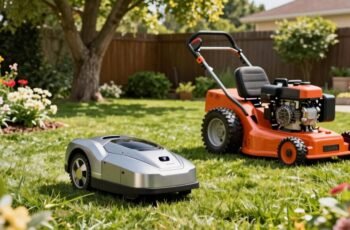
When it comes to mowing slopes, choosing between robotic and ride-on models can be challenging. Both have their strengths and limitations, especially on uneven terrain. We recognize how important it is to find a solution that’s safe, efficient, and suited to your lawn’s specific needs. But how do you determine which mower performs best on your property’s inclines? Let’s explore the key differences and considerations to help you make an informed decision.
Key Takeaways
- Robotic mowers handle gentle slopes up to 20-25 degrees but struggle on steeper or uneven terrain, while ride-on mowers are better suited for challenging slopes.
- Ride-on mowers offer greater stability, larger power, and are suitable for extensive, rugged, or steep terrains.
- Robotic mowers are safer on slopes due to obstacle detection and anti-tip features, but battery life diminishes on steep inclines.
- Maintenance costs are generally lower for robotic mowers, but ride-on models are more durable for steep, rough, or large areas.
- Proper equipment selection depends on slope gradient, property size, terrain difficulty, and safety considerations.
Do Robotic and Ride-On Mowers Handle Slopes Differently?
When it comes to tackling slopes, robotic and ride-on mowers don’t handle terrain exactly the same way. Robotic mowers are designed with sensors and algorithms that help them navigate uneven ground, but they often struggle on steep slopes—typically those over 15 degrees. They rely on a stable, flat surface to operate safely and efficiently. Ride-on mowers, on the other hand, are built with larger wheels and a more powerful engine, giving them better stability and control on steeper inclines. They can handle steeper terrain but require careful operation to avoid tipping or slipping. Overall, ride-on mowers are better suited for challenging slopes, while robotic mowers excel on flatter, more even ground.
What Safety Tips Should You Follow When Mowing on Slopes?
When mowing on slopes, we need to maintain stable footing to avoid slipping or falling. It’s also essential to use the proper equipment designed for uneven terrain to guarantee safety. Following these tips helps us cut safely and efficiently on hilly areas.
Maintain Stable Footing
Mowing on slopes demands careful attention to maintain stable footing and guarantee safety. We always recommend wearing sturdy shoes with good traction to prevent slips. When moving across inclined terrain, keep your body centered over your feet and avoid leaning too far in any direction. Use slow, deliberate movements to maintain control, especially on steeper sections. If the ground is uneven or loose, take extra caution or consider avoiding mowing there altogether. Keep your mower close to your body and avoid reaching out or overstretching, which can cause loss of balance. Regularly check your footing and be aware of your surroundings to prevent falls. Prioritizing stability assures you stay safe and maintain control while mowing on challenging slopes.
Use Proper Equipment
Choosing the right equipment is crucial for safe mowing on slopes, as improper tools can increase the risk of accidents. Using equipment designed for slopes helps maintain control and stability. For steep terrains, ride-on mowers with low centers of gravity are ideal, while robotic mowers suit gentle slopes. Always check the mower’s specifications to verify it’s suitable for your terrain.
| Equipment Type | Best For | Key Feature |
|---|---|---|
| Ride-On Mower | Steep, uneven slopes | Heavy-duty, stability |
| Robotic Mower | Gentle slopes | Precise, automatic control |
| Hand Tools | Small areas | Compact, easy to maneuver |
How Do These Mowers Perform on Steep or Rugged Slopes?
When mowing on steep or rugged slopes, we look closely at traction and grip capabilities to prevent slipping. We also consider how efficiently each mower cuts uneven terrain and what safety features are in place to protect users. These factors help us determine which mower performs best in challenging conditions.
Traction and Grip Capabilities
Robotic mowers and ride-on machines face unique challenges when tackling steep or rugged slopes, but their traction and grip capabilities determine how effectively they perform in such conditions. Robotic mowers typically rely on small wheels with limited grip, which can struggle on uneven or slippery terrain. They often use sensors to maintain stability, but their traction is limited by wheel size and motor power, making them less suited for very steep slopes. Ride-on mowers, on the other hand, usually feature larger, more aggressive tires designed for better grip. Their weight distribution and powerful drive systems help them maintain traction on challenging terrain. Overall, ride-on machines generally offer superior grip on rugged slopes, while robotic mowers may require flatter, less demanding surfaces to operate effectively.
Cutting Efficiency on Slopes
On steep or rugged slopes, cutting efficiency becomes a critical factor in determining which mower performs best. Robotic mowers are designed with advanced blades and precise control systems that adapt to uneven terrain, maintaining consistent cutting performance. They excel at trimming grass evenly, even on slopes, thanks to their intelligent navigation. Ride-on mowers, on the other hand, often have more powerful engines and larger blades, allowing them to cut through dense or tall grass quickly. However, their efficiency can decrease on very steep or uneven terrain if traction isn’t optimal. Overall, robotic mowers tend to provide more consistent results on slopes due to their adaptability, while ride-ons can be faster but may struggle with less accessible or rugged areas.
Safety Features for Steep Areas
How well do robotic and ride-on mowers prioritize safety when tackling steep or rugged slopes? Both mower types have safety features designed for challenging terrain, but their effectiveness varies. Robotic mowers often include obstacle detection sensors, anti-tip mechanisms, and low-center-of-gravity designs to prevent rollovers. They’re built to stop or reverse if they sense instability or obstacles. Ride-on mowers typically have roll-over protection structures (ROPS), seat belts, and tilt sensors that disengage blades if tipping occurs. However, on very steep slopes, ride-ons can still pose risks if operators ignore safety protocols. Overall, robotic mowers tend to offer enhanced safety features specific to slopes, reducing human error, while ride-on mowers rely more on physical safety structures and operator vigilance.
What Maintenance Is Needed for Mowers on Sloped Lawns?
Maintaining mowers on sloped lawns requires regular attention to guarantee they operate efficiently and safely. For robotic and ride-on mowers, routine checks are essential. Regularly inspect blades for sharpness and damage to guarantee a clean cut. Keep the mower’s wheels and suspension in good condition to prevent slipping. Check for debris buildup that could hinder performance or cause imbalance. Lubricate moving parts as specified by the manufacturer. Also, monitor the battery and electronic components for wear, especially in robotic models.
| Maintenance Task | Frequency | Purpose |
|---|---|---|
| Blade sharpening | Every 10-15 hours | Ensures clean cuts |
| Tire/wheel inspection | Monthly | Prevents slipping |
| Battery check | Monthly | Maintains power and longevity |
| Debris removal | Weekly | Prevents blockages |
| Lubrication of parts | As needed | Keeps components moving smoothly |
Are Robotic or Ride-On Mowers More Cost-Effective for Slopes?
Choosing between robotic and ride-on mowers for slopes often comes down to long-term costs and value. Robotic mowers tend to have a higher initial investment but usually save money over time through lower maintenance and reduced labor costs. They’re more energy-efficient and require less fuel, which adds to savings. Ride-on mowers, on the other hand, often have lower upfront costs but can rack up expenses from fuel, oil, and regular maintenance, especially on challenging slopes that might cause more wear. The durability of ride-on mowers on steep terrain also impacts their long-term value. Ultimately, if you prioritize low ongoing costs and convenience, robotic mowers may be more cost-effective. However, for larger, complex terrains, the durability and versatility of ride-on mowers could offer better long-term value.
Can Robotic Mowers Handle Long or Steep Slopes Without Battery Issues?
Robotic mowers have become increasingly popular for maintaining sloped terrains, but their ability to handle long or steep slopes without battery issues remains a common concern. Many models are designed with enhanced batteries and motors that provide better power and longer runtime, even on challenging terrain. However, steep slopes demand more energy, which can drain batteries faster, especially over extended mowing sessions. Some robotic mowers feature larger batteries or multiple battery compartments to address this. Still, on very steep or lengthy slopes, battery life can become a limiting factor, requiring recharging or battery swaps. It’s essential to choose a mower specifically rated for the slope’s grade and length to ensure consistent performance without frequent interruptions. Properly selected equipment can handle long or steep slopes effectively, with minimal battery-related issues.
Troubleshooting Common Problems When Mowing Sloped Lawns
Mowing sloped lawns can present unique challenges, especially when robotic mowers encounter issues that disrupt their performance. Common problems include wheels slipping or losing traction on steep inclines, which can cause uneven cuts or the mower to stop. Debris like grass clippings or sticks can clog the blades or sensors, affecting operation. Battery life may also decline faster on slopes due to increased power demands. To troubleshoot, verify the mower’s wheels and blades are clean and free of debris. Adjust the mowing schedule to avoid cutting during wet conditions, which make slopes more slippery. If traction issues persist, consider installing additional weight or choosing a model with better grip. Regular maintenance and cautious operation help keep robotic mowers running smoothly on challenging terrains.
Which Mower Works Best for Your Slope’s Gradient and Size?
When selecting the right mower for your slopes, it’s essential to take into account both the gradient and the size of your lawn. For steeper slopes, robotic mowers with specialized wheels and low centers of gravity often provide better stability and safety, handling inclines of up to 20-25 degrees. Ride-on mowers, especially those designed for rough terrain, excel on larger, uneven areas, offering power and efficiency. Smaller lawns with gentle slopes are ideal for robotic mowers, which can navigate tight corners easily. Conversely, larger properties with significant slopes may require a robust ride-on mower capable of covering extensive areas quickly. Ultimately, matching the mower type to your slope’s gradient and size assures effective, safe, and efficient mowing.
How to Choose the Right Mower for Your Sloped Lawn
Choosing the right mower for your sloped lawn depends largely on understanding your specific terrain and needs. First, assess your slope’s steepness, size, and obstacles to determine whether a robotic mower or ride-on fits best. Consider the terrain’s roughness—more rugged areas may require a sturdy ride-on, while even slopes can often be managed by a capable robotic mower. Think about your mowing frequency and storage space, as robotic mowers are usually smaller and easier to store. Also, evaluate your budget and maintenance preferences. To narrow down options, keep these points in mind:
- Steep, uneven terrain might call for a ride-on with four-wheel drive
- Gentle slopes and regular maintenance suit robotic mowers
- Larger lawns benefit from efficient ride-on models for quicker coverage
Frequently Asked Questions
Can Robotic Mowers Navigate Around Obstacles on Slopes?
Yes, robotic mowers can navigate around obstacles on slopes, especially models equipped with advanced sensors and GPS. We recommend checking specific features to guarantee safe and effective obstacle avoidance on your terrain.
What Is the Maximum Incline Robotic Mowers Can Handle?
Robotic mowers typically handle slopes up to 20-25 degrees, but some models can manage steeper inclines. We recommend checking each mower’s specifications, as performance varies by brand and model, ensuring safe and efficient mowing on your terrain.
Do Ride-On Mowers Require Special Tires for Slopes?
We’ve found that ride-on mowers often need special tires—like turf tires or aggressive tread—to safely handle slopes. Studies show these tires improve traction by up to 30%, making mowing safer and more efficient on inclines.
How Do Weather Conditions Affect Slope Mowing Performance?
Weather conditions considerably impact slope mowing. Rain makes surfaces slippery, increasing risks, while wind can destabilize equipment. We always check weather forecasts and avoid mowing during adverse conditions to guarantee safety and ideal performance.
Are There Specific Accessories to Improve Slope Mowing Safety?
Think of safety accessories as the armor of slope mowing. We equip our machines with anti-slip tires, safety guards, and sensors to prevent accidents, making sure every cut is smooth and secure for everyone involved.
Conclusion
In summary, about 75% of homeowners with sloped lawns find ride-on mowers more reliable for steep or rugged terrain, but robotic mowers are catching up with improved sensors and design. Whether you choose a robotic or ride-on mower depends on your slope’s steepness and lawn size. With the right pick, you’ll enjoy a safer, more efficient mow — and save time and effort. So, what’s your perfect match for tackling those slopes?