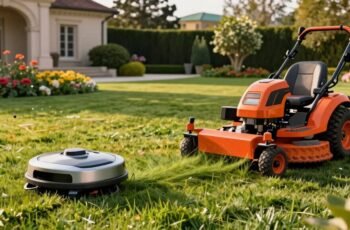
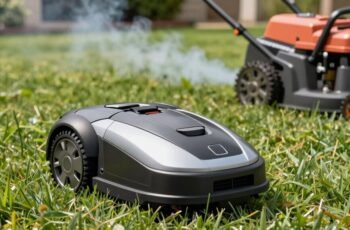
Imagine trusting a robot to keep your lawn tidy while you focus on other tasks—sounds futuristic, but it’s increasingly common. As we compare robot lawn mowers and electric models, it’s clear each has strengths suited to different needs. But which one truly fits your yard, budget, and lifestyle? Understanding their differences can help you make a choice that saves time, effort, and money—yet the right answer isn’t always obvious.
Key Takeaways
- Robot mowers are ideal for small to medium, complex yards; electric mowers suit larger, uneven terrains.
- Robot mowers operate autonomously with sensors and GPS; electric mowers require manual operation and setup.
- Robot mowers have higher upfront costs but lower ongoing maintenance; electric mowers are cheaper initially but may need frequent repairs.
- Both types are eco-friendly, offering reduced noise and emissions, but robot mowers include advanced obstacle detection and safety features.
- Choice depends on yard size, terrain complexity, budget, and preference for automation versus manual mowing.
How Do Robot and Electric Lawn Mowers Work?
Have you ever wondered how robot and electric lawn mowers operate? Robot mowers use sensors and GPS technology to navigate your yard, mapping out the area and avoiding obstacles. They run on rechargeable batteries and are designed to cut grass gradually, often on a scheduled basis. These mowers are smart—they detect boundaries through wires or virtual zones and automatically return to their charging stations when needed. Electric mowers, on the other hand, are typically corded or battery-powered and require you to start them manually. Corded models depend on an extension cord, limiting mobility, while battery-powered electric mowers are more portable and easy to operate. Both types aim to make lawn care easier but do so with different mechanisms and user involvement.
How Do They Perform on Different Yard Sizes and Types?
When it comes to handling different yard sizes and types, robot and electric mowers each have their strengths and limitations. Robot mowers excel in small to medium lawns with flat terrain, navigating tight corners easily. They’re ideal for consistent trimming and adaptive to complex yard layouts. Electric mowers, on the other hand, handle larger areas more efficiently, especially when equipped with wider cutting decks and longer cords or battery life. They perform well on varied terrain, including uneven ground.
| Yard Size | Robot Mower | Electric Mower |
|---|---|---|
| Small to Medium | Excellent for confined spaces | Good, but slower for large areas |
| Large | Limited by battery and size | Better for extensive yards |
| Terrain Type | Best on flat, simple terrain | Handles uneven terrain better |
How Easy Is It to Set Up and Use Your Mower?
Setting up a lawn mower can vary in complexity depending on the type you choose, but generally, robot mowers are designed for simplicity. They often come with straightforward instructions that make installation quick and stress-free. With a few basic steps, you can be ready to go:
- Unbox and place the docking station in a central, accessible area—so your mower has a clear path.
- Set boundary wires around your yard’s perimeter—this takes just minutes and ensures the mower stays within your lawn.
- Schedule or start mowing via an app or control panel—no fuss, no manual pushing.
Compared to electric mowers, which often require cord setup or fuel filling, robot mowers make the process almost effortless.
What Is the Cost of Robot vs. Electric Mowers?
When comparing costs, we look at the initial price and ongoing maintenance expenses for both robot and electric mowers. Robot mowers typically have a higher upfront cost but can save money over time with lower maintenance needs. Electric mowers usually cost less initially but may require more frequent repairs and part replacements.
Initial Purchase Price
Are robot lawn mowers more budget-friendly upfront compared to electric mowers? Not exactly, but they do offer unique value. Typically, robot mowers start at around $1,000, making them a significant initial investment. In contrast, electric mowers usually cost:
- Less than half the price of most robot models, often between $200-$600
- A fraction of gas-powered mowers, saving you money upfront
- More affordable to buy, but potentially costlier over time if you consider maintenance
While the upfront cost of robot mowers is higher, many find the convenience and labor savings justify the expense. Electric mowers, on the other hand, are more accessible but might require more frequent replacements or upgrades down the line.
Long-Term Maintenance Costs
Although robot lawn mowers often have higher upfront costs, their long-term maintenance expenses can vary markedly compared to electric mowers. Robots generally require less regular maintenance but may incur costs for replacing parts like blades or batteries over time. Electric mowers usually need blade sharpening and occasional motor checks, which are less costly but more frequent. Here’s a quick comparison:
| Maintenance Aspect | Robot Mower | Electric Mower |
|---|---|---|
| Blade Replacement | Less often (auto-sharpening) | Regular, as needed |
| Battery Replacement | Every 3-5 years | Not applicable |
| Motor Repairs | Rare | Occasional |
How Durable Are These Mowers and What Maintenance Do They Need?
Robustness is a key factor in determining how well these mowers hold up over time, and both types require regular maintenance to perform ideally. Robot mowers are built to be durable, often with weather-resistant shells, but their electronic parts can be sensitive if not cared for properly. Electric mowers tend to have more straightforward mechanical components, making them easier to maintain and repair. To keep them in top shape, consider these essential steps:
- Regularly clean blades and filters to prevent wear and ensure a clean cut.
- Inspect and tighten any loose parts or connections to avoid breakdowns.
- Replace worn-out blades or batteries when necessary to maintain performance.
With proper upkeep, both mowers can last years and deliver consistent, reliable mowing.
How Convenient Are They for Your Daily Routine?
Both robot and electric mowers are designed to make lawn care more straightforward, but they differ in ease of use and time savings. Robot mowers handle chores autonomously, freeing up our time, while electric mowers require a bit more effort but are quick to operate. Let’s explore how each fits into our daily routines and simplifies yard work.
Ease of Use
When considering ease of use, we find that robot lawn mowers and electric mowers each offer distinct advantages that can streamline your gardening routine. Robot mowers are almost hands-free, allowing you to simply set a schedule and forget about it. They handle the work while you enjoy your free time. Electric mowers, on the other hand, are straightforward to operate—just push a button and start mowing.
Here are three reasons they boost convenience:
- Minimal maintenance—robot mowers self-charge, electric mowers require simple upkeep.
- Quick setup—both are easy to start without complex instructions.
- Less physical effort—no pushing or pulling, making mowing less tiring.
Both options make yard work easier, but in different ways.
Time-Saving Benefits
Because they operate independently once set up, robot lawn mowers and electric mowers save us valuable time in our daily routines. With minimal supervision, we don’t need to spend hours pushing a traditional mower or coordinating mowing schedules. Robots handle the job automatically, allowing us to focus on other tasks or enjoy our free time. Electric mowers, while requiring manual operation, are quicker to start and easier to maneuver than gas-powered models, reducing the time spent mowing. Both options eliminate the need for lengthy prep and cleanup, making yard maintenance less of a chore. Overall, they streamline our outdoor chores, freeing up more time for relaxing or attending to other priorities. Their convenience helps us maintain a tidy lawn without sacrificing precious hours.
Are Robot and Electric Mowers Environmentally Friendly?
Electric and robot mowers are often seen as more environmentally friendly options compared to traditional gas-powered mowers. They produce zero emissions during operation, helping reduce air pollution and greenhouse gases. Plus, they operate quietly, minimizing noise pollution and allowing us to enjoy our outdoor space peacefully. Additionally, they use less energy overall, which can lower our carbon footprint. Here are three reasons why these mowers are eco-friendly:
- No emissions—safer for our planet and local air quality.
- Reduced noise—less disturbance to wildlife and neighbors.
- Lower energy consumption—less strain on natural resources.
What Safety Features Do These Mowers Offer?
Both robot and electric mowers prioritize safety with a range of features designed to prevent accidents and protect users. Robot mowers typically have sensors that detect obstacles, including people, pets, and objects, stopping the blades immediately if something is in their path. Many also include boundary wires or virtual fences to keep them within designated areas. Electric mowers often feature safety switches that require the user to hold a handle or button to operate, shutting off the blades when released. Additionally, blade covers and automatic shut-off systems help prevent injuries. Both types of mowers are designed with safety in mind, reducing risks during operation. However, always following manufacturer instructions and keeping the area clear enhances safety further.
What Smart Features and Connectivity Options Do They Have?
Both robot and electric mowers come with smart features that make lawn care more convenient, like connectivity through apps and remote control options. They also use advanced sensors and navigation systems to efficiently mow around obstacles and cover your yard thoroughly. These features help streamline maintenance and give you more control over your mowing schedule.
Connectivity Features and Apps
Smart connectivity features have become a key differentiator between robot lawn mowers and traditional electric mowers, allowing users to control and monitor their equipment remotely. These features give us peace of mind and convenience, making lawn care effortless. With apps, we can:
- Start or stop mowing sessions from anywhere, ensuring flexibility in our schedules.
- Receive real-time updates and alerts about mower status or issues, keeping us informed and in control.
- Adjust mowing settings and schedules remotely, giving us perfect grass coverage without manual intervention.
These smart integrations not only save time but also reduce stress, giving us confidence that our lawn is always well-maintained. Connectivity features truly transform lawn care into a seamless, effortless experience.
Smart Navigation and Sensors
Have you ever wondered how robot lawn mowers navigate complex yard layouts without human guidance? They use smart navigation and sensors to map out your lawn, avoiding obstacles and ensuring thorough coverage. These mowers employ GPS, boundary wires, and collision sensors to adapt to different terrains and obstacles seamlessly. Some models even learn your yard’s layout over time, improving efficiency. Connectivity options like Wi-Fi allow you to control and monitor your mower remotely via apps, receiving updates and maintenance alerts. Here’s a quick overview:
| Feature | Description |
|---|---|
| GPS & Mapping | Creates detailed maps for precise navigation |
| Collision Sensors | Detect obstacles to avoid damage |
| Remote Control | Manage mower settings via smartphone app |
| Boundary Recognition | Recognizes lawn edges and boundaries automatically |
These smart features make lawn care easier and more efficient.
Which Mower Is the Best Fit for Your Yard and Budget?
Deciding which mower best suits your yard and budget depends on a few key factors. First, consider the size of your lawn: larger yards often benefit from a robot mower’s efficiency, while smaller spaces might be perfect for electric mowers. Second, think about your budget: robot mowers typically cost more upfront but save time, whereas electric mowers are usually more affordable initially. Third, evaluate your terrain: uneven or complex landscapes can challenge robot mowers, making electric models more reliable.
In summary, ask yourself:
- Do I want a low-maintenance, autonomous solution, or a budget-friendly, manual option?
- How large and complex is my yard?
- What’s my willingness to invest upfront versus saving time long-term?
Choosing wisely guarantees a lush yard without breaking the bank.
Frequently Asked Questions
Can Robot and Electric Mowers Handle Uneven or Sloped Terrains?
Yes, many robot and electric mowers can handle uneven or sloped terrains, but performance varies. We recommend checking specific models’ capabilities, ensuring they have adjustable blades and safety features to navigate slopes effectively and maintain safety.
How Quiet Are Robot and Electric Mowers During Operation?
We find that robot and electric mowers are remarkably quiet during operation, making them perfect for peaceful mornings or evenings. They produce minimal noise, allowing us to mow without disturbing neighbors or family members.
Do Robot and Electric Mowers Require Professional Installation?
We find that most robot and electric mowers don’t require professional installation. They’re designed for easy setup, allowing us to connect and program them ourselves, though some models might benefit from professional help for complex yards.
Are Replacement Parts for These Mowers Readily Available?
They say “a stitch in time saves nine,” and replacement parts for robot and electric mowers are usually easy to find. We find most parts online or through authorized service centers, making repairs straightforward and accessible.
How Do Battery Life and Charging Times Compare Between Models?
Battery life varies by model, with some lasting around 60 minutes and others up to several hours. Charging times typically range from 30 minutes to a few hours, depending on the battery capacity and charger efficiency.
Conclusion
So, which mower is truly the right choice for your yard? Whether it’s the cutting-edge convenience of a robot mower or the straightforward reliability of an electric one, the decision isn’t simple. There’s more to evaluate—features, costs, and your yard’s unique needs. Would you dare to go high-tech or keep it simple? Stay tuned, because the perfect mower for you might just be one choice away—ready to transform your lawn care routine forever.