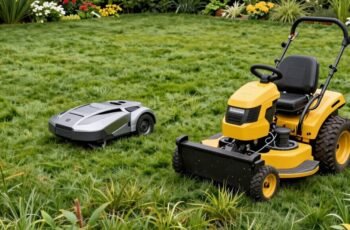
When choosing between a robotic mower and a petrol mower, we recognize that each offers distinct advantages suited to different lawn needs and lifestyles. While robotic mowers promise convenience and eco-friendliness, petrol models deliver power for larger or uneven terrains. Understanding these differences can help you make an informed decision that best fits your yard and priorities. Let’s explore how these options compare in design, performance, and long-term costs to find the ideal fit for your outdoor space.
Key Takeaways
- Robotic mowers are autonomous, quiet, eco-friendly, and ideal for small lawns, while petrol mowers are manual, powerful, suitable for large or uneven terrains.
- Robotic mowers have higher upfront costs but lower ongoing maintenance and fuel expenses compared to petrol models.
- Petrol mowers handle thicker, taller grass and challenging terrains better than robotic mowers.
- Robotic mowers offer enhanced safety features and security, reducing user risk and unauthorized use.
- Petrol mowers produce emissions, noise pollution, and require more physical effort to operate and maintain.
How Do Robotic and Petrol Mowers Differ in Design and Operation?
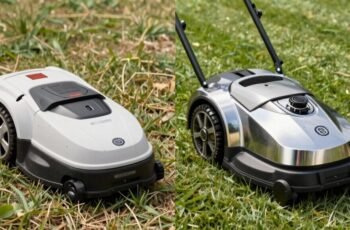
While both robotic and petrol mowers serve the same purpose of cutting grass, their designs and how they operate differ markedly. Robotic mowers are compact, lightweight, and autonomous. They navigate your lawn using sensors, boundary wires, or GPS, and operate quietly without needing a human present. They run on rechargeable batteries, returning to their charging station when the battery runs low. Petrol mowers, on the other hand, are larger, heavier, and require manual operation. They use internal combustion engines fueled by petrol, producing noise and emissions. Petrol mowers need a human to push or guide them across the lawn, making them more labor-intensive. The key difference lies in automation: robotic mowers are self-operating, while petrol mowers demand active human involvement.
Which Mower Is Best for Small, Medium, and Large Lawns?
Choosing the right mower depends heavily on the size of your lawn. For small yards, robotic mowers are ideal—they’re quiet, easy to maintain, and can handle tight spaces effortlessly. Medium lawns benefit from a versatile petrol mower that offers more power and wider cutting paths, making the job quicker. Large lawns, however, usually demand a petrol mower with a robust engine and large cutting deck to cover extensive areas efficiently.
Choose your mower based on lawn size for optimal results and easy maintenance.
Consider these points:
- Small lawns: robotic mowers for convenience and quiet operation
- Medium lawns: petrol mowers for versatility and power
- Large lawns: high-capacity petrol mowers for speed and efficiency
Matching your lawn size with the right mower guarantees better results and easier maintenance.
How Do Robotic and Petrol Mowers Compare in Performance and Cutting Quality?
Robotic and petrol mowers each have distinct strengths when it comes to performance and cutting quality, and understanding these differences can help you choose the right tool for your lawn. Robotic mowers excel in providing consistent, even cuts, thanks to their precise navigation and regular mowing schedule. They tend to create a healthier lawn by avoiding over-trimming and promoting dense grass growth. Petrol mowers, on the other hand, often deliver more power, making them better suited for thicker, taller, or uneven grass. They can handle larger areas quickly and manage tougher terrain. While robotic mowers produce a finely manicured finish, petrol mowers can achieve a more traditional, uniform cut over a broader range of conditions. Your choice depends on your lawn’s specific needs and your desired level of precision.
What Are the Cost Differences Between Robotic and Petrol Mowers?
When comparing costs, we look at the initial purchase price, which for robotic mowers is usually higher upfront. However, their maintenance and operating expenses tend to be lower over time, especially with fewer parts to service. Conversely, petrol mowers often cost less initially but can rack up higher ongoing expenses due to fuel, oil, and parts.
Initial Purchase Cost
The initial purchase cost of robotic mowers is generally higher than that of petrol mowers, making it a key factor for many homeowners. Robotic mowers often come with advanced technology and features, which drive up the price. Petrol mowers, on the other hand, tend to be more affordable upfront but may lack some of the automation benefits. When comparing costs, consider these points:
- Robotic mowers typically cost between $1,000 and $3,000 depending on size and features.
- Petrol mowers usually range from $200 to $800.
- Additional features like GPS navigation or smart app integration can increase robotic mower costs further.
While the initial investment is higher for robotic mowers, their long-term savings and convenience might justify the upfront expense.
Maintenance and Operating Expenses
While robotic mowers typically require a higher upfront investment, their ongoing maintenance and operational costs can differ substantially from petrol mowers. Robotic models usually have lower maintenance needs, mainly requiring periodic blade replacements and software updates, which are relatively inexpensive. They don’t need oil, fuel, or exhaust system repairs, saving money over time. Petrol mowers, on the other hand, consume fuel regularly and require more frequent servicing, including oil changes, spark plug replacements, and engine tune-ups, all adding to ongoing costs. Additionally, petrol mowers tend to have higher repair expenses if parts break down. Overall, while robotic mowers may cost more initially, their lower fuel, maintenance, and repair expenses can make them more economical in the long run.
Which Mower Is More Eco-Friendly: Robotic or Petrol?
When comparing eco-friendliness, we consider emissions, energy use, and noise levels. Petrol mowers produce more pollution and emissions, while robotic mowers tend to be quieter and more energy-efficient. Let’s explore which option minimizes environmental impact best.
Emissions and Pollution
Robotic mowers are generally more eco-friendly than petrol-powered counterparts because they produce zero emissions during operation. Unlike petrol mowers, which release carbon monoxide, nitrogen oxides, and particulate matter, robotic mowers run quietly and cleanly. This considerably reduces air pollution and helps improve local air quality. Additionally, robotic mowers don’t emit greenhouse gases directly, making them a better choice for the environment. They also contribute less noise pollution, which benefits nearby residents and wildlife.
- No direct emissions during use
- Reduced air pollution and greenhouse gases
- Less noise disturbance for surroundings
Energy Consumption Efficiency
Have you ever wondered which mower uses energy more efficiently—robotic or petrol? Generally, robotic mowers are more energy-efficient because they run on rechargeable batteries, which convert electricity directly into power with minimal waste. Petrol mowers, on the other hand, burn fuel, which results in energy loss through heat and emissions. To compare:
| Mower Type | Energy Use |
|---|---|
| Robotic | Uses electricity, more efficient, renewable options available |
| Petrol | Uses gasoline, less efficient, emits CO2 |
Robotic mowers tend to consume less energy overall, especially when powered by renewable sources. Petrol mowers are less eco-friendly due to fuel inefficiency and higher emissions. So, from an energy standpoint, robotic mowers clearly have the advantage.
Noise and Disturbance
Although robotic and petrol mowers both serve the same purpose, their levels of noise and disturbance differ considerably. Robotic mowers operate quietly, often producing sounds similar to a whisper, making them unobtrusive and ideal for peaceful neighborhoods. Petrol mowers, on the other hand, are loud, with noise levels comparable to a lawnmower engine, which can disturb residents and wildlife alike.
- Robotic mowers create minimal noise, allowing for early or late mowing without disturbance.
- Petrol mowers generate loud noise, often requiring restrictions on operating hours.
- Vibration and exhaust fumes from petrol mowers add to environmental noise and air pollution, unlike robotic models.
How Easy Are Robotic and Petrol Mowers to Use and Maintain?
When it comes to ease of use and maintenance, robotic and petrol mowers each present their own challenges. Robotic mowers are generally simple to operate—just set the boundary and schedule, and they handle the rest. Maintenance mainly involves cleaning blades and checking batteries periodically. They require minimal intervention, which makes them convenient. Petrol mowers, on the other hand, demand more effort. Starting them can be tricky, and regular maintenance like oil changes, spark plug replacements, and blade sharpening are necessary to keep them running smoothly. They also tend to be heavier and more cumbersome to handle. Overall, robotic mowers offer a more straightforward, low-maintenance experience, while petrol mowers demand more hands-on attention and effort to keep them in good shape.
What Are the Safety Features and Risks of Each Mower Type?
Robotic and petrol mowers each come with their own safety features and potential risks that users should be aware of. Robotic mowers are equipped with sensors to detect obstacles and prevent collisions, and they often have PIN codes or lock features to prevent unauthorized use. Petrol mowers, on the other hand, have safety switches and blade guards to protect users during operation. However, risks exist with both types. Robotic mowers can malfunction or get stuck, posing a tripping hazard or damage risk. Petrol mowers can cause burns, fires, or injuries if mishandled.
Robotic and petrol mowers have safety features but also pose risks like malfunctions or injuries if not properly handled.
Key safety considerations include:
- Robotic mowers stopping automatically when lifted or tilted
- Use of protective gear when handling petrol mowers
- Proper storage of fuel to prevent leaks or fires
Which Mower Saves More Time and Offers Greater Convenience?
When it comes to saving time and boosting convenience, operating efficiency is key. Robotic mowers typically require less hands-on effort and can work unattended, while petrol mowers need manual operation and regular refueling. We find that ease of use often tips the scale in favor of robotic models for busy schedules.
Operating Time Efficiency
While both robotic and petrol mowers aim to maintain a tidy lawn, robotic mowers excel in saving time through their autonomous operation. They can mow regularly without human intervention, ensuring the lawn stays neat with minimal effort. This continuous, scheduled mowing prevents overgrowth and reduces the need for long, manual sessions. Petrol mowers, on the other hand, require manual effort and time investment each session, especially for larger lawns.
- Robotic mowers operate daily, maintaining an even, healthy lawn effortlessly
- They work during your off hours, saving valuable weekend time
- Petrol mowers depend on user-driven sessions, often leading to longer, less frequent mowings
Ease of Use
Ease of use plays a significant role in determining which mower saves more time and offers greater convenience. Robotic mowers excel here because they require minimal effort from us. Once set up, they operate automatically, guiding the yard and handling mowing on their own. This means we don’t need to push or steer, freeing up our time and reducing physical strain. In contrast, petrol mowers demand more manual effort, including starting, pushing, and maneuvering around obstacles. They also require regular maintenance, fueling, and adjustments, which adds to the effort. For those seeking simplicity and quick setup, robotic mowers offer a clear advantage. They turn mowing into a hassle-free task, allowing us to focus on other priorities while the mower takes care of the grass.
Factors to Consider When Choosing Between Robotic and Petrol Mowers
Choosing between a robotic mower and a petrol mower depends on several key factors that can influence your decision. First, consider your lawn size and terrain. Robotic mowers work best on smaller, flat lawns, while petrol mowers handle larger, uneven areas more easily. Second, think about maintenance and cost. Robotic mowers typically have lower ongoing costs but higher upfront prices, whereas petrol mowers might need more frequent servicing and fuel. Finally, evaluate your environmental priorities and noise tolerance. Robotic mowers are quieter and eco-friendly, while petrol mowers tend to be noisier and produce emissions.
Choose robotic or petrol mowers based on lawn size, maintenance, noise, and environmental preferences.
- Lawn size and terrain suitability
- Budget and maintenance costs
- Noise levels and environmental impact
Making the Right Choice for Your Lawn and Lifestyle
Selecting the right mower ultimately depends on how well it fits your lawn’s needs and your lifestyle. If you have a small, manageable yard and value convenience, a robotic mower could be perfect. It works quietly, requires minimal maintenance, and frees up your time. On the other hand, if you have a larger lawn or uneven terrain, a petrol mower might be more effective, offering power and control. Consider your schedule—if you prefer a hands-off approach, robotics are ideal. But if you enjoy mowing and want flexibility, petrol mowers give you that control. Think about your environmental priorities, budget, and how much effort you’re willing to invest. Ultimately, choosing the right mower means balancing your lawn’s demands with what fits best into your daily routine.
Frequently Asked Questions
How Long Do Robotic and Petrol Mowers Typically Last Before Replacement?
Robotic mowers typically last around 5 to 8 years with proper maintenance, while petrol mowers often last 8 to 10 years or more. We find both require regular care to maximize their lifespan.
Can Robotic and Petrol Mowers Handle Uneven or Hilly Terrain Effectively?
We believe robotic and petrol mowers can handle uneven or hilly terrain quite well when equipped with the right features. Robotic models with adjustable blades and powerful motors, and petrol mowers with good traction, are especially effective.
What Warranty and Customer Support Options Are Available for Each Mower Type?
We find that robotic mowers often come with all-encompassing warranties and responsive customer support, like a reliable lighthouse guiding us through fog. Petrol mowers usually offer robust warranties but may lack the prompt, tech-savvy support robotic models provide.
Are Robotic Mowers Suitable for All Grass Types and Lawn Conditions?
Robotic mowers work well on most grass types and lawn conditions, but we recommend checking compatibility for thicker or uneven terrains. They’re great for convenience, but some complex landscapes might need traditional mowing methods for the best results.
How Do Maintenance Costs Compare Over the Mower’s Lifespan?
We find robotic mowers generally have lower maintenance costs over their lifespan compared to petrol mowers. They require less frequent repairs, no oil changes, and minimal upkeep, making them more cost-effective and easier to maintain long-term.
Conclusion
Ultimately, whether we choose a robotic or petrol mower depends on our lawn size, needs, and values. It’s interesting how the quiet efficiency of a robotic mower might fit perfectly with our eco-conscious approach, while the raw power of petrol models could match our outdoor ambitions. Sometimes, it’s the little details—like noise levels or maintenance—that tip the scale. Whichever we pick, it’s satisfying to find a solution that makes lawn care feel like a natural extension of our lifestyle.