When it comes to maintaining small to medium lawns, we often consider whether a robot mower can truly replace a traditional ride-on mower. While robot mowers offer precise trimming and require less effort, they also come with limitations that might affect your decision. Understanding the differences in performance, features, and costs can help determine if they’re the right fit for your yard—so, let’s explore what makes each option unique.
Key Takeaways
- For large, uneven, or hilly terrains, ride-on mowers provide more power and coverage than most robot mowers.
- Multi-zone or hybrid solutions combining robot mowers with other equipment can effectively replace ride-on mowers.
- Battery-powered, self-propelled walk-behind mowers are suitable for medium to large lawns with complex terrain.
- Commercial-grade robotic or autonomous mowers designed for extensive areas can serve as ride-on mower alternatives.
- Consider professional landscape services or tractor-based mowers for expansive, challenging terrains beyond robot mower capabilities.
How Do Robot Mowers Compare to Ride-On Mowers in Performance?
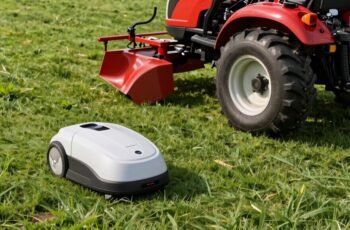
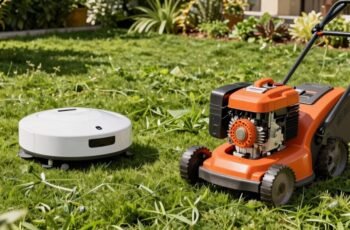
When comparing robot mowers to ride-on mowers in performance, it’s clear that each has its strengths depending on the lawn size and terrain. Robot mowers excel on small to medium lawns, providing consistent, precise cutting without manual effort. They navigate around obstacles with ease, maintaining a neat appearance over time. However, they may struggle on uneven or very large terrains, where their limited power and battery life can be restrictive. Ride-on mowers, on the other hand, handle bigger lawns quickly and efficiently, especially on uneven or hilly terrain. They offer more cutting power and capacity for larger areas, but require manual operation and regular maintenance. Overall, the choice depends on your lawn’s size, terrain, and how much time you’re willing to spend on upkeep.
What Features Matter Most When Choosing a Robot Mower?
Choosing the right robot mower hinges on understanding which features will best meet your lawn’s needs. First, consider the mower’s cutting width and height adjustments to guarantee it can handle your lawn size and terrain. Battery life and charging time are vital—longer runtimes mean less frequent interruptions. Safety features like obstacle detection and auto-shutdown are essential for peace of mind. Noise levels matter if you prefer a quieter operation, especially in shared spaces or early mornings. Some models offer GPS navigation for precise coverage, while others include smart app controls for easy scheduling. Durability and weather resistance also play a role, so your mower can work efficiently in different conditions. Prioritizing these features helps you choose a mower that’s reliable, efficient, and suited to your yard.
Are Robot Mowers a Cost-Effective Solution for Your Lawn?
Robot mowers can be a cost-effective solution for maintaining your lawn, especially when you consider their long-term savings on labor, fuel, and maintenance. Unlike ride-on mowers, they don’t require a hired gardener or regular trips to the gas station, which adds up over time. Their electric motors run quietly and efficiently, reducing energy costs compared to traditional gas-powered machines. Maintenance is minimal—mostly just blade replacements and occasional cleaning—saving you both money and time. Additionally, because robot mowers trim small sections consistently, they promote healthier grass growth, potentially reducing the need for fertilization or overseeding. While the initial investment might seem high, the ongoing savings in labor, fuel, and upkeep can make robot mowers a financially smart choice for many homeowners.
Getting Started: Setting Up and Maintaining Your Robot Mower
Getting started with your robot mower involves a few key steps to guarantee it operates smoothly and safely. First, place the charging station in a flat, shaded area with easy access to the lawn’s edges. Next, remove any debris, rocks, or sticks from the mowing area to prevent jams or damage. Before turning it on, confirm the blades are securely attached and the battery is fully charged. Once powered up, set the mowing schedule and boundaries using the provided app or control panel. Regular maintenance is essential; clean the blades and check for grass buildup after each use. Periodically inspect the wheels and sensors, replacing parts as needed. Proper setup and routine upkeep keep your robot mower running efficiently and prolong its lifespan.
Will Your Lawn Size and Terrain Work With a Robot Mower?
While robot mowers are versatile, their effectiveness depends heavily on your lawn’s size and terrain. They work best on flat, open spaces up to a certain size, usually around half an acre or less. If your yard is very large, the mower might need multiple charging stations or may take longer to complete the job. Hilly or uneven terrain can pose challenges, as some models struggle with slopes over 20-30%. Obstacles like trees, flower beds, or tight corners can also hinder performance unless the mower has advanced boundary sensors or mapping features. Overall, for small to medium, relatively flat lawns, a robot mower can be an excellent, low-maintenance alternative. But if your yard is complex or expansive, it’s worth evaluating whether a robot mower fits your specific landscape.
Frequently Asked Questions
How Long Do Robot Mowers Typically Last Before Needing Replacement?
Robot mowers typically last around 2 to 8 years before needing replacement, depending on usage, maintenance, and model quality. We recommend regular upkeep and choosing reputable brands to maximize their lifespan and performance.
Can Robot Mowers Handle Uneven or Hilly Terrains Effectively?
A picture is worth a thousand words, and yes, robot mowers can handle uneven or hilly terrains effectively. We’ve seen them adapt well, making them a reliable alternative for challenging lawns, just like a skilled mountain climber.
What Safety Features Do Robot Mowers Include to Prevent Accidents?
Robot mowers include safety features like obstacle detection, lift sensors, and boundary wires that stop blades when lifted or encountering objects, helping prevent accidents and ensuring safe operation around people, pets, and obstacles.
Are Robot Mowers Suitable for All Grass Types and Textures?
They say “the grass is always greener,” and we believe robot mowers suit most grass types, adapting well to various textures. However, thick or uneven lawns might need manual care or specialized equipment for ideal results.
How Do Robot Mowers Perform in Different Weather Conditions?
Robot mowers handle various weather conditions well, but heavy rain or snow can challenge their performance. We recommend avoiding mowing during extreme weather to prevent damage, ensuring peak operation and longevity for your robot mower.
Conclusion
In the end, choosing between a robot mower and a ride-on is like selecting the right brush for a masterpiece. Each has its rhythm—one whispers quietly across the lawn, the other commands power through larger fields. We believe the right fit depends on your landscape’s dance. So, tune into your lawn’s needs, and let your choice be the steady beat that keeps your yard beautifully in step, effortless and evergreen.