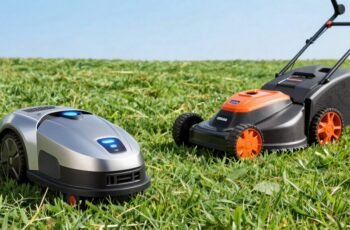
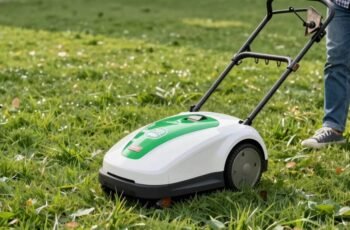
When it comes to maintaining our lawns, choosing between a robot mower and a self-propelled model can substantially impact our time and effort. Both options have their advantages and limitations, depending on the size and terrain of our yard. We want a solution that balances convenience, cost, and performance, but making the right choice isn’t always straightforward. Let’s explore how these mowers compare and how to select the best fit for your outdoor space.
Key Takeaways
- Robot mowers offer automated, hands-free operation ideal for small, flat lawns, while self-propelled mowers require manual guiding suitable for larger, uneven terrain.
- Self-propelled mowers generally have higher power and are better suited for tough, overgrown grass, unlike robot mowers that handle light, regular grass.
- Robot mowers typically have higher initial costs but lower ongoing maintenance, whereas self-propelled models are cheaper upfront but cost more over time.
- Both mower types feature safety features and boundary settings; robot mowers use boundary wires or virtual zones, while self-propelled models rely on sensors.
- Choice depends on lawn size, terrain, desired automation level, budget, and maintenance preferences for optimal yard management.
What Are Robot Mowers and Self-Propelled Mowers?
While both robot mowers and self-propelled mowers are designed to make lawn care easier, they operate quite differently. Robot mowers are autonomous devices that cut grass independently, using sensors and boundary wires to navigate your yard. They work quietly and can run on a schedule, requiring minimal human intervention. Self-propelled mowers, on the other hand, are traditional push mowers equipped with a motor that powers the wheels, making it easier to maneuver compared to push mrollers. These mowers still need a person to operate them, guiding them across the lawn. While robot mowers handle the job automatically, self-propelled mowers offer more control, especially for larger or more complex lawns. Both types aim to reduce effort but differ markedly in operation and convenience.
How Do These Mowers Work? An Easy Explanation
Understanding how these mowers work helps us see their differences clearly. Robot mowers operate autonomously, using sensors, boundary wires, and GPS to navigate your lawn. They cut grass gradually, moving around obstacles and returning to their charging stations when needed. You set a schedule, and they do the work quietly and consistently. Self-propelled mowers, on the other hand, are manually guided. They have engines, wheels, and cutting blades, and you push or drive them across your lawn. These mowers rely on your control, making them suitable for larger or more complex terrains where precise navigation is needed. Both types cut grass, but robot mowers do it automatically, while self-propelled mowers require your active involvement. Knowing their mechanics helps us choose the right mower for our needs.
Which Mower Is Easier to Use: Automation or Manual Control?
Deciding which mower is easier to use depends largely on how much hands-on effort we’re willing to put in. Robot mowers are incredibly convenient—they require minimal input once set up. Just program a schedule, and they handle the mowing automatically, saving us time and physical effort. On the other hand, self-propelled mowers need manual control, which means pushing or guiding them during operation. This gives us more direct control but demands more physical effort and attention, especially on uneven terrain or tricky areas. For those who prefer a set-it-and-forget-it approach, automation wins hands down. But if we like being involved in the mowing process or need precise control, manual control of a self-propelled mower might feel more straightforward. Ultimately, ease of use depends on our preferences and physical capabilities.
Power and Cutting Performance: How Do They Handle Tough Grass?
When it comes to handling tough grass, the power and cutting performance of a mower are essential factors. Robot mowers generally have smaller motors, which might struggle with dense or thick grass, especially on uneven terrain. They excel with lighter, regular grass but can falter when faced with more challenging patches. Self-propelled mowers, on the other hand, typically feature more robust engines and larger blades, giving them a clear advantage in cutting through tough, overgrown grass. Their ability to handle high-density growth makes them suitable for neglected lawns or areas with stubborn weeds. Overall, for thick or challenging grass, self-propelled mowers usually deliver superior power and more consistent, cleaner cuts compared to robot mowers.
Robot vs. Self-Propelled Mowers: Cost and Long-Term Value
While robot mowers often come with a higher upfront cost, they can offer significant savings over time due to lower maintenance and operational expenses. They don’t require gas, oil changes, or frequent tune-ups, which reduces ongoing costs. Additionally, their quiet operation means you won’t pay extra for noise mitigation. Self-propelled mowers might be cheaper initially but typically need more maintenance, fuel, and occasional repairs, adding up over years. Robot mowers also tend to last longer, thanks to their durable components designed for continuous use. Over the long term, the automatic features of robot mowers save time and effort, making them a cost-effective choice for busy homeowners. Ultimately, investing in a robot mower can pay off through lower recurring expenses and increased convenience.
What Yard Sizes and Conditions Suit Each Mower Type?
The size and condition of your yard play a crucial role in determining which mower type is best suited for your needs. For smaller, flat lawns, a robot mower is ideal. It handles repetitive mowing efficiently and keeps the grass even without much effort from you. If your yard has uneven terrain, slopes, or obstacles like trees and flower beds, a self-propelled mower may be better. These mowers offer more power and control, making them suitable for larger, more complex landscapes. Additionally, if your yard is particularly large—say over half an acre—a robot mower’s autonomy can save time, but you might need multiple units or a hybrid approach. Ultimately, understanding your yard’s size and terrain helps you choose the mower that will work most effectively and efficiently.
Maintenance Needs and Durability: What to Expect
Maintaining your mower’s performance and ensuring its longevity requires understanding their specific needs. Robot mowers generally need less maintenance—primarily blade sharpening, cleaning sensors, and occasional software updates. They’re built for durability, with many weather-resistant features, but regular checks help prevent issues. Self-propelled mowers demand more upkeep: oil changes, air filter replacements, and blade sharpening are routine. They tend to be more robust but may suffer wear and tear faster depending on usage and terrain. Both types benefit from keeping them clean and inspecting parts regularly. Overall, robot mowers require less frequent attention, making them more convenient long-term. Self-propelled mowers, while more involved to maintain, often last longer with proper care. Understanding these needs helps you plan maintenance and maximize your mower’s lifespan.
What Safety Features Do These Mowers Offer?
Both robot and self-propelled mowers come with safety features like obstacle detection systems that prevent collisions and emergency stop functions that instantly shut down the mower if needed. Boundary and zone settings let us control where the mower can operate, reducing risks in restricted areas. These features help keep lawn care safe for everyone around the mower.
Obstacle Detection Systems
Obstacle detection systems are essential safety features that prevent mower accidents by allowing the machines to sense and respond to their surroundings. These systems typically use sensors like infrared, ultrasonic, or cameras to detect objects nearby. When an obstacle is identified, the mower adjusts its path or stops entirely, avoiding collisions. This technology is particularly useful in cluttered yards or areas with pets and children.
| Feature | Benefit |
|---|---|
| Infrared sensors | Detects objects ahead quickly |
| Ultrasonic sensors | Senses obstacles at various distances |
| Camera systems | Provides visual awareness for precise navigation |
Emergency Stop Functions
Have you ever wondered what happens if your mower encounters a sudden hazard or malfunction? Both robot and self-propelled mowers include emergency stop functions to guarantee safety. Robot mowers typically have a quick-stop button or sensors that trigger an automatic shutdown when they detect obstacles or unusual activity. Some models also feature remote control stop buttons for immediate halting. Self-propelled mowers usually come with a safety lever or switch that stops the blades and engine when released or activated. These features help prevent accidents, protect users, and minimize damage to the mower. Overall, emergency stop functions are essential safety features, providing peace of mind while working in your yard. They guarantee a quick response to unexpected hazards, keeping everyone safe.
Boundary and Zone Settings
Boundary and zone settings are key safety features that help prevent accidents and keep your mower within designated areas. These settings allow us to define precise boundaries around your yard, ensuring the mower doesn’t wander into unwanted zones, like flower beds or walkways. With boundary wires or virtual perimeter systems, both robot and self-propelled mowers can stay contained, reducing the risk of damage or injury. Zone settings let us assign specific mowing tasks to different areas, enhancing safety by controlling where the mower operates. Many models also include sensors that detect nearby objects or drop-offs, automatically stopping the mower if a safety risk is identified. Overall, these features give us peace of mind, knowing your mower is safely confined and operating only where you want it to.
Which Mower Saves More Time and Offers Greater Convenience?
When comparing the time and convenience offered by robot mowers and self-propelled mowers, it’s clear that automation plays a key role. Robot mowers operate independently, trimming your lawn daily without your intervention, which saves significant time and effort. You set a schedule, and they handle the rest, meaning you don’t need to push or steer them. In contrast, self-propelled mowers require manual operation, which can be labor-intensive and time-consuming, especially for larger lawns. While self-propelled mowers offer more control and faster cutting for big areas, they still demand your active involvement. Overall, robot mowers provide greater convenience through automation, freeing up your time and reducing physical effort, making lawn care less of a chore.
How to Choose the Right Mower for Your Lawn: Key Factors
Choosing the right mower depends on several key factors that match your lawn’s size, terrain, and your personal preferences. First, consider your lawn size: smaller yards usually need a lightweight, easy-to-manoeuvre mower, while larger lawns benefit from a mower with extended battery life or cutting capacity. Terrain plays a role too—hilly or uneven ground might require a self-propelled model with good traction, whereas flat terrain can work with simpler designs. Think about your preferred mowing style; if you want minimal effort, a robot mower offers convenience, but if you prefer control, a self-propelled mower might be better. Finally, factor in storage space, budget, and maintenance requirements to choose a mower that fits your needs perfectly.
Frequently Asked Questions
Can Robot Mowers Handle Uneven or Sloped Terrain Effectively?
Robot mowers can handle uneven or sloped terrain, but their effectiveness depends on the model’s design and features. We recommend choosing one with adjustable blades and sturdy wheels to guarantee it navigates slopes safely and efficiently.
Are Self-Propelled Mowers Suitable for Very Large or Complex Lawns?
We believe self-propelled mowers are up to the task for very large or complex lawns, but they’re not a one-size-fits-all solution. You gotta weigh their capabilities against your lawn’s unique challenges.
How Do Weather Conditions Affect the Performance of Each Mower Type?
Weather impacts both mowers—wet conditions can cause slipping, clogging, or uneven cuts. Robots handle light rain better but struggle with heavy moisture, while self-propelled mowers perform well in various weather, though muddy terrain can hinder both.
What Are the Environmental Impacts of Using Robot Versus Self-Propelled Mowers?
Using robot mowers generally reduces emissions and noise pollution, making them eco-friendlier than self-propelled mowers, which often rely on gas and produce more pollution. We believe robots promote a greener, quieter lawn care option.
Which Mower Type Offers Better Compatibility With Smart Home Systems?
We find that robot mowers offer better compatibility with smart home systems because they often connect via Wi-Fi or Bluetooth, allowing us to control and schedule mowing remotely, unlike self-propelled mowers, which lack integrated smart technology.
Conclusion
Choosing between a robot mower and a self-propelled one is like picking the right tool for a job—each has its own strengths. If you want effortless, quiet maintenance, a robot mower is your loyal, silent partner. For tougher terrain and more control, a self-propelled mower is your rugged companion. By weighing your lawn’s needs, you’ll find the perfect match that keeps your yard looking sharp and your life easier.