Did you know that robotic mowers can reduce lawn maintenance time by up to 70%? As homeowners, we often seek efficient solutions that fit our yard’s unique needs, but choosing the right model can be complex. Factors like yard size, terrain, and budget all play a role. Understanding these differences is essential to making a smart investment. Let’s explore what options are available and how to find the best fit for your lawn.
Key Takeaways
- Match mower features like battery life, cutting capacity, and navigation to your yard size for optimal efficiency.
- Compare safety features and obstacle sensors to ensure secure operation around plants, pets, and children.
- Evaluate maintenance needs, warranty coverage, and user reviews for long-term reliability and support.
- Consider smart mapping and scheduling options for convenience in managing multiple zones or varied terrain.
- Determine budget and overall investment value by balancing initial costs with features suited to your lawn size and needs.
What Are Robotic Mowers and How Do They Work?
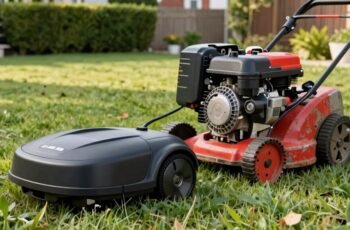
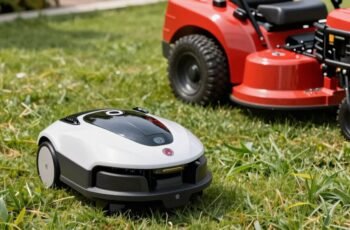
Robotic mowers are automated devices designed to cut grass without human intervention, making lawn maintenance easier and more efficient. These compact machines use a combination of sensors, boundary wires, and navigation systems to operate within designated areas. Once set up, they automatically mow your lawn in a systematic pattern, ensuring even cutting. Most models are equipped with rechargeable batteries, returning to their charging stations when power runs low. They feature safety sensors to avoid obstacles and prevent accidents, stopping if they detect something in their path. With programmable schedules, we can customize mowing times to fit our routines. Overall, robotic mowers simplify lawn care by working quietly in the background, maintaining a neat, healthy lawn with minimal effort from us.
Key Factors to Consider When Choosing a Robotic Mower
When choosing a robotic mower, it’s essential to take into account several key factors to guarantee you select the right model for your lawn. First, consider the lawn size; some mowers handle large areas better, while others suit smaller yards. Next, think about the mower’s cutting height and pattern, which affect the overall look of your grass. Battery life is also critical; longer-lasting batteries reduce charging interruptions. Additionally, features like obstacle detection and boundary setup improve efficiency and safety. Finally, evaluate maintenance needs and warranty coverage to avoid future hassles.
| Factor | Importance | Example Consideration |
|---|---|---|
| Lawn Size | Compatibility | Large yard needs longer battery life |
| Cutting Features | Lawn appearance | Adjustable height, pattern options |
| Battery Life | Usage duration | Sufficient for your yard size |
| Safety & Navigation | Ease of use and safety | Obstacle sensors, boundary wiring |
| Maintenance & Warranty | Longevity and support | Easy access to repairs, warranty length |
Which Robotic Mower Is Best for Your Yard Size?
Ever wonder which robotic mower is best suited for your yard size? The right choice depends heavily on the area you need to cover. For small lawns under 1/4 acre, compact models with simple features work well and are budget-friendly. Medium-sized yards between 1/4 and 1 acre benefit from models with larger battery capacities and more advanced navigation. For large properties over an acre, you’ll want a mower with robust power, multiple zones, and efficient coverage capabilities.
Choose the right robotic mower based on your yard size for optimal coverage and efficiency.
- Smaller yards require basic models with straightforward navigation
- Medium yards benefit from models with smart mapping and scheduling
- Large yards need heavy-duty mowers with extended battery life and zone management
How Battery Life and Cutting Capabilities Affect Performance
A key factor in choosing the right mower is understanding how battery life and cutting capabilities influence overall performance. Longer battery life means the mower can cover larger areas without frequent recharges, reducing downtime and frustration. Cutting capabilities determine how well the mower handles different grass types and terrain, affecting the lawn’s appearance and health. If a mower’s blade sharpness and cutting height aren’t suited to your yard, you’ll see uneven patches and overgrown areas. Here’s a quick look at how these factors impact performance:
| Battery Life | Cutting Capabilities | Emotional Impact |
|---|---|---|
| Longer runtime, less worry | Precise, even cuts | Confidence in a perfect lawn |
| Frequent recharges, delays | Handles diverse grass types | Satisfaction in beauty |
| Larger yards, better coverage | Adjusts to terrain easily | Pride in a well-maintained yard |
Top Robotic Mower Brands and Models Compared
We’re excited to compare the leading brands and their most popular models, so you can find the best fit for your lawn. By examining their key features and differences, we’ll help you make an informed decision. Let’s start by highlighting what sets each brand apart and what their models offer.
Popular Brands Overview
When choosing a robotic mower, understanding the top brands and their key models can help you make an informed decision. Leading brands like Husqvarna, Worx, and Robomow offer reliable options with varying features suited for different lawn sizes. Husqvarna is known for durability and advanced technology, making it popular among homeowners with larger yards. Worx provides budget-friendly models with user-friendly controls, ideal for small to medium lawns. Robomow emphasizes strong cutting power and innovative design, appealing to those seeking high performance.
- Brand reputation and customer reviews
- Warranty and after-sales support
- Compatibility with smart home systems
Model Features Comparison
To select the best robotic mower, it’s essential to compare the features of top models from leading brands. We look at cutting width, battery life, and navigation systems to understand each mower’s capabilities. Some models offer multi-zone programming, allowing users to customize mowing schedules for different areas. Others feature sensors that detect obstacles, preventing collisions and ensuring safety. Cutting height adjustability varies, giving homeowners control over grass length. Connectivity options, like smartphone control and app integration, enhance convenience. Additionally, some models include weather sensors that adapt mowing schedules based on rain or humidity. By examining these features side by side, we can identify which mower aligns best with your lawn size, terrain, and lifestyle, helping you make an informed, confident decision.
Tips for Maintaining and Troubleshooting Your Robotic Mower
Maintaining and troubleshooting your robotic mower is essential to guarantee it runs smoothly and lasts longer. Regular care ensures peak performance and helps catch issues early. Keep the blades sharp for clean cuts and better efficiency, and check for debris or dirt buildup that can hinder movement. Confirm the charging station is clean and properly connected to prevent power issues. If your mower isn’t operating correctly, consult the user manual for troubleshooting tips before calling support.
- Regularly inspect and replace blades as needed
- Clean sensors and charging contacts to ensure proper operation
- Check for obstructions or tangled grass that could block movement
Is Investing in a Robotic Mower Worth It for Your Lawn?
Have you ever wondered if investing in a robotic mower is truly worth it for your lawn? It depends on your yard size, budget, and lifestyle. Robotic mowers excel in maintaining consistent grass height, saving time, and reducing manual effort. They’re ideal for small to medium lawns but may struggle with uneven terrain or tall grass. To help you decide, here’s a quick comparison:
| Feature | Traditional Mower | Robotic Mower | Cost |
|---|---|---|---|
| Maintenance | Regular upkeep | Minimal | Higher initial |
| Time Savings | Limited | Significant | Moderate |
| Lawn Quality | Variable | Consistent | Varies |
If you value convenience and a well-kept lawn, a robotic mower can be a worthwhile investment.
Frequently Asked Questions
Can Robotic Mowers Handle Uneven or Hilly Terrain?
Yes, robotic mowers can handle uneven or hilly terrain, but not all models are suitable. We recommend choosing ones with adjustable height settings and strong wheels for better traction and stability on challenging slopes.
Are Robotic Mowers Safe for Children and Pets?
Like the fairy tale of the safe, enchanted forest, we believe robotic mowers are generally safe for children and pets. They have sensors and safety features that stop the blades if something’s in their way, ensuring everyone stays protected.
How Do Robotic Mowers Perform in Different Weather Conditions?
Robotic mowers handle various weather conditions well, but heavy rain can disrupt their operation and cause damage. We recommend monitoring them during storms and avoiding mowing in wet, slippery conditions for ideal performance and safety.
What Is the Typical Lifespan of a Robotic Mower?
We find robotic mowers typically last around 3 to 8 years, depending on diligent upkeep and conditions. Durability, design, and daily duty determine their lifespan, and proper maintenance makes these mechanical marvels last longer and work wonders.
Do Robotic Mowers Require Professional Installation?
Robotic mowers generally don’t require professional installation; most are designed for easy setup by homeowners. We recommend following the manufacturer’s instructions carefully, but many find installation straightforward and manageable without needing expert help.
Conclusion
In the garden of homeownership, a robotic mower is like a loyal gardener tending your lawn with tireless precision. With the right model, your yard transforms into a lush, emerald canvas, free from manual labor. It’s an investment that waters your peace of mind and sprinkles convenience into your daily routine. So, let’s embrace this high-tech helper—turning your outdoor space into a vibrant, worry-free paradise that blooms effortlessly under its watchful, automated care.