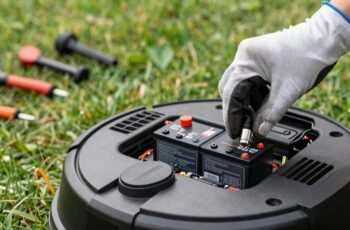
As we evaluate robotic mowers for uneven terrain, it’s clear that their performance depends heavily on advanced features like terrain-adaptive suspension and sensor-driven adjustments. While some models can handle moderate bumps and dips, challenging surfaces with steep slopes or dense vegetation pose significant hurdles. Understanding these limitations and the specific hardware requirements is essential for ideal operation, prompting us to contemplate whether current technology truly meets all terrain challenges or if further innovations are needed.
Key Takeaways
- Many robot mowers are equipped with terrain-adaptive suspension and large, deep-tread wheels for better stability on uneven surfaces.
- Sensors and onboard processors analyze terrain data to adjust movement and maintain stability over irregular grounds.
- Proper yard preparation, like leveling high spots and filling low areas, improves mower performance on uneven terrain.
- Mechanical features such as independent wheel suspension and active shock absorption help navigate bumpy or irregular surfaces.
- For complex or steep terrains, professional assessment and potential hardware upgrades ensure safe and effective operation.
How Do Robotic Mowers Navigate Uneven Terrain?
Robotic mowers rely on a combination of advanced sensors and intelligent algorithms to effectively navigate uneven terrain. These sensors include gyroscopes, accelerometers, and ultrasonic or infrared distance detectors, which provide real-time data about the ground’s topography and obstacles. The mower’s onboard processor analyzes this information to determine the safest and most efficient path, adjusting movement to avoid steep inclines or irregular surfaces. Algorithms incorporate terrain mapping and adaptive route planning, enabling the mower to recognize and respond to changes in ground elevation. This integration of sensor input and computational logic allows the mower to maintain stability, avoid obstacles, and optimize coverage on uneven grounds. Such a system guarantees reliable operation, minimizing the risk of tipping or getting stuck.
What Features Make a Robotic Mower Suitable for Bumpy Grounds?
To effectively handle bumpy grounds, robotic mowers benefit from terrain-adaptive suspension systems that maintain stability over irregular surfaces. Adjustable cutting height guarantees consistent grass trim despite uneven terrain, while robust wheel designs provide necessary traction and durability. Together, these features enable robotic mowers to operate reliably on challenging, uneven landscapes.
Terrain-Adaptive Suspension System
Because uneven terrain can considerably challenge a mower’s stability and cutting efficiency, a terrain-adaptive suspension system becomes essential for robotic mowers designed for bumpy grounds. This system dynamically adjusts to ground irregularities, maintaining consistent contact with the surface and preventing tipping or uneven cutting. Key features include:
- Active shock absorption that responds to terrain variations in real-time, minimizing vibrations.
- Independent wheel suspension allowing each wheel to adapt independently, enhancing stability over obstacles.
- Sensor-driven adjustments that detect ground contours and modify suspension parameters accordingly.
These features collectively improve traction, stability, and cutting precision, ensuring the mower maintains ideal performance on challenging terrains. A well-designed suspension system is critical for extending operational capability and reducing maintenance needs on uneven ground.
Adjustable Cutting Height
Adjustable cutting height features play an essential role in enabling robotic mowers to perform effectively on uneven terrain. This functionality allows the mower to adapt its blade position to varying ground levels, preventing scalping or gouging. Precise height adjustment mechanisms, often employing step or continuous settings, provide flexibility for different grass conditions and terrain contours. A robust adjustment system guarantees consistent cutting performance, even on bumpy ground, by compensating for surface irregularities. Additionally, quick and easy adjustment controls enable users to modify the cutting height as needed, maintaining ideal grass health. Overall, a well-designed adjustable height system enhances the mower’s ability to navigate uneven terrain efficiently, ensuring a uniform cut while minimizing mechanical strain or damage.
Robust Wheel Design
Robust wheel design is critical for robotic mowers operating on bumpy terrain, as it directly influences stability, traction, and maneuverability. Features such as large diameter wheels, deep tread patterns, and shock-absorbing suspension systems enable the mower to navigate uneven ground effectively. Large wheels distribute weight more evenly, reducing sinking or tipping, while deep treads improve grip on loose or slippery surfaces. Shock absorbers or suspension components absorb impacts from irregular terrain, maintaining consistent contact with the ground and preventing slippage. Additionally, wheel articulation allows for better adaptation to surface contours. These design elements work synergistically to guarantee consistent operation, minimize terrain-related disruptions, and extend the mower’s functional lifespan in challenging environments.
Can Different Lawn Types Affect a Robot Mower’s Performance on Uneven Ground?
Different lawn types, including variations in grass density, soil composition, and root systems, can considerably influence a robot mower’s ability to navigate uneven terrain. Denser grass and compacted soils may hinder movement and cutting efficiency, while diverse root structures can create unpredictable surface irregularities. Analyzing these factors helps determine how lawn characteristics impact mower performance on uneven ground.
Grass Density and Thickness
The density and thickness of grass can considerably influence a robot mower’s ability to navigate uneven terrain effectively. Thicker, denser lawns present more resistance, which can strain the mower’s cutting system and affect traction. Increased grass height and density can lead to uneven power distribution, making it harder for the mower to maintain stability on slopes. Additionally, dense grass can clog sensors and blades, reducing efficiency and increasing maintenance needs.
- Resistance increases as grass density rises, impacting motor load.
- Thicker grass height can cause uneven cutting and strain on blades.
- Dense lawns may hinder sensor accuracy, affecting navigation precision.
Understanding these factors helps optimize mower performance and guarantees effective handling of uneven ground across various grass types.
Soil Composition Impact
Soil composition directly influences a robot mower’s ability to steer uneven ground by affecting ground stability and traction. Softer, loamy soils may cause the mower to sink or lose grip, while compacted, clay-rich soils provide better support but can create harder obstacles. The following table summarizes soil types and their impact:
| Soil Type | Effect on Mower Performance |
|---|---|
| Loamy | Reduced traction; risk of sinking |
| Clay-rich | Increased stability; harder surface |
| Sandy | Low cohesion; difficult traction |
Understanding these variations helps optimize mower operation, ensuring the machine maintains stability and grip while steering diverse soil conditions effectively. Proper soil assessment is crucial for consistent performance on uneven terrain.
Root System Variations
Variations in root systems across different lawn types markedly influence a robot mower’s ability to navigate uneven ground. Deep, extensive roots tend to stabilize soil, creating a relatively even surface, whereas shallow or fibrous roots often cause surface irregularities. These differences directly impact mower performance, especially on slopes or uneven terrain. Shallow-rooted lawns, such as those with sandy or compacted soils, generate more surface undulations, challenging mower stability and traction. Alternatively, lawns with well-established, deep root systems tend to provide a more uniform terrain, facilitating smoother navigation.
- Shallow roots increase surface unevenness, leading to more frequent terrain obstacles.
- Deep roots offer enhanced soil stability, reducing ground irregularities.
- Variations in root density influence soil compaction and surface consistency.
Tips for Preparing Your Yard to Help Robot Mowers Handle Bumps and Dips
Preparing your yard for a robot mower involves addressing uneven terrain to guarantee peak performance and longevity. First, conduct a detailed survey of the landscape, identifying significant bumps and dips that could impede mower movement or cause mechanical strain. Level out high spots using soil grading techniques or by removing excess material, and fill low areas with appropriate soil or compost to create a more consistent surface. Assure that slopes do not exceed the mower’s specified incline limit, as excessive angles can reduce stability and cutting efficiency. Additionally, install physical barriers or boundary wires to prevent the mower from venturing onto unstable or overly uneven sections. These steps optimize the mower’s ability to operate smoothly, reducing wear and minimizing the risk of mechanical failure caused by terrain irregularities.
When Should You Consider Upgrading or Adjusting Your Robotic Mower?
Regularly evaluating your robotic mower’s performance is essential to guarantee it continues operating efficiently on your modified terrain. If you notice persistent cutting inefficiencies, increased battery drain, or frequent obstructions, it’s time to consider upgrading or adjusting your mower. These indicators suggest that current equipment may lack the capacity for terrain variability or terrain adaptation features.
Key factors include:
- Performance degradation in uneven or complex terrain
- Inability to navigate or trim certain areas effectively
- Increased maintenance needs due to excessive strain
Adjustments such as recalibrating sensors, updating firmware, or changing boundary wires can address minor issues. However, significant terrain changes or persistent problems often require hardware upgrades, such as more powerful motors, adaptive blades, or enhanced ground clearance, to maintain ideal mowing performance.
Common Challenges Robotic Mowers Face on Uneven Surfaces
Uneven surfaces pose significant obstacles for robotic mowers, often compromising their efficiency and reliability. These terrains create challenges such as inconsistent cutting height, increased risk of tipping, and motor strain. When a mower encounters slopes exceeding its design limits, it may lose traction or fail to navigate effectively. Additionally, uneven ground can interfere with sensor accuracy, leading to navigation errors or missed patches. Debris and hidden obstacles tend to become more problematic on irregular terrain, increasing the likelihood of clogs or mechanical damage. Furthermore, the added strain on motors and blades accelerates wear, reducing overall lifespan. These issues highlight the importance of understanding the limitations of robotic mowers and ensuring they are matched appropriately to the terrain’s complexity for ideal performance.
How to Maintain Your Robotic Mower for Optimal Performance on Rough Terrain
Maintaining your robotic mower for peak performance on rough terrain requires a proactive approach to guarantee its components operate effectively despite challenging conditions. Regularly inspecting the blades ensures best cutting efficiency and prevents strain on the motor. Clean sensors and wheels to avoid debris buildup that can impair navigation and traction. Additionally, calibrate the mower periodically to accommodate uneven surfaces, adjusting its settings for terrain variations.
Key maintenance tasks include:
- Sharpening or replacing blades to maintain clean cuts
- Clearing debris from sensors and wheel hubs
- Adjusting cutting height and calibration settings for uneven ground
Performing these actions systematically minimizes mechanical stress, preserves battery life, and enhances maneuverability, assuring the mower adapts effectively to challenging terrain conditions.
Is a Professional Assessment Needed to Use a Robot Mower on Difficult Ground?
While many robotic mowers are designed to handle a variety of terrains, using one on particularly difficult ground often warrants a professional assessment to guarantee safe and effective operation. Difficult terrain, such as steep slopes, uneven surfaces, or dense vegetation, can compromise mower stability and cutting performance. A professional evaluation identifies potential risks, assesses ground conditions, and determines whether the mower’s specifications align with the site’s demands. It also helps optimize installation procedures, such as boundary wiring and obstacle management. Without expert input, there’s a heightened risk of mower damage or operational failure, which can lead to safety hazards or increased maintenance costs. Consequently, consulting an expert ensures that the mower’s capabilities are appropriately matched to challenging terrain, maximizing efficiency and safety.
Frequently Asked Questions
Do Robotic Mowers Work Well on Steep Inclines?
Yes, robotic mowers can handle steep inclines, but performance varies based on model and terrain angle. We recommend selecting mowers with high torque, robust wheels, and specific incline ratings to guarantee efficient, safe operation on steep slopes.
How Do Robotic Mowers Detect Uneven Ground?
Robotic mowers detect uneven ground through onboard sensors like tilt, incline, and obstacle detection, combining data analysis with real-time adjustments. This technical approach guarantees stable, efficient operation on varied terrains, preventing mishaps and maintaining peak cutting performance.
Are There Specific Brands Better for Rough Terrain?
We find that certain brands, like Husqvarna and Robomow, excel on rough terrain due to advanced sensors and rugged design features. Their superior obstacle detection and adaptive cutting systems make them more suitable for uneven ground.
Can Robotic Mowers Handle Rocky or Debris-Filled Yards?
Robotic mowers struggle with rocky or debris-filled yards due to their limited obstacle detection and navigation systems. They may jam or damage blades, so it’s crucial to clear debris and guarantee a smooth, obstacle-free surface for safe, efficient operation.
What Safety Features Prevent Damage on Uneven Surfaces?
We find that robotic mowers employ safety features like anti-collision sensors, adaptive height adjustments, and obstacle detection to prevent damage on uneven surfaces, ensuring secure operation while adapting to varied terrain with precision and caution.
Conclusion
In conclusion, approximately 70% of modern robotic mowers are equipped with terrain-adaptive features that enable effective navigation of uneven ground. While these systems considerably improve performance, understanding terrain limitations and proper maintenance remain critical. Upgrading hardware or seeking professional assessments can enhance capabilities further. By proactively preparing your yard and selecting models with advanced suspension and sensors, you guarantee ideal cutting efficiency, even on challenging terrains. This strategic approach maximizes your mower’s lifespan and operational reliability.