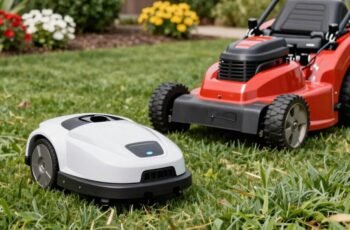
Imagine trying to maintain a classic car versus an electric scooter—one demands a detailed, time-consuming routine, while the other requires minimal upkeep. That’s how we see the difference between regular and robotic mowers. As we explore their maintenance needs, you’ll notice how choosing the right mower can substantially impact your time and costs. Understanding these differences can help you make smarter decisions for your lawn care—something worth considering before your next mowing session.
Key Takeaways
- Robotic mowers require minimal maintenance, mainly blade sharpening, cleaning, and software updates, while regular mowers need oil changes, belt checks, and engine tune-ups.
- Maintenance costs for robotic mowers are lower ($20–$50 annually) and involve less time compared to regular mowers’ higher costs and labor-intensive tasks.
- Troubleshooting robotic mowers focuses on charging, connectivity, and blade issues, whereas regular mowers address engine, belt, and mechanical problems.
- Proper maintenance of robotic mowers ensures better lawn health through even cuts and reduces equipment wear, extending lifespan.
- Regular upkeep of both mower types enhances efficiency, reduces breakdowns, and promotes healthier, more resilient lawns.
How Do Robotic and Regular Mowers Differ in Maintenance?
Robotic and regular mowers differ greatly in how they require maintenance, primarily because of their design and operation. Robotic mowers are built for minimal upkeep, often needing only occasional blade replacements and software updates. They operate automatically, so their maintenance tends to be less frequent and more straightforward. Regular mowers, on the other hand, demand more hands-on care, including engine oil changes, spark plug replacements, and belt adjustments. They’re manually operated, which means more frequent inspection and troubleshooting. Robotic mowers are designed to be self-sufficient, with features like sensors and charging stations reducing the need for constant attention. Meanwhile, traditional mowers require regular physical checks and maintenance tasks to keep them running smoothly. Overall, robotic mowers are engineered for easy, low-effort upkeep compared to their manual counterparts.
What Are the Essential Maintenance Tasks for Robotic Mowers?
While robotic mowers require less hands-on attention than traditional models, they still need regular maintenance to keep functioning at their best. First, we check the blades regularly—dull blades can harm the grass and reduce efficiency. Sharp blades are essential for a clean cut, so we replace or sharpen them as needed. Next, we clean the mower’s underside and sensors to prevent buildup of grass clippings and debris, which can impact performance. It’s also important to inspect the wheels and motors for wear and tear. Additionally, we verify the charging station is clean and functioning properly. Finally, we update the mower’s software when updates are available, helping it operate smoothly and adapt to changing lawn conditions. These tasks keep the mower reliable and extend its lifespan.
What Maintenance Do Gas and Electric Mowers Require?
Gas and electric mowers require regular maintenance to keep them running efficiently and extend their lifespan. For gas mowers, this means checking and changing the oil regularly, cleaning or replacing the air filter, and inspecting the spark plug for wear. Also, it’s important to sharpen the blades to ensure a clean cut and prevent strain on the engine. For electric mowers, maintenance involves inspecting the power cord or battery connections, cleaning the undercarriage, and checking for debris or grass buildup. Both types benefit from keeping the mower clean and free of grass clippings, which can cause rust or mechanical issues over time. Regularly inspecting moving parts and lubricating joints helps prevent rust and guarantees smooth operation, ultimately prolonging the mower’s effective life.
Which Mower Is Easier and Cheaper to Maintain Long-Term?
When it comes to long-term maintenance, robotic mowers generally stand out as the easier and cheaper option compared to traditional gas or electric mowers. They have fewer moving parts, which means less wear and tear, reducing repair costs. Robotic mowers also don’t require oil changes, spark plug replacements, or filter replacements, saving time and money. Maintenance tasks like blade sharpening are infrequent and simple. In contrast, regular mowers need regular tune-ups, fuel, oil, and more frequent blade replacements. Plus, robotic mowers often come with self-maintenance features, like self-charging, which cut down on ongoing upkeep. Overall, their design minimizes ongoing effort and expense, making them a more convenient and cost-effective choice for long-term lawn care.
How Much Do Maintenance Tasks Cost and How Long Do They Take?
Maintenance tasks for robotic mowers generally cost less and take less time than those for traditional mowers. For robotic mowers, basic upkeep like blade replacements and cleaning usually costs between $20 and $50 annually, and it takes about 15 to 30 minutes. These tasks are quick and straightforward, often involving just removing and replacing blades or wiping down sensors. In contrast, traditional mower maintenance can involve oil changes, filter replacements, and engine tune-ups, which can total $100 or more per year and take several hours. Regular servicing on gas-powered mowers also includes more complex tasks like spark plug replacements. Overall, robotic mower maintenance is more affordable and less time-consuming, making it a convenient choice for those seeking minimal upkeep.
What Are Common Troubleshooting Tips for Robotic Mowers?
Troubleshooting robotic mowers can seem intimidating at first, but many common issues have simple solutions. If your mower isn’t charging, check the charging station and connections for dirt or damage. For connectivity problems, verify the mower is within range of the Wi-Fi or Bluetooth and restart your router if needed. If the blades aren’t cutting properly, inspect for tangles or debris and replace dull blades. Stuck or unresponsive mowers often result from obstructions or uneven terrain—clear the path and recalibrate if necessary. For error messages, consult the user manual to identify specific codes and follow recommended steps. Regularly cleaning sensors and blades can prevent many issues, saving you time and frustration. With these basic troubleshooting tips, you can keep your robotic mower running smoothly.
What Maintenance Challenges Do Regular Mowers Present?
Regular mowers require consistent upkeep that can be both time-consuming and physically demanding. They need regular blade sharpening or replacement to guarantee a clean cut, which can be a messy and labor-intensive process. Fueling and oil changes are necessary to keep engines running smoothly, but forgetting these can lead to breakdowns. Clogged air filters, spark plug issues, and belt replacements add to maintenance tasks. Additionally, mowing in tough weather or uneven terrain can cause mechanical strain, increasing the risk of damage. Regular inspections are essential to catch rust, corrosion, or worn parts early. All these tasks take time, effort, and some mechanical know-how. For many, this ongoing maintenance can feel like a constant chore, making lawn care more stressful and less enjoyable.
How Can You Simplify Lawn Mower Maintenance?
We can make lawn mower maintenance easier by regularly checking the blades to keep them sharp and efficient. Taking good care of the battery, such as charging it properly and avoiding overuse, also simplifies upkeep. These simple steps help us keep our mowers running smoothly with less hassle.
Regular Blade Checks
Maintaining sharp and clean blades is essential for a healthy, well-manicured lawn, and checking them regularly can prevent many mowing issues. Dull blades tear grass instead of cutting it cleanly, which stresses the grass and promotes disease. To keep blades in top shape, inspect them every few mowings and sharpen or replace as needed. Using the right tools makes this easier:
| Blade Type | Replacement Frequency | Indicator for Dullness |
|---|---|---|
| Steel | Annually or after 20 hrs | Uneven cuts |
| Plastic | Replace monthly | Grass tearing |
| Composite | Every 6-12 months | Reduced cutting efficiency |
Proper Battery Care
Proper battery care is essential for guaranteeing your lawn mower runs smoothly and lasts longer. To keep your mower’s battery in top shape, follow these simple tips:
- Charge after each use: Avoid leaving the battery completely drained; recharge it promptly to maintain peak performance.
- Store in a cool, dry place: Extreme temperatures can damage the battery, so keep it in a shaded, well-ventilated area.
- Check connections regularly: Ensure the battery terminals are clean and securely connected to prevent power issues.
How Maintenance Affects Your Lawn Care and Equipment Life
Proper maintenance directly improves your lawn’s health by ensuring even cutting and preventing damage. It also extends the lifespan of your mower, saving you money over time. When maintenance is efficient, you get better results with less effort, making lawn care easier and more effective.
Impact on Lawn Health
Have you ever wondered how the way you care for your mower impacts the health of your lawn? Proper maintenance directly influences grass growth and overall lawn vitality. When mowers are well-kept, they cut evenly, preventing damage and promoting healthy, lush grass. Conversely, neglected equipment can leave uneven patches, damaging grass roots and encouraging weeds. Regularly maintaining your mower helps guarantee:
- Precise cuts that reduce tearing and stress on grass
- Consistent mowing height, fostering stronger roots
- Reduced risk of disease spread through cleaner blades
Equipment Longevity Factors
Maintaining your mower isn’t just about ensuring a neat cut; it also plays a crucial role in extending the lifespan of both your equipment and your lawn. Regular upkeep prevents parts from wearing out prematurely, reducing the risk of costly repairs or replacements. For example, sharpening blades keeps cuts clean, minimizing strain on the motor, while changing oil and filters guarantees smooth operation. Keeping the mower clean from debris prevents rust and corrosion, which can weaken components over time. Proper storage during off-season months also protects against weather damage. By staying consistent with maintenance, we can substantially boost our mower’s durability and efficiency, saving money and effort in the long run. Good maintenance habits are essential for maximizing your equipment’s longevity and ensuring ideal lawn care.
Maintenance Efficiency Benefits
When we prioritize regular maintenance, we considerably enhance both the efficiency of our lawn care routine and the lifespan of our equipment. Well-maintained mowers operate smoothly, saving us time and effort. They also use less fuel or electricity, making our lawn care more cost-effective. Additionally, consistent upkeep reduces the risk of breakdowns, preventing costly repairs.
Benefits include:
- Improved cutting performance with cleaner, even cuts
- Reduced wear and tear on parts, extending equipment life
- Fewer unexpected breakdowns and downtime
Frequently Asked Questions
How Often Should Robotic Mowers Be Recalibrated Compared to Regular Mowers?
We suggest recalibrating robotic mowers every few months or if you notice uneven cutting, while regular mowers need recalibration less frequently, usually only when blades or settings are changed. Regular checks guarantee peak performance for both.
Are There Specific Tools Needed for Robotic Mower Maintenance?
You’ll need basic tools like screwdrivers, pliers, and a cleaning brush for robotic mower maintenance. Coincidentally, these are often similar to what we use for regular mowers, making upkeep straightforward and familiar for most homeowners.
What Safety Precautions Are Necessary During Robotic Mower Servicing?
We always disconnect the robotic mower from power before servicing, wear gloves for protection, keep children and pets away, and follow manufacturer instructions carefully to guarantee safety during maintenance. These steps prevent accidents and injuries.
Can Robotic Mower Batteries Be Replaced Easily?
Yes, robotic mower batteries can be replaced, but it’s usually straightforward. We recommend consulting the user manual or professional service to guarantee proper handling, safety, and compatibility, especially with lithium-ion batteries that require careful disposal.
How Do Weather Conditions Impact Robotic Mower Maintenance Needs?
Weather conditions notably impact robotic mower maintenance. Heavy rain can cause rust and electrical issues, requiring us to clean and dry the mower more often, while extreme heat may strain batteries, prompting more frequent checks and replacements.
Conclusion
In conclusion, robotic mowers are like the smooth operators of lawn care—requiring less fuss and cost, making maintenance a breeze. They let us spend more time enjoying our yard instead of fixing equipment. Regular mowers, while effective, demand more hands-on attention and can be more costly over time. Choosing the right mower depends on your needs, but either way, proper upkeep is key to a healthy lawn and longer-lasting equipment.