Imagine spending your weekend relaxing instead of pushing a manual mower across a large, uneven lawn. That’s the promise of robot mowers, but they come with their own set of advantages and challenges compared to traditional manual options. As we consider these differences, it’s important to weigh factors like cost, lawn size, and personal preferences. Let’s explore whether a robot mower truly fits your needs or if sticking with manual tools makes more sense.
Key Takeaways
- Robot mowers offer automated, consistent cutting, reducing manual effort, while manual mowers require physical labor and ongoing maintenance.
- Robot mowers are quieter and eco-friendly, but have higher upfront costs and limited suitability for large or complex lawns.
- Manual mowers provide greater control and flexibility for irregular or small lawns at a lower initial investment.
- Robot mowers operate on preset schedules with minimal supervision, whereas manual mowers depend on user effort and skill.
- Long-term maintenance costs are generally higher for manual mowers due to parts replacement and fuel, while robot mowers need regular checks for optimal performance.
What Are Robot Mowers and How Do They Work?
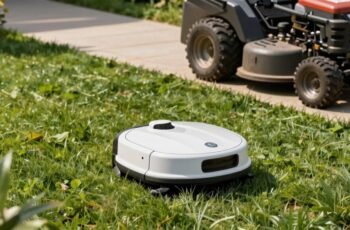
Robot mowers are automated devices designed to trim lawns with minimal human intervention. They operate on a preset schedule, using embedded sensors and boundary wires to navigate your yard. Once programmed, they move around your lawn, cutting grass in a systematic pattern that prevents overgrowth. These mowers typically come with rechargeable batteries, and they return to their charging stations when power runs low. Some models feature sensors to detect obstacles, avoiding trees, flower beds, and other objects. They can handle various terrains and grass types, making yard maintenance easier. The key is their ability to work independently, saving you time and effort. Overall, robot mowers are smart, efficient, and designed to keep your lawn neatly trimmed without your constant supervision.
What Are the Benefits of Using a Robot Mower?
Using a robot mower offers numerous advantages that make yard maintenance more manageable and efficient. First, it saves us time since it automatically handles mowing, freeing us up for other activities. Its consistent cutting schedule keeps the grass evenly trimmed, promoting healthier growth. Additionally, robot mowers operate quietly, so we don’t have to deal with loud noise or disturb neighbors. They also use electric power, which reduces emissions and lowers energy costs compared to gas-powered mowers. Many models feature smart technology, allowing us to customize mowing patterns and control the device remotely. With minimal manual effort, we enjoy a well-maintained lawn that stays tidy year-round. Overall, robot mowers simplify lawn care, making it less time-consuming and more convenient for us.
What Are the Drawbacks of Robot Mowers?
While robot mowers offer many benefits, they also have some drawbacks to take into account. They work best on smaller lawns and can sometimes face technical issues. Plus, the initial cost can be high compared to traditional mowers.
Limited Lawn Size Compatibility
Have you ever wondered if a robot mower can handle your lawn’s size? Many models are designed for smaller to medium-sized lawns, often struggling with larger areas. If your yard spans several acres, a robot mower might not be practical or efficient. These machines typically have limited battery life and cutting area per charge, meaning they may need frequent recharging or extended charging times. This can result in uneven coverage or the need for multiple units, which increases costs. Additionally, larger lawns may require more complex boundary setups and ongoing maintenance to ensure the mower stays within designated areas. For bigger properties, manual mowers or more robust mowing solutions often remain the better choice, as robot mowers are generally optimized for smaller, manageable spaces.
Potential Technical Malfunctions
Although robot mowers offer convenience, they are susceptible to technical malfunctions that can disrupt your lawn care routine. These issues can range from minor glitches to more serious failures, requiring repairs or replacements. Common problems include sensor failures, motor malfunctions, and connectivity issues. Such malfunctions may cause the mower to stop unexpectedly or misnavigate the lawn. To better understand, consider the table below:
| Malfunction Type | Potential Impact |
|---|---|
| Sensor Failures | Inaccurate boundary detection, mower stops or goes off course |
| Motor Malfunctions | Reduced cutting efficiency or complete stop |
| Connectivity Issues | Remote control problems or app disconnection |
| Battery Failures | Shorter run times or inability to recharge |
| Blade Jamming | Ineffective mowing or damage to blades |
Regular maintenance helps but doesn’t eliminate all risks.
Higher Initial Investment Cost
Investing in a robot mower requires a significant upfront expense that can be a barrier for many homeowners. These devices often cost several times more than traditional manual mowers, which can be intimidating if you’re on a budget. While the long-term savings on fuel, maintenance, and labor are appealing, the initial purchase can be a tough pill to swallow. Additionally, some high-end models with advanced features come with even higher price tags. This initial investment might make you hesitant, especially if you’re unsure about the long-term benefits or if your lawn is relatively small. Ultimately, the higher upfront cost is a key factor to weigh when contemplating the convenience of a robot mower against its financial impact.
How Do Manual Mowers Compare on Cost, Maintenance, and Performance?
Manual mowers typically cost less upfront than robot mowers, but they require ongoing maintenance like blade sharpening and fuel. Over time, their efficiency depends on the user’s effort and skill, which can affect the overall cost and performance. Let’s compare how these factors stack up against the advantages of automated mowing.
Initial Purchase Expenses
When comparing initial purchase expenses, manual mowers typically cost less upfront than robot mowers. A basic push mower can be found for a few hundred dollars, making it an affordable option for most homeowners. In contrast, robot mowers often start at around a thousand dollars or more, depending on features and size. While manual mowers require a one-time purchase, robot mowers can also involve additional costs like installation or upgrades. However, the initial investment in a manual mower is generally lower, which makes it attractive for those on a tighter budget. That said, the upfront cost isn’t the only factor; considering long-term savings and convenience is important when evaluating which type of mower makes the most sense for your yard.
Ongoing Upkeep and Efficiency
While manual mowers may have lower initial costs, their ongoing upkeep and performance can vary considerably compared to robot mowers. Manual mowers require regular maintenance like blade sharpening, oil changes, and occasional repairs, which can add up over time. Additionally, their performance depends heavily on user effort and skill. Conversely, robot mowers generally need less maintenance, mainly just blade checks and software updates. To compare:
- Manual mowers demand ongoing labor and maintenance costs.
- Robot mowers offer consistent cutting with minimal intervention.
- Over time, robot mowers can be more cost-effective due to reduced upkeep and better efficiency.
Ultimately, while manual mowers may seem cheaper upfront, robot mowers often save money and effort in the long run.
When Should You Choose a Robot Mower Versus a Manual Mower?
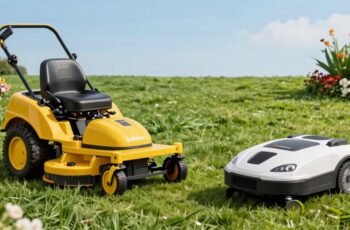
Deciding between a robot mower and a manual mower often depends on your specific lawn needs and lifestyle. If you have a large yard that needs frequent trimming without much hassle, a robot mower is a smart choice. It’s ideal if you want to save time and effort, especially if you’re busy or prefer hands-off maintenance. On the other hand, if your lawn is small or irregularly shaped, a manual mower might be more practical and cost-effective. Manual mowers also give you more control over cut quality and are better suited for lawns with obstacles or delicate plants. Ultimately, consider your lawn size, budget, and how much time you want to spend on mowing when making your decision.
Is a Robot Mower Right for Your Lawn and Lifestyle?
Evaluating whether a robot mower fits your lawn and lifestyle involves considering both your yard’s characteristics and your daily routine. A few key factors can help determine if it’s the right choice:
- Lawn Size and Shape: Robot mowers excel on smaller, flat lawns but may struggle with large or complex landscapes.
- Maintenance and Supervision: If you prefer low-maintenance solutions, a robot mower offers consistent cutting with minimal effort. However, occasional checks are still needed.
- Lifestyle and Schedule: If you’re often away or value convenience, a robot mower’s autonomous operation fits seamlessly into busy routines. Otherwise, manual mowing might be more suitable.
Frequently Asked Questions
How Long Do Robot Mowers Typically Last Before Needing Replacement?
Robot mowers typically last around 3 to 8 years before needing replacement, depending on usage, maintenance, and brand quality. We recommend regular upkeep to extend their lifespan and guarantee peak performance for several seasons.
Are Robot Mowers Effective on Uneven or Complex Lawn Terrains?
Think of robot mowers as nimble explorers traversing a rugged trail; they’re effective on uneven terrains, but may struggle with very complex landscapes. We find they handle gentle slopes and moderate obstacles quite well, easing our lawn care.
Can Robot Mowers Handle Thick or Tall Grass Effectively?
Yes, robot mowers can handle thick or tall grass, but they work best with regular maintenance. We find that keeping grass at a manageable height guarantees efficient mowing and prevents strain on the mower’s blades and sensors.
What Safety Features Do Robot Mowers Have to Prevent Accidents?
We believe robot mowers have safety features that could stop a runaway train! They include obstacle detection, boundary sensors, emergency stop buttons, and blade shut-off systems, making them incredibly safe and preventing accidents effectively.
How Does Weather Impact the Performance of Robot Mowers?
Weather considerably impacts robot mower performance; rain can cause slipping and muddy tracks, while extreme heat or cold may hinder battery life and operation. We recommend monitoring weather forecasts to guarantee ideal functioning and avoid damage.
Conclusion
Ultimately, choosing between a robot and manual mower is like selecting the perfect tool for your unique landscape. While a robot can gently tend to your lawn’s every corner with ease, a manual mower offers hands-on control and simplicity. We believe that understanding your lawn’s needs and your lifestyle will help you find the ideal match—one that turns lawn care from a chore into a breeze, leaving your outdoor space beautifully maintained and inviting.