Imagine a quiet, autonomous device gliding smoothly across your lawn, trimming with minimal effort and no noise. As we consider whether a robot mower surpasses a ride-on model, it’s clear that each has its strengths. But which suits your garden’s unique needs—smaller, flat spaces or larger, uneven terrains? The answer depends on several factors, and understanding them can help you choose the best mower for your outdoor space.
Key Takeaways
- Robot mowers are ideal for small, flat lawns, offering automatic, quiet, and low-maintenance operation with minimal setup.
- Ride-on mowers provide greater power and versatility for large, uneven, or challenging terrains and demanding vegetation.
- Robot mowers have higher upfront costs but lower ongoing expenses, saving money over time through reduced fuel and maintenance.
- Ride-on mowers are better suited for extensive lawns, seasonal tasks, and tough vegetation requiring more manual control and power.
- The choice depends on lawn size, terrain complexity, budget, and maintenance preferences; neither is universally better.
Understanding the Differences Between Robot and Ride-On Mowers
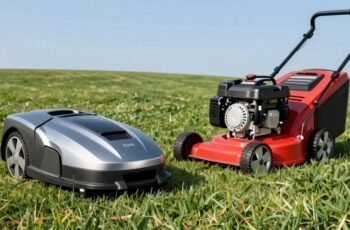
While both robot and ride-on mowers serve the purpose of cutting grass, they differ considerably in design and operation. Robot mowers are compact, autonomous devices that navigate your yard using sensors and GPS, trimming grass quietly and efficiently without human intervention. They’re perfect for maintaining a neat lawn with minimal effort. Ride-on mowers, on the other hand, are larger, gasoline or electric-powered machines operated by a person sitting on them. They cover ground faster and handle thicker, taller grass better. Ride-ons are ideal for larger properties or uneven terrain but require manual control and more maintenance. Fundamentally, robot mowers focus on convenience and precision, while ride-on mowers emphasize power and speed. Understanding these core differences helps you decide which type best suits your lawn care needs.
What Lawn Size and Terrain Are Best for Each Mower Type
When choosing between a robot mower and a ride-on, we consider the size of your lawn and the terrain. Robot mowers work best on smaller, flat areas with minimal obstacles, while ride-on mowers handle larger, uneven terrains more efficiently. We also factor in how often you want to mow to guarantee the equipment matches your maintenance needs.
Suitable Lawn Sizes
Choosing the right mower depends heavily on your lawn’s size and terrain. For small to medium lawns, both robot and ride-on mowers work well, but robots excel in maintaining regular trims without manual effort. If your lawn is under half an acre, a robot mower can handle it efficiently, especially with flat or gently sloped terrain. For larger areas exceeding an acre, a ride-on mower becomes more practical, offering faster coverage and greater power. Hilly or uneven terrain can challenge robot mowers, which typically perform best on flat ground. Conversely, ride-on mowers with four-wheel drive are better suited for varied terrain and larger, more complex lawns. Ultimately, matching mower type to lawn size guarantees efficient, effective mowing without unnecessary strain.
Ideal Terrain Conditions
The terrain of your lawn considerably influences which mower will perform best. Flat, even surfaces allow both robot and ride-on mowers to operate smoothly, but steeper slopes can challenge robot mowers’ stability. For robot mowers, gentle slopes and small, manageable areas are ideal—they work best on lawns under half an acre. Ride-on mowers handle larger, uneven terrains with hills and obstacles more effectively.
Consider these factors:
- Flat, smooth lawns suit robot mowers
- Slopes over 15 degrees may require a ride-on mower
- Large lawns over 1 acre benefit from ride-ons
- Hilly, uneven terrain favors ride-on mowers
- Small to medium-sized yards are perfect for robots
Mowing Frequency Needs
Lawn size and terrain play a crucial role in determining how often each mower type needs to operate. For smaller lawns, both robot and ride-on mowers can usually handle weekly or bi-weekly mowing sessions. Robot mowers excel here because they can mow frequently without much effort, keeping the grass consistently neat. Larger lawns, however, may require more planning; ride-on mowers can handle extensive areas quickly, but they might need regular attention depending on growth rate. Steeper or uneven terrain can influence mowing frequency—robot mowers work best on flat surfaces, so they might need more frequent runs on hilly terrain. Overall, the right mower and mowing schedule depend on lawn size, terrain complexity, and desired turf appearance.
How Much Do These Mowers Cost and What Are the Long-Term Savings
Robotic mowers generally come with a higher upfront cost than traditional ride-on models, but they can save money over time through reduced labor and maintenance expenses. While they may seem pricey initially, their long-term savings are significant. They cut down on fuel, oil, and part replacements, and lessen the need for manual labor. Plus, their precise mowing helps prolong the lawn’s health, reducing costly repairs or overseeding.
Robotic mowers cost more upfront but save money long-term with less maintenance, fuel, and manual labor.
Here’s what you can expect:
- Lower ongoing maintenance costs
- No need for fuel or oil
- Reduced labor hours
- Longer-lasting lawn health
- Minimal storage needs
How Easy Are Robot Mowers to Use Compared to Ride-On Models
Robot mowers are generally easier to set up and install than ride-on models, often requiring just a simple boundary wire and minimal tools. Once running, they operate automatically with little daily input, making maintenance straightforward. In contrast, ride-on mowers usually need more hands-on effort for both setup and regular use.
Setup and Installation Ease
While the idea of setting up a new mower might seem intimidating at first, robotic models generally offer a simpler installation process compared to traditional ride-on mowers. They typically come with clear instructions and require less physical effort. Most robot mowers need a perimeter wire to define the mowing area, which is straightforward to install with basic tools. Many models also feature user-friendly apps that guide you through setup step-by-step. Additionally, robotic mowers often have fewer parts to assemble, reducing setup time. Here are some key points:
- Easy-to-follow installation instructions
- Minimal physical assembly required
- Perimeter wire setup is simple and quick
- Smartphone app guidance simplifies configuration
- Less overall time compared to ride-on mower setup
Daily Operation Simplicity
Once the mower is set up, the way we operate it can make a big difference in overall ease and convenience. Robot mowers are designed for simplicity—once programmed, they run automatically, requiring minimal input. We just need to set boundaries and schedules, then let the mower do its thing. It cuts grass consistently without supervision, saving us time and effort. Ride-on mowers, on the other hand, demand more physical work and constant steering or adjustments, especially for larger lawns. With robot mowers, there’s little to do during daily operation beyond occasional maintenance. Overall, robot mowers are more straightforward to operate on a daily basis, offering a hands-off approach that keeps lawns tidy without much hassle.
Pros and Cons of Robot Mowers for Your Lawn Care
Although robot mowers offer innovative convenience, they come with both advantages and drawbacks that homeowners should consider. On the plus side, they’re quiet, energy-efficient, and can maintain your lawn automatically, saving you time. They’re also easy to set up and can adapt to uneven terrain with the right model. However, there are some downsides.
- Limited handling of tall or thick grass
- High initial purchase cost
- Potential for theft or vandalism
- Less effective on very steep slopes
- May require regular maintenance and software updates
While they’re perfect for small to medium lawns with simple layouts, larger or complex landscapes might challenge their capabilities. Understanding these pros and cons helps determine if a robot mower fits your specific lawn care needs.
When Should You Opt for a Ride-On Mower Instead of a Robot?
There are clear situations where choosing a ride-on mower makes more sense than relying on a robot mower. If you have a large or uneven lawn, a ride-on mower can cover ground faster and handle rough terrain more effectively. When your yard includes obstacles like trees, flower beds, or fences, a ride-on mower offers better maneuverability and control. Additionally, if you prefer a quicker, hands-free mowing experience for extensive areas, a ride-on mower reduces the time and effort involved. For those with thick, tall grass or stubborn weeds, a ride-on mower’s power and cutting capacity outshine most robot models. Finally, if you want a versatile machine that can handle seasonal tasks like snow removal or mulch spreading, a ride-on mower provides greater functionality.
Choosing the Right Mower for Your Lawn: A Practical Guide
When deciding between a robot mower and a ride-on model, understanding your lawn’s specific needs is key. Consider these factors to choose the right mower:
- Lawn size: Larger lawns often need ride-on mowers for efficiency, while smaller areas are ideal for robots.
- Terrain: Hilly or uneven terrain may require a robust ride-on mower with four-wheel drive.
- Grass type and height: Thick, tall grass might need a powerful ride-on, while shorter grass suits a robot.
- Frequency of mowing: Regular, light mowing favors robots, while occasional heavy-duty cuts suit ride-ons.
- Budget and maintenance: Robots typically cost less upfront and require less maintenance, but ride-ons can handle tougher jobs.
Matching these factors ensures you pick the mower that best fits your lawn’s unique demands.
Frequently Asked Questions
How Do Robot Mowers Handle Uneven or Sloped Terrains?
Robot mowers handle uneven or sloped terrains well, thanks to adjustable blades and sensors that detect terrain changes. We find they adapt to slopes up to a certain degree, ensuring efficient mowing without tipping over.
What Maintenance Is Required for Robot Versus Ride-On Mowers?
Think of maintenance as tending a garden; both robot and ride-on mowers need regular checks. We clean blades, check batteries, and lubricate parts. Robots require software updates, while ride-ons need more engine tune-ups.
Are Robot Mowers Suitable for Complex Lawn Layouts?
Robot mowers work well on complex lawn layouts, especially with obstacles and irregular shapes, as they navigate precisely and adapt to different terrains, making them a practical choice for intricate yards.
Can Robot Mowers Operate in All Weather Conditions?
We believe robot mowers can’t operate in all weather conditions; heavy rain, snow, and extreme heat challenge their functionality, so we recommend monitoring weather forecasts and adjusting schedules to guarantee ideal performance and lawn health.
How Long Do Robot Mower Batteries Typically Last?
Robot mower batteries typically last between 60 to 90 minutes per charge, depending on the model and grass conditions. We find that investing in higher-capacity batteries often extends runtime, making lawn maintenance more efficient.
Conclusion
So, considering all these factors, which mower truly fits our lawn’s needs? Whether we prefer quiet, effortless trimming or the power to handle larger, uneven terrain, understanding our lawn’s size and terrain is key. Do we value convenience over versatility, or vice versa? By weighing these aspects, we can choose the perfect mower that keeps our outdoor space beautiful with minimal hassle. After all, isn’t a well-maintained lawn worth the right investment?