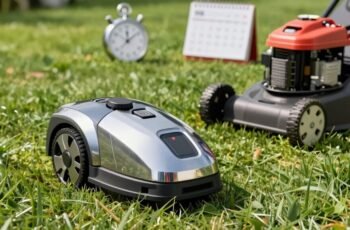
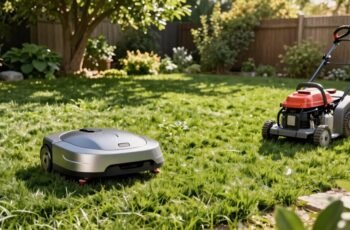
Like a careful gardener tending to delicate plants, choosing between robotic mowers and ride-on models can profoundly influence the health and look of your estate lawn. Each offers distinct advantages, but the decision isn’t always straightforward. As we explore the differences, costs, and landscape suitability, you’ll see that the right mower hinges on more than just size—it’s about understanding what your land truly needs. Let’s consider which option aligns best with your estate’s unique features.
Key Takeaways
- Robotic mowers are ideal for small, flat, obstacle-rich lawns, offering quiet, automatic, and low-maintenance operation.
- Ride-on mowers are better suited for large, hilly, or uneven estates requiring higher power and manual control.
- Robotic models are more cost-effective for small to medium lawns, while ride-on mowers involve higher initial investment for extensive areas.
- Maintenance is minimal for robotic mowers, whereas ride-on mowers need regular, hands-on upkeep and active operation.
- Robotic mowers provide a more precise, uniform cut, producing a polished appearance on suitable terrains.
What Are the Main Differences Between Robotic and Ride-On Mowers?
Robotic and ride-on mowers serve the same purpose—maintaining large lawns—but they differ considerably in design and operation. Robotic mowers are compact, autonomous devices that cut grass in a set pattern, often working quietly and automatically. They’re ideal for regular, maintenance-level mowing and can be scheduled to operate on their own. Ride-on mowers, on the other hand, resemble small tractors with a seat for the operator. They’re larger, more powerful, and designed for cutting thick grass or uneven terrain quickly. Ride-ons require manual operation and provide more control over cutting patterns. While robotic mowers focus on convenience and minimal effort, ride-on mowers excel in handling extensive, demanding lawns with more precision and power. Each suits different needs based on size, terrain, and maintenance preferences.
Which Mower Works Best for Different Lawn Sizes and Terrains?
Choosing the right mower depends heavily on the size and terrain of your lawn. For small, flat yards, robotic mowers excel—they’re quiet, efficient, and easy to set up. Larger or uneven terrains benefit from ride-on mowers, which handle rough ground and extensive areas with ease.
| Lawn Size | Terrain | Recommended Mower |
|---|---|---|
| Small | Flat | Robotic mower |
| Medium | Slight slopes | Robotic or ride-on |
| Large | Hilly, uneven | Ride-on mower |
Robotic mowers are great for manageable, flat lawns, while ride-ons tackle bigger, more rugged spaces efficiently. Knowing your lawn’s size and terrain helps you choose the best fit.
How Much Do Robotic and Ride-On Mowers Cost?
The cost of robotic and ride-on mowers varies widely depending on features, brand, and size. Robotic mowers are generally more affordable upfront, with prices ranging from around $800 to $3,000, depending on their capabilities and area coverage. Ride-on mowers tend to be more expensive, often costing between $2,500 and $8,000 or more, especially for larger, more powerful models. Higher-end robotic mowers with advanced features like GPS navigation or customizable mowing patterns can push prices higher. Conversely, basic ride-on models are more budget-friendly but may lack some luxury features. When choosing, consider not just the initial investment but also the long-term savings in time and effort each mower provides.
What Are the Maintenance Needs and Operating Effort for Each Type?
Both robotic and ride-on mowers require regular maintenance, but the tasks differ in complexity and frequency. We’ll look at what’s involved in keeping each type running smoothly and how much effort it takes to operate them daily. This way, you can better understand the ongoing commitments for each mower option.
Routine Maintenance Tasks
Routine maintenance for robotic mowers typically involves minimal effort, mainly requiring regular cleaning, blade sharpening, and software updates to guarantee peak performance. We find that keeping the mower’s sensors and underside free of debris prevents issues and assures smooth operation. Sharpening or replacing blades is straightforward and helps maintain a clean cut, promoting healthy grass. Software updates are often automatic or simple to install, enhancing functionality and fixing bugs. In contrast, ride-on mowers demand more effort: checking and changing oil, inspecting belts, cleaning filters, and replacing spark plugs. These tasks are more time-consuming and often require tools and some mechanical knowledge. Overall, robotic mowers are designed for easy, low-maintenance operation, while ride-on mowers need regular, hands-on care to stay in top shape.
User Operation Effort
User operation efforts differ markedly between robotic mowers and ride-on machines, impacting how much time and effort homeowners need to invest. Robotic mowers are mostly hands-off, requiring minimal oversight once set up. Ride-on machines, however, demand more active involvement, including regular driving and adjustments.
Here are four key points to ponder:
- Robotic mowers need initial programming and occasional software updates.
- Ride-on machines require regular fueling, oil changes, and blade sharpening.
- Robotic mowers operate autonomously, saving time but needing boundary setup.
- Ride-ons demand physical effort to steer and maneuver, especially on uneven terrain.
In short, robotic mowers offer convenience, while ride-ons involve more active management and maintenance.
Which Mower Provides Better Lawn Precision and Quality?
When it comes to lawn precision and quality, we look at how accurately each mower cuts and the pattern it creates. Robotic mowers tend to produce a more uniform finish, while ride-ons can handle larger areas quickly with consistent results. Let’s compare how each performs in achieving a smooth, even lawn.
Cutting Accuracy and Pattern
Robotic mowers excel in delivering consistent cutting patterns, thanks to their precise navigation systems and programmed algorithms. They methodically cover every inch of your lawn, avoiding missed spots and overlaps. This results in a neat, uniform appearance that enhances your yard’s overall look.
Here are four key advantages:
- Consistent coverage – robotic mowers follow a systematic route, ensuring even trimming.
- Precise navigation – advanced sensors help avoid obstacles and stay on course.
- Adaptive algorithms – they learn and adjust to complex layouts for better patterning.
- Minimal pattern disruptions – fewer zigzags or irregular patches compared to manual or ride-on mowers.
All of these elements contribute to superior cutting accuracy and a polished lawn finish.
Lawn Uniformity and Finish
Both robotic mowers and ride-on models aim to create an even, high-quality lawn finish, but they achieve this in different ways. Robotic mowers excel at maintaining a consistent cut across the entire lawn, reducing uneven patches and ensuring a uniform height. Their precise navigation and multiple small passes lead to a smoother, more polished look over time. Ride-on mowers, on the other hand, deliver a quick, even cut with larger blades, often resulting in a very uniform finish if operated properly. However, they can sometimes leave uneven edges or missed spots if not carefully maneuvered. Overall, robotic mowers tend to produce a more consistently even appearance because of their meticulous, multi-directional cutting pattern, giving your lawn a more refined, professional finish.
How Do These Mowers Impact the Environment?
As we consider the environmental impact of different lawn mowing options, it’s clear that each has its own set of advantages and drawbacks. Robotic mowers are generally more eco-friendly since they’re electric, producing no emissions during operation. Ride-on mowers, however, tend to use gasoline or diesel, which release pollutants into the air. Here are some key points:
- Emissions: Robotic mowers produce zero tailpipe emissions, while ride-ons emit greenhouse gases.
- Energy Consumption: Robotic models are energy-efficient, often using rechargeable batteries; ride-ons consume more fuel.
- Noise Levels: Robotic mowers are quieter, reducing noise pollution.
- Battery Waste: Robotic mowers generate battery waste, requiring proper disposal or recycling.
How Easy Is It to Set Up and Use Robotic and Ride-On Mowers?
Setting up and operating these mowers varies in complexity, but generally, robotic models are designed for user-friendliness with straightforward installation processes. They often come with step-by-step instructions, requiring minimal tools. Ride-on mowers, on the other hand, usually involve more setup, like adjusting seat height and attaching blades, which can take longer and need more physical effort.
Here’s a quick comparison:
| Feature | Robotic Mower | Ride-On Mower | Ease of Use |
|---|---|---|---|
| Installation | Simple, often takes minutes | More involved, longer setup | Robotic: quick; Ride-on: moderate |
| Operation | Autonomous, user-friendly | Manual controls | Robotic: easy; Ride-on: requires skill |
| Maintenance | Minimal | Regular checks needed | Robotic: low; Ride-on: higher |
Which Mower Suits Different Landscaping Needs and Estate Features?
Choosing the right mower depends heavily on the specific landscaping needs and features of your estate. Here are four key considerations:
Selecting the ideal mower depends on your estate’s unique landscaping features and maintenance needs.
- Size of the lawn – Larger estates benefit from ride-on mowers for efficiency, while robotic mowers suit smaller, more intricate areas.
- Terrain type – Hilly or uneven terrain often requires a sturdy ride-on mower with four-wheel drive, whereas flat lawns work well with robotic mowers.
- Landscaping complexity – Gardens with obstacles, flower beds, or trees may need precise, maneuverable robotic mowers, while open spaces are better for ride-ons.
- Maintenance requirements – Robotic mowers demand less upkeep but may struggle with complex terrains, whereas ride-ons handle diverse features but need more maintenance.
How to Choose the Right Mower for Your Estate and Budget?
Selecting the right mower for your estate ultimately depends on balancing your specific lawn needs with your budget. First, assess the size and complexity of your property. Larger, uneven, or obstacle-filled lawns may require a durable ride-on mower, while smaller or flat areas could be perfect for a robotic mower. Next, consider your budget—ride-on mowers have higher upfront costs but can handle extensive areas efficiently, whereas robotic mowers are more affordable and low-maintenance. Think about your time commitment; robotic mowers offer convenience, but some manual oversight is needed. Also, factor in storage space and ease of use. By evaluating these aspects, you can select a mower that fits your estate’s demands and your financial plan, ensuring you get the best value and results.
Frequently Asked Questions
Are Robotic Mowers Suitable for Very Steep Slopes?
Yes, robotic mowers can handle very steep slopes, but it depends on the model’s specifications and safety features. We recommend checking the manufacturer’s guidelines and ensuring the mower has appropriate grip and stability for your specific terrain.
Can Robotic Mowers Handle Uneven or Rocky Terrains?
Like a nimble dancer, robotic mowers navigate uneven terrain, gracefully adapting to rocks and bumps. They handle rocky or uneven grounds well, but for extremely rough or rugged areas, we recommend specialized equipment for peak performance.
How Secure Are Robotic Mowers Against Theft or Vandalism?
Robotic mowers are fairly secure against theft and vandalism thanks to features like PIN codes, alarms, and GPS tracking. We recommend combining these with physical locks or secure storage for extra protection.
What Safety Features Do Ride-On Mowers Include?
Ride-on mowers include safety features like emergency shut-off valves, blade brakes, rollover protection, and safety switches that prevent operation without proper engagement, ensuring user safety and reducing accident risks during lawn maintenance.
How Do Weather Conditions Affect Mower Performance?
Weather conditions considerably impact mower performance; rain can cause slipping and clogging, while extreme heat stresses engines. We recommend adjusting mowing schedules and ensuring equipment is suited for wet or hot conditions to maintain safety and efficiency.
Conclusion
In choosing between robotic and ride-on mowers, we’re fundamentally selecting the brushstrokes for our estate’s landscape masterpiece. Each has its own rhythm—quiet, precise strokes or bold, sweeping movements—shaping your lawn’s character. By understanding their strengths and how they blend with your terrain and lifestyle, we can craft a lush, vibrant canvas that reflects your vision. Ultimately, it’s about finding the perfect harmony between innovation and tradition for your outdoor sanctuary.