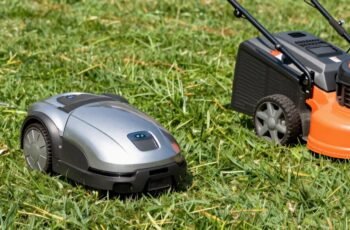
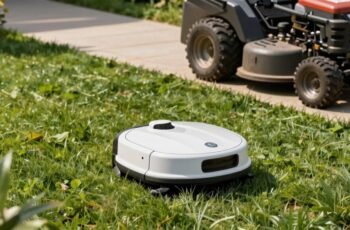
Did you know that choosing the right mower can substantially impact your safety at home? While robot mowers are often praised for their advanced obstacle detection and automatic shut-offs, ride-on mowers bring their own set of risks and safety features. Understanding these differences is essential for making an informed decision that keeps your family safe. Let’s explore how each type stacks up and what safety measures you should consider before making a choice.
Key Takeaways
- Robot mowers use obstacle sensors and boundary systems to prevent collisions and ensure safe operation around children and pets.
- Ride-on mowers have safety features like emergency shutoffs, blade guards, and safety switches to protect operators during use.
- Robotic mowers reduce accident risks but can be hazardous if tampered with or lifted, especially around blades.
- Larger ride-on mowers pose higher injury risks, particularly if safety features fail or are improperly used.
- Proper mower selection based on yard size and terrain, along with safety feature awareness, enhances overall mowing safety.
Are Robot Mowers Safer Than Ride-On Mowers?
While both robot mowers and ride-on mowers have safety features, robot mowers are generally safer for homeowners and pets. They operate autonomously within a confined area, reducing the risk of accidental injury during mowing. Since robot mowers typically stop when they detect obstacles or humans nearby, they lower the chance of collisions or injuries. In contrast, ride-on mowers require manual operation, which can lead to accidents if the operator isn’t careful or if children and pets are nearby. Additionally, robot mowers are designed with sensors and safety mechanisms that prevent them from operating in unsafe conditions. Overall, their automated nature and built-in safety features make them a safer choice for households with children and pets.
What Safety Features Do Robot Mowers Have?
Robot mowers come equipped with a variety of safety features designed to protect both users and bystanders. One key feature is the obstacle detection system, which uses sensors to identify objects or people in the mower’s path, stopping or rerouting as needed. Many models also have lift and tilt sensors that instantly shut down the blades if the mower is lifted or tilted, preventing injuries. Additionally, boundary wires or virtual fences help keep the mower within designated areas, reducing the risk of accidents outside the yard. Some advanced models include cameras or infrared sensors for enhanced obstacle recognition. These safety features work together to assure the mower operates securely, minimizing risks and providing peace of mind for everyone nearby.
What Safety Features Come With Ride-On Mowers?
Ride-on mowers come equipped with essential safety features like emergency shutoff systems, which allow us to quickly stop the machine if needed. They also have blade safety mechanisms that prevent accidental contact and reduce injury risk. These features are designed to keep users safe while operating heavy-duty equipment.
Emergency Shutoff Systems
Emergency shutoff systems are essential safety features that help prevent accidents and injuries during mower operation. These systems allow operators to quickly stop the mower if they notice a hazard or if someone enters the mowing area unexpectedly. Many ride-on mowers are equipped with a safety switch that automatically shuts off the engine when the operator leaves the seat or releases the control handle. Some models include a dead-man’s switch that must be engaged for the mower to run. These features guarantee that the mower halts immediately in an emergency, reducing the risk of injury. Overall, emergency shutoff systems are critical for safe operation, giving users peace of mind knowing they can quickly stop the mower if necessary.
Blade Safety Mechanisms
What safety features do ride-on mowers include to protect users from blade-related accidents? Most ride-on mowers come equipped with blade safety mechanisms like blade engagement controls that require deliberate actions to activate the blades. Many models have blade brake systems that instantly stop the blades when the operator leaves the seat or releases the control, preventing accidental contact. Some mowers include safety shields or guards around the blades to minimize the risk of debris being thrown or accidental contact. Additionally, safety switches are often integrated into the seat or controls, ensuring the blades only run when someone is seated and actively operating the mower. These features work together to reduce injuries and keep users safe during operation.
How Do Obstacle Detection and Navigation Keep You Safe?
Since obstacle detection and navigation systems are central to the safety of robotic and ride-on mowers, they continuously monitor the environment to prevent accidents. These systems use sensors and cameras to identify objects, slopes, and boundaries, ensuring the mower stays on course and avoids obstacles. They can automatically stop or change direction when something is detected, reducing the risk of collisions.
Some key features include:
- Proximity sensors that detect nearby objects before contact
- GPS and boundary wires to keep the mower within designated areas
- Autonomous navigation algorithms that adapt to changing terrain
Together, these technologies create a safer mowing experience by actively preventing accidents and keeping both operators and bystanders protected.
What Are the Main Safety Risks of Each Mower Type?
While robotic and ride-on mowers both aim to make lawn care safer and more efficient, each comes with distinct safety risks that users should understand. Robotic mowers can pose a risk of injury if they’re manually lifted or tampered with, especially since blades are still sharp when the mower is powered off. They can also be a hazard to pets or small children if they enter the mowing area unexpectedly. Ride-on mowers, on the other hand, present risks of rollovers, collisions, and run-over injuries, especially if operators aren’t careful or don’t follow safety guidelines. Their larger size and power make them inherently more dangerous if misused or if safety features fail. Understanding these risks helps us better protect ourselves, others, and our property.
How Can You Keep Kids and Pets Safe Around Mowers?
We always keep an eye on kids and pets when mowing to prevent accidents. Setting up safety barriers helps keep them at a safe distance from the equipment. Supervision guarantees everyone stays safe during yard work.
Supervise During Mowing
Keeping kids and pets safe around mowers requires active supervision at all times. We need to stay vigilant, especially during mowing sessions, to prevent accidents. Constant monitoring guarantees children and pets stay clear of moving equipment and potential hazards.
To keep everyone safe, we suggest:
- Always keeping children and pets inside or in a designated safe area while mowing
- Watching for any signs of curiosity or wandering close to the mower
- Pausing mowing if anyone approaches until they are safely away
Create Safety Barriers
Creating physical barriers is one of the most effective ways to keep kids and pets safely separated from mowing equipment. Fencing or gates can establish a clear boundary, preventing accidental entry during mowing. Portable barriers like playpens or temporary fencing work well for smaller areas, while permanent fences suit larger yards.
| Barrier Type | Best Use |
|---|---|
| Chain-link Fence | Encloses entire yard for full safety |
| Portable Playpen | Protects small play areas or gardens |
| Wooden Fence | Adds security and aesthetic appeal |
| Temporary Barrier | Quick setup for short-term safety |
Maintenance Tips for Safe Mower Operation
Regular maintenance is essential for guaranteeing safe and efficient mower operation. By keeping your mower in top shape, you reduce the risk of accidents and malfunctions. First, always check and sharpen blades regularly to ensure clean cuts and prevent jams. Second, inspect belts, cords, and moving parts for wear and tear, replacing any damaged components promptly. Third, keep the mower’s area clean by removing debris, grass clippings, and dirt, which can interfere with operation and safety. Additionally, regularly check fluid levels and confirm safety features like emergency stops and sensors are functioning correctly. Proper maintenance not only prolongs the mower’s lifespan but also keeps it operating safely, making yard work smoother and less hazardous.
How to Choose the Safest Mower for Your Yard
When choosing the safest mower for your yard, it’s crucial to take into account the size and terrain of your property. For smaller, flat lawns, a robot mower can be safer since it operates autonomously and has sensors to avoid obstacles. However, for larger or uneven terrains, a ride-on mower might be more appropriate, provided it has safety features like seat sensors and emergency shut-offs. Always look for mowers with robust safety features such as blade guards, automatic shut-off when operators leave the seat, and clear safety instructions. Consider your familiarity with mower operation and the presence of children or pets. Selecting a mower that matches your yard’s specific needs and includes essential safety features helps guarantee safer mowing sessions.
Frequently Asked Questions
Do Robot Mowers Require Supervision During Operation?
We believe robot mowers generally don’t need constant supervision during operation, but it’s best to stay nearby initially, monitor their performance, and guarantee safety features work properly to prevent accidents or damage to your lawn or pets.
Are Ride-On Mowers Safer on Uneven Terrain?
Think of uneven terrain as a wild river; ride-on mowers are like sturdy boats that handle it better, offering more stability and control. We find they generally provide safer operation on bumpy, unpredictable landscapes.
Can Robot Mowers Accidentally Cut Through Fences or Gates?
Yes, robot mowers can accidentally cut through fences or gates if they’re not properly set up or if boundary wires are damaged. We recommend carefully installing boundary wires and regularly checking them to prevent such accidents.
How Loud Are Each Type of Mower During Use?
You might be surprised—robot mowers are generally quieter, producing around 60-70 decibels, like background music, while ride-on mowers can reach 85-95 decibels, similar to loud conversation or city traffic.
What Safety Gear Should Operators Wear When Using Ride-On Mowers?
We wear sturdy gloves, eye protection, earplugs, and sturdy boots when operating ride-on mowers. It’s essential to stay alert, keep hands and feet away from blades, and follow safety instructions to prevent accidents and injuries.
Conclusion
Just like choosing the right safety gear for a hike, selecting the safest mower depends on understanding each option’s features. We’ve seen how robot mowers gently navigate around obstacles, making them safer for families. But no matter the type, staying vigilant and following safety tips is key. Think of it as steering a ship—your awareness keeps everyone on board safe, turning a potentially risky journey into a smooth, worry-free adventure in your yard.