Deciding between a robot mower and a ride-on mower depends on several factors, from yard size to terrain and budget. Each offers distinct advantages and limitations, making it important to understand their differences. We’re here to help you evaluate which option fits your needs best, so you can make an informed choice that suits your property and lifestyle. Let’s explore the key considerations to guide your decision.
Key Takeaways
- For small to medium yards (up to half an acre), robot mowers are more cost-effective and require less maintenance.
- Larger, uneven, or complex terrains (over half an acre) are better suited for ride-on mowers with more power and versatility.
- Robot mowers are eco-friendly, quieter, and ideal for low-maintenance lawn care, while ride-on mowers handle tougher terrains efficiently.
- Budget considerations favor robot mowers for smaller yards, but larger properties may justify the higher cost of ride-on mowers.
- The choice depends on yard size, terrain difficulty, and specific needs like customization, with ride-on mowers offering more versatility.
What Are Robot Mowers and Ride-On Mowers?
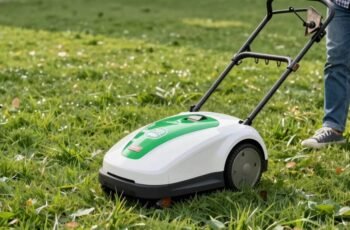
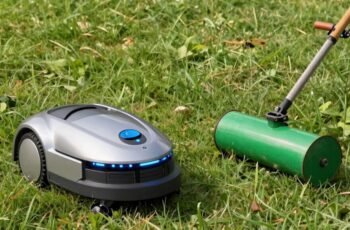
Have you ever wondered how modern lawn care has evolved? Today, we have two popular options: robot mowers and ride-on mowers. Robot mowers are small, autonomous devices that trim your grass quietly and efficiently. They use sensors and GPS technology to navigate your yard, automatically returning to their charging stations when needed. These mowers are perfect for maintaining a neat lawn with minimal effort from us. On the other hand, ride-on mowers are larger, riding machines that require manual operation. They’re ideal for bigger lawns, offering fast, powerful cutting with the comfort of sitting down. While robot mowers excel in convenience and automation, ride-on mowers provide more control and are better suited for extensive or tough terrain. Both have their unique benefits depending on your yard size and needs.
How Do Their Designs and Functions Differ
While both robot mowers and ride-on mowers serve the purpose of maintaining your lawn, their designs and functions are quite distinct. Robot mowers are compact, autonomous machines that cut grass in a systematic, grid-like pattern. They operate quietly, navigate via sensors or boundary wires, and require minimal human intervention. In contrast, ride-on mowers are larger, powered machines that you sit on and guide manually. They feature powerful engines, larger cutting decks, and are built for tackling extensive or uneven terrain more quickly. The robot mower’s focus is on automation and precision for small to medium yards, while ride-on mowers prioritize speed, control, and handling larger areas efficiently. Both serve different needs, depending on your lawn size and maintenance preferences.
Which Yard Sizes Are Best for Each Mower Type
Choosing the right mower depends heavily on the size of your yard. For smaller lawns, typically under half an acre, a robot mower works well. It’s compact, easy to manage, and keeps your yard perfectly trimmed without much effort. If your yard is between half an acre and a couple of acres, a robot mower can still be suitable, especially if the terrain isn’t too complex. For larger yards over two acres, a ride-on mower is usually more efficient, offering faster coverage and more power to handle extensive grass areas. Ride-on mowers are better suited for open, expansive spaces, where their larger cutting decks and higher speeds save time. Ultimately, choosing the right mower depends on yard size, with robots ideal for smaller, manageable lawns and ride-ons better for larger, more demanding properties.
What Are the Cost Factors: Purchase, Maintenance, and Operation
When weighing the options between robot mowers and ride-on mowers, understanding the overall costs involved can help you make a smarter choice.
The initial purchase price varies considerably: robot mowers generally cost between $1,000 and $3,000, while ride-on mowers can range from $2,000 to over $4,000. Maintenance costs also differ—robot mowers usually require less upkeep, but batteries may need replacement after a few years. Ride-on mowers need regular oil changes, blade sharpening, and occasional repairs, which can add up. Operating costs, like electricity or fuel, should also be considered:
- Purchase price
- Maintenance and repairs
- Energy or fuel expenses
Knowing these factors helps you budget wisely and choose the mower that fits both your yard and your wallet.
How Do Power and Performance Compare on Tough Terrain
Have you ever wondered how robot mowers and ride-on mowers handle tough terrain? When it comes to power, ride-on mowers generally have larger engines, giving them the muscle to tackle uneven or steep terrain. They’re designed with bigger blades and more torque, allowing them to cut through dense grass, thick weeds, and rough patches efficiently. Robot mowers, on the other hand, are built for lighter tasks. While some models boast decent power, they often struggle on steep inclines or highly uneven ground. Their performance depends heavily on the terrain’s complexity. Overall, ride-on mowers outperform robot mowers in raw power and performance on tough terrain, but robot models excel in precision and ease of use on flatter, less challenging surfaces.
What Maintenance and Durability Should You Expect
Since maintenance needs and durability vary considerably between robot mowers and ride-on mowers, it’s important to understand what to expect from each.
For robot mowers, maintenance is usually minimal—cleaning blades and checking batteries regularly. They’re built to last but can be sensitive to weather and debris, so durability might decline with harsh conditions.
Ride-on mowers, on the other hand, require more upkeep, like oil changes, belt replacements, and blade sharpening. They’re generally more durable for tough terrain but need regular servicing to keep them running smoothly.
- Robot mowers need less frequent maintenance but may have shorter lifespan with heavy use.
- Ride-on mowers demand ongoing upkeep but generally last longer with proper care.
- Both require attention, but the complexity varies based on usage and environment.
Are Robot or Ride-On Mowers More Eco-Friendly?
When comparing eco-friendliness, we look at emissions, fuel use, energy efficiency, and noise pollution. Robot mowers generally produce fewer emissions and use less energy than ride-on models, making them a greener choice. Additionally, their quieter operation helps reduce noise pollution, benefiting the environment and your neighbors.
Emissions and Fuel Use
Robot mowers are generally more eco-friendly than ride-on mowers because they produce little to no emissions during operation. They run on electricity, which means no direct exhaust gases, reducing their environmental impact. In contrast, ride-on mowers typically use gasoline or diesel, releasing emissions like carbon dioxide and other pollutants.
Here are some key points:
- Electric power makes robot mowers cleaner, especially if charged from renewable sources.
- Fuel consumption in ride-on mowers contributes notably to air pollution.
- Maintenance emissions are lower for robot mowers since they have fewer moving parts and require less oil or fuel-related upkeep.
Energy Efficiency Levels
While emissions and fuel use are important, energy efficiency levels determine how effectively each mower converts energy into mowing power. Robot mowers generally use rechargeable batteries, making them more energy-efficient for small to medium lawns. Ride-on mowers, especially gas-powered ones, tend to consume more fuel and produce higher emissions, reducing overall efficiency. To compare, here’s a quick look:
| Mower Type | Energy Source | Efficiency Level |
|---|---|---|
| Robot Mower | Rechargeable Battery | High for small lawns |
| Ride-On Mower | Gasoline | Lower, less efficient |
| Robot Mower | Solar-powered | Very high |
| Ride-On Mower | Diesel or Gas | Moderate to low |
Noise Pollution Impact
Noise pollution is a significant factor when comparing the eco-friendliness of robot and ride-on mowers. Robot mowers are notably quieter, often producing sound levels similar to a conversation, which minimizes disturbance and reduces noise pollution. In contrast, ride-on mowers tend to be louder, especially during heavy cutting, contributing more to environmental noise.
Here are a few points to contemplate:
- Robot mowers operate with minimal noise, making them suitable for noise-sensitive areas.
- Ride-on mowers generate louder noise, which can disturb wildlife and neighbors.
- Reduced noise pollution from robot mowers supports a more eco-friendly environment and better community relations.
Which Mower Offers More Customization and Flexibility
When comparing the customization options of robot mowers and ride-on mowers, it’s clear that ride-on mowers generally offer more flexibility. With ride-on mowers, you can easily adjust cutting heights, modify blades, and choose different attachments like mulchers or snow blowers, tailoring the mower to various tasks and terrains. They often come with adjustable steering and seat positions, providing comfort and control. Robot mowers, while programmable, have limited customization—mainly setting mowing schedules and boundaries. They lack the ability to adapt to different yard conditions or perform multiple functions. Overall, ride-on mowers allow for greater personalization, making them more versatile for homeowners who want a mower that can handle a range of yard needs.
How to Choose the Right Mower for Your Budget and Yard
When selecting a mower, we need to take into account our budget and yard size to find the best fit. Smaller yards often work well with more affordable options, while larger properties may require more powerful machines. By understanding these factors, we can make smarter choices that balance cost and performance.
Budget Considerations
Choosing the right mower often comes down to balancing your budget with the specific needs of your yard. To make the best choice, consider these factors:
- Initial Cost: Robot mowers usually cost less upfront but might lack features of ride-on options. Ride-on mowers tend to be more expensive initially but offer greater power and versatility.
- Long-term Expenses: Think about maintenance, fuel, and replacement parts. Robot mowers generally have lower ongoing costs, while ride-ons may require more maintenance.
- Yard Size and Frequency: Smaller yards may be perfect for budget-friendly robot mowers, while larger properties might justify the investment in a ride-on mower for efficiency.
Balancing these elements helps you pick a mower that fits your budget and yard size perfectly.
Yard Size Compatibility
Yard size plays a crucial role in determining the most suitable mower for your needs and budget. If you have a small to medium-sized yard, a robot mower can be an excellent choice. They’re efficient, quiet, and require minimal maintenance, making them perfect for lawns up to half an acre. For larger yards, however, ride-on mowers are often more practical. They cover ground quickly and handle uneven terrain better. Consider your yard’s shape and obstacles as well—complex landscapes may favor robotic solutions for precision cutting. Matching your mower to your yard size ensures you won’t overspend on a machine that’s too powerful or struggle with a mower that lacks the capacity to handle your lawn efficiently. Proper compatibility saves time, effort, and money in the long run.
Frequently Asked Questions
How Long Does Each Mower Type Typically Last With Proper Maintenance?
We find robot mowers typically last around 3-8 years with good maintenance, while ride-on mowers can last 8-15 years or more if properly cared for. Regular upkeep extends each mower’s lifespan considerably.
Can Robot Mowers Handle Uneven or Sloped Terrains Effectively?
Did you know 85% of robot mowers handle uneven terrain effectively? We believe they can manage slopes up to 20 degrees, making them suitable for most hilly yards, though some challenging terrains might still need a ride-on mower.
What Safety Features Are Included in Robot Versus Ride-On Mowers?
Robot mowers typically include safety features like obstacle detection, bump sensors, and automatic shut-offs, while ride-on mowers often have seat sensors and emergency stop buttons. Both prioritize user safety but differ in their implementations.
Are There Specific Weather Conditions That Affect Mower Performance?
Weather conditions definitely impact mower performance. Heavy rain can cause robots to slip or get stuck, while ride-on mowers handle wet or uneven terrain better. We recommend monitoring weather and adjusting mowing schedules accordingly for ideal results.
How Easy Is It to Repair or Replace Parts for Each Mower Type?
We find that robot mowers are generally easier to repair and replace parts for, thanks to their modular design and widespread availability. Ride-on mowers can be more complex, but both require some basic mechanical skills for maintenance.
Conclusion
Choosing between a robot mower and a ride-on mower is like picking the right tool for your garden’s story. Both have their strengths, but the best choice depends on your yard’s size, terrain, and budget. Think of your mower as a trusty companion—whether it’s quietly tending a small lawn or bravely tackling a sprawling, rugged landscape. With the right fit, your yard will flourish, turning maintenance into a breeze rather than a storm.