Choosing the right battery for a robot lawn mower requires careful consideration of several key factors, from battery type to capacity and compatibility with your yard’s size and terrain. We recognize that making an informed decision can be complex, especially with the variety of options available. To optimize performance and guarantee longevity, it’s crucial to evaluate these elements thoroughly—yet many overlook the nuanced differences that can profoundly impact your mowing experience. Let’s explore what you need to know to make the best choice.
Key Takeaways
- Match battery capacity and voltage to your robot mower’s specifications for optimal performance.
- Consider lithium-ion batteries for longer lifespan, higher energy density, and lower maintenance.
- Assess yard size and terrain to choose appropriate capacity and runtime needs.
- Monitor battery health regularly and replace when runtime or efficiency declines.
- Purchase from authorized dealers or reputable sources to ensure genuine, quality batteries.
Understanding Your Robot Lawn Mower’s Battery Needs
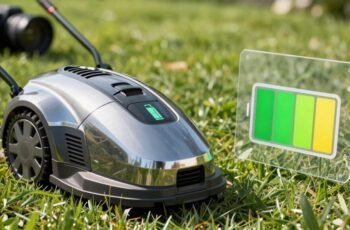
Understanding your robot lawn mower’s battery needs is essential for ensuring ideal performance and longevity. We recognize that battery capacity, measured in milliamp-hours (mAh) or watt-hours (Wh), directly impacts runtime, so selecting a battery with appropriate capacity is vital for covering your lawn efficiently. Additionally, voltage levels influence power output; mismatched voltages can reduce efficiency or damage the motor. To optimize lifespan, it’s important to take into account charging habits and environmental conditions—overcharging or exposing batteries to extreme temperatures accelerates degradation. Monitoring battery health through indicators helps you anticipate replacements, maintaining consistent performance. By understanding these technical aspects, we can make informed decisions that balance runtime, durability, and cost, ultimately maximizing productivity and extending the life of your robot mower’s power source.
Types of Batteries: Lithium-Ion vs. Lead-Acid for Mowers
When choosing the right battery for your robot lawn mower, it’s important to compare the two most common types: lithium-ion and lead-acid. Lithium-ion batteries offer higher energy density, lighter weight, and longer lifespan, making them ideal for consistent performance and ease of use. Lead-acid batteries, while more affordable upfront, tend to be heavier, have shorter cycles, and require more maintenance. Here’s a detailed comparison:
| Feature | Lithium-Ion | Lead-Acid |
|---|---|---|
| Energy Density | High | Low |
| Weight | Light | Heavy |
| Lifespan | Longer (500-1000 cycles) | Shorter (300-500 cycles) |
| Cost | Higher initial cost | Lower initial cost |
| Maintenance | Minimal | Regular maintenance needed |
How to Choose the Right Battery Capacity and Voltage
Choosing the appropriate battery capacity and voltage is essential for ensuring your robot lawn mower performs at its best across various yard sizes and terrains. To determine the right specifications, consider:
- Yard Size and Terrain: Larger or uneven terrains demand higher capacity (mAh) and voltage to maintain consistent power and runtime.
- Mower Power Requirements: Match the voltage with the mower’s motor specifications; using a lower voltage may reduce efficiency, while higher voltage can improve cutting power.
- Runtime Needs: Higher capacity batteries provide longer operation, ideal for extensive lawns, but may add weight and cost, so balance your needs accordingly.
Ultimately, selecting the correct combination ensures optimal performance, battery longevity, and efficient mowing results.
Tips for Extending Your Battery’s Lifespan and Performance
To maximize your battery’s lifespan and maintain ideal performance, regular maintenance and mindful usage are essential. Consistently inspecting battery terminals for corrosion and ensuring secure connections prevent performance drops. Avoid deep discharges; instead, recharge before the battery reaches critically low levels, as deep cycling accelerates wear. Store batteries in a cool, dry environment—excessive heat accelerates chemical degradation, while extreme cold can reduce capacity temporarily. Use your mower within its recommended operational parameters, avoiding prolonged idle periods that can lead to capacity loss. Additionally, periodically calibrate the battery by fully charging and discharging it to reset the system’s understanding of capacity. These practices help mitigate capacity fade, promote stable performance, and extend your battery’s effective lifespan over time.
Common Signs You Need a New Robot Mower Battery
Over time, a decline in your robot mower’s performance can serve as a clear indicator that its battery may be nearing the end of its useful life. Recognizing these signs helps prevent unexpected breakdowns and maintains efficient mowing.
A decline in mower performance signals the battery may be nearing the end of its life.
- Reduced Runtime: If your mower previously operated for a full cycle but now stops early, it suggests the battery can’t hold a charge like it used to.
- Longer Charging Times: An increase in charging duration indicates decreased battery efficiency, often due to aging cells.
- Inconsistent Cutting Performance: Frequent pauses or incomplete mowing sessions point to insufficient power delivery, which may stem from a deteriorating battery.
Monitoring these signs allows us to determine when a replacement is necessary, ensuring consistent performance and avoiding potential damage to the mower.
Where to Buy Genuine, High-Quality Robot Mower Batteries
Finding genuine, high-quality robot mower batteries requires careful selection from reputable sources to guarantee compatibility, longevity, and safety. We recommend purchasing directly from the manufacturer’s official website or authorized dealers, as these outlets ensure authenticity and access to the latest models. Reputable online retailers with high customer ratings, such as Amazon or specialized garden equipment suppliers, also offer verified products and reliable customer support. Avoid unknown marketplaces or unverified third-party sellers, which may provide counterfeit or substandard batteries. Additionally, certified brick-and-mortar stores specializing in outdoor power equipment often stock genuine batteries and can offer expert advice. By choosing trusted sources, you minimize risks associated with poor quality, *guarantee* warranty coverage, and secure a battery that performs reliably over its lifespan.
Frequently Asked Questions
How Long Does a Typical Robot Lawn Mower Battery Last per Charge?
A typical robot lawn mower battery lasts about 60 to 90 minutes per charge, depending on mower size, grass density, and terrain. We find that understanding these factors helps optimize mowing schedules and battery maintenance for better performance.
Can I Upgrade My Robot Mower’s Battery to a Higher Capacity?
Absolutely, upgrading your robot mower’s battery is possible and can dramatically extend runtime like a rocket soaring through the sky. We recommend checking compatibility, capacity, and manufacturer guidelines to guarantee a safe, effective upgrade.
Are There Any Safety Concerns When Handling Mower Batteries?
Handling mower batteries can pose safety risks like leaks, burns, or fires if mishandled. We always wear protective gear, avoid puncturing, and keep batteries away from heat sources, ensuring safe, proper maintenance to prevent accidents.
How Do Weather Conditions Affect Battery Performance?
Weather conditions drastically impact battery performance—extreme cold drains power faster, while intense heat can cause overheating and reduce lifespan. We analyze how temperature fluctuations influence battery efficiency, emphasizing the importance of storage and operation in ideal conditions.
What Warranties Are Usually Offered on Replacement Batteries?
We find that warranties typically cover 1 to 2 years, sometimes extending up to 3, depending on the brand. We analyze that all-encompassing warranties often include replacements or repairs for defects, ensuring reliability and peace of mind for users.
Conclusion
Choosing the right battery is like planting a sturdy tree—you want a foundation that lasts. We’ve seen how upgrading to a lithium-ion battery can boost runtime by up to 30%, transforming a once-frustrating chore into effortless maintenance. By understanding your mower’s needs, you’re not just buying a battery—you’re investing in reliable performance and longevity. With careful selection and proper care, your mower will keep your yard pristine season after season, like a well-tended garden.