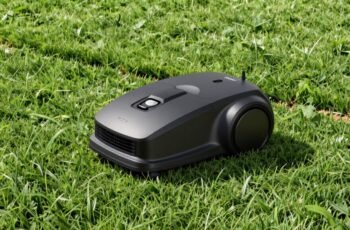
Did you know that the charging times for robotic mowers can vary considerably even among models with similar battery sizes? Factors such as charging technology, battery capacity, and brand influence how quickly these machines can return to ideal operation. Understanding these nuances is essential for maximizing efficiency and minimizing downtime. As we compare different brands and technologies, you’ll discover what impacts charging speed most and how to choose a mower that fits your lawn maintenance schedule effectively.
Key Takeaways
- Charging times typically range from 60 to 120 minutes, depending on battery capacity and technology.
- Higher-capacity batteries and fast-charging systems significantly reduce recharge duration.
- Brand and model specifications influence charging speed, with premium models often offering quicker recharges.
- Battery type (lithium-ion vs. lead-acid) impacts charging efficiency and total recharge time.
- Proper maintenance and optimized charging station setup can improve overall charging performance.
How Do Robotic Mowers Charge and How Fast Is It?
Robotic mowers recharge their batteries primarily through automatic docking stations that supply electrical power via standard or specialized charging interfaces. These stations detect the mower’s position using sensors or docking cues and establish an electrical connection for charging. The process involves transferring direct current (DC) power efficiently, with some models employing intelligent charging protocols to optimize battery health. Charging speeds vary depending on battery capacity, charger output, and the mower’s power management system. Typically, a full recharge takes between 60 to 120 minutes, though high-capacity batteries or faster chargers can reduce this time. The design guarantees minimal user intervention, enabling the mower to autonomously return, dock, and recharge reliably without manual assistance.
Comparing Charging Times Across Popular Robotic Mower Brands
While charging times vary among different robotic mower brands, understanding their specifications requires examining their battery capacities and charging technologies. For instance, brands like Husqvarna and Gardena typically feature batteries with capacities ranging from 2.0 to 3.0 Ah, enabling quicker recharges within 45 to 60 minutes using advanced fast-charging systems. Conversely, lower-capacity batteries, such as those in some entry-level models, may take 80 to 120 minutes to fully recharge due to limited charging currents. The integration of proprietary charging technologies, such as intelligent power management and optimized contact points, considerably influences recharge durations. These technical differences account for the variability in charging times across brands, underscoring the importance of evaluating both battery specifications and charging system efficiencies when comparing robotic mower models.
Factors That Influence Robotic Mower Charging Speed
Charging speed in robotic mowers is primarily affected by battery capacity and type, which determine the energy available for rapid recharging. Additionally, the design of the charging station influences efficiency by affecting connection stability and power transfer. Mower usage patterns, such as frequency and duration of operation, also impact how quickly the battery can be replenished.
Battery Capacity and Type
The capacity and type of a mower’s battery directly impact its charging time, as they determine how much energy the battery can store and how efficiently it accepts a charge. Higher-capacity batteries, measured in ampere-hours (Ah) or watt-hours (Wh), require more energy to fully recharge, resulting in longer charging durations. Lithium-ion batteries are prevalent due to their high energy density, fast charging capabilities, and minimal self-discharge, unlike lead-acid or NiMH variants. The battery chemistry influences charge acceptance rate and longevity, with lithium-ion variants enabling quicker recharge cycles. Additionally, the battery’s internal resistance affects how efficiently it draws current during charging, thereby impacting overall charging speed. Consequently, selecting an appropriate capacity and battery type is essential for optimizing charging efficiency and reducing downtime.
Charging Station Design
The design of a robotic mower’s charging station plays a significant role in determining how quickly the device can replenish its battery. Ideal contact points and alignment are critical; precise placement ensures efficient electrical connection, minimizing charging delays. The station’s power supply capacity influences charging speed directly—higher wattage units facilitate faster energy transfer. Additionally, thermal management within the station affects charging efficiency; adequate cooling prevents overheating, which can slow down or damage the battery. The station’s connector design, whether pogo pins or contact plates, impacts electrical conductivity and stability. Ultimately, the station’s overall construction durability and precision manufacturing reduce connection resistance and wear over time, maintaining consistent charging performance. These factors collectively maximize charging speed by ensuring reliable, high-quality electrical transfer.
Mower Usage Patterns
Frequent or prolonged mowing sessions can considerably influence a robotic mower’s charging speed, as increased usage depletes the battery more rapidly and necessitates longer or more frequent charging cycles. High operational demand accelerates battery discharge, reducing overall runtime between charges. Mower patterns, such as continuous operation versus intermittent mowing, impact battery health and charging time, with continuous use often leading to deeper discharge states. The efficiency of mowing routes also plays a role; longer, less optimized paths increase energy consumption. Additionally, heavy or uneven grass growth heightens motor load, further draining the battery. Properly managing mowing schedules and optimizing patterns can mitigate these effects, ensuring shorter charging times and prolonging battery lifespan. Understanding these usage patterns enables better prediction and management of charging requirements.
How Battery Capacity Affects Charging Duration
We observe that larger batteries inherently require more time to recharge due to increased capacity. This extended duration directly correlates with the battery’s size, impacting overall efficiency. Understanding this relationship helps optimize charging protocols for different robotic mower models.
Larger Batteries Require Longer
Have you ever wondered why larger batteries in robotic mowers take longer to charge? The answer lies in the relationship between battery capacity and the amount of energy that must be transferred during charging. Larger batteries contain more cells and higher total amp-hours, requiring increased current flow to replenish stored energy fully. This increased capacity results in a longer charging cycle because the charger must deliver more energy over a sustained period. Additionally, charging circuitry and thermal management systems are designed to prevent overheating and ensure battery longevity, which can further extend charging time for larger capacities. Ultimately, the greater the battery capacity, the more energy it holds, and consequently, the longer it takes to reach full charge under standard charging conditions.
Capacity Influences Charging Time
Battery capacity directly determines the duration of the charging process in robotic mowers. Larger capacities require more energy transfer, consequently increasing charging time. The charger’s power output interacts with battery capacity to define the overall duration. For example:
| Battery Capacity (Wh) | Approximate Charging Time (hours) |
|---|---|
| 200 | 1.5 |
| 300 | 2.0 |
| 400 | 2.5 |
| 500 | 3.0 |
This table illustrates that doubling battery capacity from 200 Wh to 400 Wh approximately doubles the charging time, assuming consistent charger power. Precise time depends on the charger’s wattage and the battery’s chemistry. Larger capacities extend charging duration proportionally, emphasizing the importance of matching battery size with charger specifications for efficiency.
Battery Size Affects Efficiency
While larger battery capacities enable longer operation times, they also considerably influence charging efficiency by extending the duration needed to replenish the energy. Increased capacity requires a proportionally higher charge input, which extends the overall charging time when using standard chargers. The relationship between battery size and charging duration is roughly linear; doubling the capacity results in a near doubling of charging time, assuming constant charging power. Additionally, larger batteries often demand higher current flows, which can strain charger components and impact efficiency. This means that optimizing charging protocols for bigger batteries is essential to minimize downtime. Ultimately, selecting a battery size involves balancing operational longevity against recharge efficiency, ensuring that charging durations remain practical without compromising mowing endurance.
Tips to Minimize Downtime While Charging Your Robotic Mower
To effectively minimize downtime during your robotic mower’s charging cycle, it’s essential to enhance both the mower’s charging routine and its maintenance schedule. Regularly inspect charging contacts for corrosion or debris, guaranteeing ideal electrical connection. Schedule routine cleaning of the charging station and mower’s contact points to prevent conductivity issues that prolong charging time. Implement software updates to refine charging algorithms, improving efficiency. Additionally, monitor battery health through diagnostic tools, replacing cells before capacity declines cause extended charging periods. Maintaining a consistent mowing schedule reduces the frequency of full charges, decreasing overall downtime. By integrating these practices, you ensure quicker recharge cycles, maximize operational availability, and maintain mower performance, leading to more efficient lawn management without unnecessary delays.
Are Faster Charging Models Better for Your Lawn Routine?
Faster charging models can considerably impact your lawn care routine by reducing the time your mower spends idle between sessions. These models utilize high-capacity batteries and optimized charging circuits, enabling rapid energy replenishment. This efficiency allows for increased mowing frequency without extended downtime, ensuring more consistent turf maintenance. However, the benefits depend on your lawn size and mowing schedule; larger lawns may require even faster recharge rates to maintain continuous operation. While rapid charging minimizes interruptions, it can also accelerate battery degradation over time due to increased thermal stress. Consequently, selecting a fast-charging mower should balance immediate operational needs against long-term battery health. Overall, faster charging models generally enhance routine flexibility but require careful consideration of battery longevity and specific lawn requirements.
Troubleshooting Common Charging Issues in Robotic Mowers
Charging issues are among the most common problems faced by robotic mower users, often caused by a variety of hardware and connectivity faults. Troubleshooting begins with inspecting the charging contacts for dirt, corrosion, or debris, which can impair electrical contact. Next, verify that the charging station’s power source is stable and that the station is properly aligned with the mower’s docking sensors. Finally, check for software updates, as outdated firmware can cause communication failures.
- Clean and inspect the contact points regularly
- Ensure correct station placement and alignment
- Update firmware to the latest version
Addressing these points systematically helps resolve most charging issues, guaranteeing reliable operation and peak charging times for your robotic mower.
Making the Right Choice: Which Robotic Mower Offers the Best Charging Time for You?
Choosing a robotic mower that aligns with your schedule requires evaluating each model’s charging time, as this directly impacts how quickly your lawn can be maintained after each session. To determine the best choice, consider the mower’s battery capacity relative to its charging duration. Models with rapid charging capabilities, typically under 60 minutes, are advantageous for frequent, smaller mowings, ensuring minimal downtime. Conversely, units with longer charging times—exceeding 120 minutes—may suit larger lawns where less frequent charging suffices. Additionally, assess whether the mower supports fast-charging technology or multiple charging stations, which can further reduce downtime. By analyzing these technical specifications, you can identify a model that balances charging efficiency with your lawn’s maintenance needs, ultimately maximizing your mowing schedule and minimizing operational interruptions.
Frequently Asked Questions
Do All Robotic Mowers Use the Same Type of Batteries?
Not all robotic mowers use the same type of batteries; some utilize lithium-ion for efficiency and longevity, while others may rely on nickel-metal hydride. We recommend checking specific model specifications for battery compatibility and performance details.
Can External Factors Like Weather Affect Charging Times?
Weather can markedly impact charging times; studies show that extreme cold or heat can increase charging duration by up to 20%. We observe that temperature fluctuations affect battery efficiency, requiring longer periods for ideal charging under adverse weather conditions.
Are There Eco-Friendly Options for Faster Robotic Mower Charging?
Eco-friendly options for faster robotic mower charging include using renewable energy sources like solar panels or wind turbines, which reduce carbon footprint while providing consistent, sustainable power, thereby decreasing charging times without environmental impact.
How Often Should I Replace the Battery for Optimal Charging?
We replace our robotic mower batteries roughly every 1-3 years, depending on usage and performance decline. Regularly monitoring battery health guarantees peak charging efficiency, preventing unexpected downtime and maintaining mower longevity for precise, consistent operation.
Do Charging Stations Differ in Efficiency Among Brands?
Charging stations do vary in efficiency among brands due to differences in power delivery, contact design, and communication protocols. We analyze these factors to optimize charging performance, ensuring consistent, rapid recharge cycles across various robotic mower models.
Conclusion
Just as a well-tuned engine requires the right fuel, choosing a robotic mower with ideal charging capabilities guarantees seamless lawn maintenance. Faster recharges act like swift currents, keeping your mower moving efficiently—minimizing downtime and maximizing productivity. By understanding how battery size and technology influence charging times, we can navigate the landscape of options with clarity. Ultimately, selecting the right model aligns your lawn care routine with precision, guaranteeing continuous growth and a perfectly maintained yard.