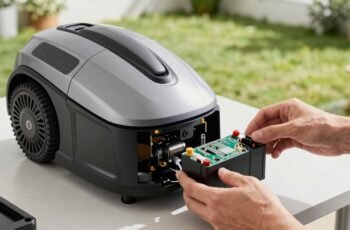
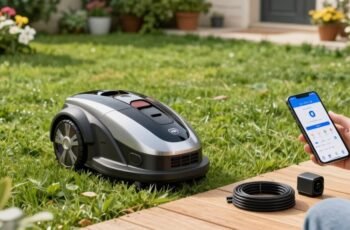
As we approach winter, understanding how cold temperatures impact robotic mower batteries becomes vital for maintaining ideal performance. Proper care during these months can prevent capacity loss and extend battery life. We’ll explore key practices for charging, storing, and troubleshooting batteries in freezing conditions, ensuring your mower remains reliable year-round. Given the potential risks and challenges, it’s essential to implement these strategies effectively—details that could make all the difference in preserving your equipment’s longevity.
Key Takeaways
- Store batteries in a moderate temperature environment and avoid extreme cold to prevent capacity loss.
- Fully charge batteries before winter storage and during the season to maintain optimal health.
- Pre-warm batteries in a controlled environment before use to improve performance in cold weather.
- Regularly monitor battery voltage, runtime, and charging behavior to detect cold-related capacity decline.
- Schedule post-winter performance assessments and replace batteries if capacity drops significantly.
How Cold Temperatures Affect Robotic Mower Batteries
Cold temperatures markedly impact robotic mower batteries by reducing their chemical activity, which leads to decreased capacity and efficiency. Lithium-ion batteries, common in robotic mowers, rely on electrochemical reactions that slow considerably in low temperatures. As temperature drops, ion mobility diminishes, resulting in higher internal resistance and reduced power output. This decreases runtime and can cause irregular charging cycles. Additionally, cold conditions impair the battery’s ability to reach full charge, potentially leading to inaccurate state-of-charge readings. The electrolyte’s viscosity increases, further hindering ion flow. Overall, colder weather hampers battery performance by limiting the chemical processes essential for energy storage and delivery, emphasizing the need for appropriate winter battery management to maintain operational reliability.
Signs Your Battery Is Struggling in Winter
When robotic mower batteries begin to struggle in winter, their performance decline becomes noticeable through specific, measurable signs. First, we observe a reduced runtime duration, indicating diminished capacity. Second, increased charging times suggest lower efficiency in energy transfer. Third, inconsistent cutting patterns or the mower stopping prematurely signal power loss. Fourth, a noticeable decline in battery voltage during operation confirms capacity depletion. These signs collectively point to the impact of cold temperatures on battery chemistry, reducing overall performance. Monitoring these indicators allows us to assess battery health and determine if cold-related stress is impairing functionality. Recognizing these signs early helps us implement appropriate maintenance strategies, preventing further damage and ensuring ideal mower operation during winter months.
Best Practices for Charging Your Mower’s Battery During Cold Months
Optimizing charging techniques during cold months involves monitoring voltage levels and avoiding overcharging, which can accelerate battery degradation. Implementing a winter-specific charging schedule helps prevent capacity loss and guarantees consistent performance. Adhering to these best practices minimizes damage and extends the lifespan of your robotic mower’s battery in low temperatures.
Optimal Charging Techniques
To guarantee your robotic mower’s battery maintains peak performance during winter, it’s essential to follow specific charging practices that account for decreased temperatures. Proper techniques maximize battery chemistry and longevity.
We recommend:
- Charge at moderate temperatures: Aim for 10-20°C (50-68°F) to prevent capacity loss.
- Use manufacturer-recommended chargers: Ensure compatibility and consistent current flow.
- Avoid partial charges: Fully charge the battery when possible to prevent capacity degradation.
- Implement scheduled top-offs: Regularly top up the battery to maintain voltage levels, especially in low temperatures.
Adhering to these precise methods minimizes stress on the battery, preserves its capacity, and guarantees reliable operation throughout the winter months.
Preventing Battery Damage
Have you considered how cold temperatures can accelerate battery degradation if not managed properly? During winter, low temperatures reduce chemical activity within the battery, increasing internal resistance and risking irreversible damage. To prevent this, avoid deep discharges, as they strain the battery further. Always use a charger compatible with cold conditions, ensuring it supplies a steady, controlled current to minimize stress. It’s critical to monitor voltage levels closely; overcharging or undercharging can lead to capacity loss or swelling. Keep the battery within recommended temperature ranges during charging—preferably just above freezing—using insulated enclosures if necessary. Additionally, disconnect the battery if the mower will be unused for extended periods. Proper handling and cautious charging practices are essential to maintaining battery integrity through winter’s cold stresses.
Winter Charging Schedule
What is the ideal charging schedule for your robotic mower’s battery during the cold winter months? To enhance performance and extend battery life, follow these guidelines:
- Charge after each mowing session to prevent deep discharge, which can damage the battery in low temperatures.
- Avoid fully charging or depleting the battery; keep it between 20-80% capacity for peak health.
- Schedule charging in a climate-controlled environment whenever possible, as extreme cold can impair charging efficiency.
- Disconnect the battery if the mower will remain unused for extended periods, and store it at a moderate temperature (around 15°C/59°F).
Adhering to this schedule maintains battery stability and minimizes capacity loss caused by cold-induced stress.
How to Store Your Robotic Mower and Its Battery for Winter
When preparing your robotic mower for winter storage, it is essential to guarantee the battery is properly maintained to prevent capacity loss and potential damage. First, fully charge the battery before storage to minimize capacity degradation. Remove the battery if possible, and store it separately in a cool, dry environment with a stable temperature between 10°C and 15°C. Avoid exposure to extreme cold or heat, as temperature fluctuations can accelerate capacity loss. Confirm the battery terminals are clean and free of corrosion before storage. Use a storage container that prevents physical damage and maintains a consistent environment. Regularly check the battery’s charge level during storage, recharging to about 50% if necessary to preserve cell integrity. Proper storage extends battery lifespan and preserves overall mower functionality.
Tips for Protecting Your Battery From Freezing Temperatures
As winter approaches and temperatures drop, protecting your robotic mower’s battery from freezing becomes a priority. Freezing temperatures can cause internal damage and reduce battery lifespan if not properly managed. To mitigate this, consider these steps:
Protect your robotic mower’s battery from freezing to ensure optimal performance and longer lifespan during winter.
- Store the battery indoors in a temperature-controlled environment, ideally between 0°C and 10°C.
- Avoid exposing the battery to outdoor temperatures below freezing for extended periods.
- Use insulated or thermal covers designed for batteries to minimize heat loss.
- Regularly check and recharge the battery if stored in a temperature-stable location, preventing deep discharge that can worsen in cold conditions.
Following these measures guarantees ideal battery performance and longevity during winter months.
Troubleshooting Common Battery Issues in Winter
Cold temperatures can markedly impair a robotic mower’s battery performance, leading to issues such as reduced runtime, difficulty in starting, or complete failure to operate. Common problems include rapid battery drain, failure to initiate charging, or inconsistent power output. Diagnosing these issues involves checking for proper insulation, ensuring the battery connections are secure, and verifying the charger’s functionality. To mitigate damage, avoid exposing the battery to sudden temperature shifts and maintain a consistent winter storage environment.
| Issue | Cause | Solution |
|---|---|---|
| Rapid battery drain | Low temperature reduces chemical reactions | Use insulated storage, keep above freezing |
| Failure to start | Battery voltage below operational threshold | Warm the battery gradually before use |
| Charging problems | Cold impedes charging efficiency | Pre-warm battery in a controlled environment |
When to Replace Your Robotic Mower Battery After Winter
We monitor battery performance indicators such as reduced run time and increased charging cycles to assess decline. Recognizing these signs helps determine the ideal time for replacement. Addressing battery degradation promptly ensures continued efficiency and prevents unexpected failures.
Signs of Battery Decline
How can you tell if your robotic mower’s battery has declined after winter? Several indicators point to diminished performance. First, a noticeable reduction in mowing time per charge suggests capacity loss. Second, increased charging duration indicates decreased efficiency. Third, if the mower fails to complete its programmed cycle, it may signal weakened battery health. Fourth, frequent shutdowns or erratic operation could reflect internal degradation. These signs result from chemical and physical changes within the battery, reducing its ability to hold and deliver reliable charge. Monitoring these parameters allows for accurate assessment of battery health post-winter, helping determine if replacement is necessary. Early detection prevents mower downtime and ensures consistent performance during the growing season.
Optimal Replacement Timing
Determining the ideal time to replace your robotic mower’s battery after winter hinges on evaluating its performance metrics against manufacturer specifications. Key indicators include reduced runtime, increased charging cycles, and diminished power output during operation. If the battery consistently falls short of its original capacity or requires longer charging times, replacement is warranted. Conduct voltage and capacity tests using calibrated equipment to quantify performance declines accurately. It’s also essential to consider age; batteries typically have a lifespan of 2-3 years under favorable conditions. Post-winter, if your mower’s battery no longer maintains consistent operation or if diagnostic tests reveal significant capacity loss—generally above 20%—timely replacement ensures reliable performance and prevents potential damage to the mower’s electrical system.
Frequently Asked Questions
Can I Use a Battery Insulation Wrap for My Robotic Mower in Winter?
Yes, we can use a battery insulation wrap for our robotic mower in winter. It helps maintain ideal battery temperature, reduces capacity loss, and guarantees reliable operation, especially in extremely cold conditions, by providing necessary thermal insulation.
How Often Should I Check My Battery’s Health During Winter?
We recommend checking your battery’s health monthly during winter, akin to monitoring a delicate instrument. Regular inspections prevent unexpected failures, ensuring ideal performance through precise voltage tests and visual assessments, especially during prolonged cold spells.
Are There Specific Types of Batteries Better Suited for Winter Use?
Lithium-ion batteries are best suited for winter use due to their stability and performance in cold temperatures. They maintain higher capacity and charge retention, making them ideal for robotic mowers operating in winter conditions.
How Does Humidity Affect My Robotic Mower’s Battery Performance in Winter?
Humidity can subtly influence your robotic mower’s battery performance in winter by promoting moisture ingress, which may lead to corrosion or reduced efficiency. We recommend storing your mower in a dry, climate-controlled environment to mitigate these effects.
Can Cold Weather Cause Permanent Damage to My Battery?
Cold weather can cause reversible capacity loss in our batteries, but it generally doesn’t cause permanent damage if we store and operate them properly. Proper insulation and avoiding extreme temperatures help maintain battery health over time.
Conclusion
By following these winter care practices, we can make certain our robotic mower batteries remain resilient against the harshest cold, almost like they’re powered by the sun itself. Proper maintenance prevents catastrophic failures, extends battery life dramatically, and keeps our lawns perfectly trimmed without a hitch. With meticulous attention, we transform winter’s chill from a destructive force into a mere inconvenience—guaranteeing our mower’s performance stays unstoppable, no matter how icy the season gets.