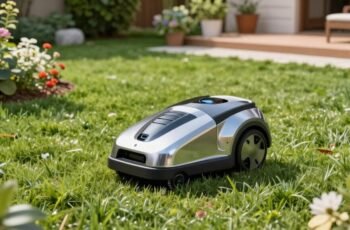
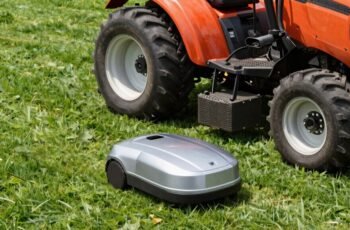
Choosing between a robotic mower and a rotary mower involves considering their differences, similarities, and what best fits our lawn care needs. We weigh factors like cost, terrain, effort, and environmental impact, but the decision isn’t always straightforward. Each option offers unique advantages and challenges that can influence how we maintain our outdoor spaces. To make the right choice, it’s important to understand their features and suitability—so let’s explore what sets them apart.
Key Takeaways
- Robotic mowers are autonomous, quiet, and eco-friendly, suitable for small to medium flat lawns, while rotary mowers require manual effort and are better for larger or uneven terrains.
- Robotic mowers usually cost more upfront but have lower ongoing maintenance; rotary mowers are cheaper initially but need more frequent upkeep.
- Robotic mowers operate with programmable schedules and sensors, whereas rotary mowers rely on manual operation and physical effort.
- Rotary mowers handle tall grass, thick weeds, and rugged terrain effectively, unlike robotic mowers which are best for flat, well-maintained lawns.
- Choice depends on lawn size, terrain, effort preference, noise tolerance, and budget, with robotic mowers ideal for convenience and rotary for power and versatility.
What Factors Should You Consider When Choosing a Lawn Mower?
When choosing a lawn mower, it’s vital to take into account factors that match your yard’s specific needs and your personal preferences. First, consider the size of your lawn. Larger yards often require more powerful mowers with larger cutting decks, while smaller lawns can be managed with lightweight, easy-to-maneuver models. Think about terrain as well—hilly or uneven areas may need sturdier machines. Noise levels can impact your choice if you live in a quiet neighborhood. Storage space matters, especially if you have limited room. Finally, consider your budget and maintenance preferences—some mowers cost more upfront but save money long-term, while others are simpler to maintain. Matching these factors helps you find a mower that’s efficient and suits your lifestyle.
How Do Robotic Mowers Work and What Are Their Key Features?
Robotic mowers operate autonomously by guiding your lawn using a combination of sensors, boundary wires, and sometimes GPS technology to guarantee complete coverage. They detect obstacles and uneven terrain to navigate safely, adjusting their path as needed. These mowers typically feature programmable schedules, allowing you to set mowing times that fit your routine. Key features include sensors for obstacle detection, adjustable cutting heights, and rechargeable batteries that provide several hours of operation. Some models connect via Wi-Fi, enabling remote control through smartphone apps. Their compact size and quiet operation make them unobtrusive, and their energy-efficient design helps save on electricity. Overall, robotic mowers combine smart technology with user-friendly features to automate lawn care efficiently and with minimal effort.
Understanding Rotary Mowers: Types, Power, and Versatility
Rotary mowers come in various types, from push models to riding machines, each suited for different lawn sizes and terrains. They’re powered by options like gas engines, electric motors, or batteries, giving you flexibility in performance and convenience. Their design also allows for versatile use, making them effective for different grass types and landscaping needs.
Types of Rotary Mowers
Understanding rotary mowers involves recognizing that they come in various types, each designed for specific mowing needs. The most common are push mowers, which are lightweight and suited for small lawns or tight spaces. Riding rotary mowers offer greater comfort and are ideal for larger areas, allowing the operator to sit while mowing. There’s also the zero-turn mower, known for its agility and speed, perfect for extensive lawns with complex shapes. Heavy-duty rotary mowers are built for rough terrains and thick grass, providing durability and power. Finally, walk-behind models offer versatility for medium-sized lawns, combining ease of use with efficiency. Each type serves different purposes, so choosing the right one depends on your lawn size, terrain, and mowing frequency.
Power Options Available
When choosing a mower, understanding the available power options helps guarantee you pick the right tool for your lawn. Rotary mowers typically come with gas engines, electric motors, or batteries. Gas-powered models offer high power and mobility, making them ideal for large or tough grass. They’re usually heavier and noisier but provide excellent cutting strength. Electric mowers, whether corded or cordless, are quieter, easier to maintain, and more environmentally friendly. Corded models require an extension cord, limiting mobility, while cordless ones rely on rechargeable batteries, offering convenience and decent runtime. Battery technology has improved, providing longer-lasting power suitable for medium-sized lawns. By knowing these options, you can select a rotary mower that matches your lawn size, terrain, and personal preferences.
Versatility in Use
Because of their adaptable design, rotary mowers are highly versatile tools suitable for a range of lawn conditions and mowing needs. They can handle tall grass, thick weeds, and uneven terrain with ease, making them ideal for various yard types. The different blade styles and cutting heights allow us to customize the mowing process, whether we’re trimming a small lawn or maintaining a large property. Rotary mowers are also compatible with various attachments, such as baggers, mulchers, and scarifiers, expanding their functionality. This flexibility means we can use them for more than just regular mowing—they’re useful for edging, debris removal, and even light landscaping tasks. Overall, their adaptability makes rotary mowers a practical choice for diverse outdoor maintenance needs.
How Much Do Robotic and Rotary Mowers Cost, and What’s Their Maintenance Like?
Robotic and rotary mowers differ markedly in their upfront costs and ongoing maintenance expenses, making it important to take both factors into account before choosing. Robotic mowers generally cost between $500 and $2,500, depending on features and lawn size, and tend to have lower maintenance needs. Maintenance mainly involves blade sharpening, battery replacement, and occasional cleaning. Rotary mowers are usually more affordable upfront, ranging from $150 to $600, but they require more frequent upkeep—changing blades, oil changes, and engine checks. They also tend to have higher fuel or electricity costs over time. While robotic mowers save time and effort, rotary mowers might be more suitable for larger or more rugged lawns, but they demand more maintenance and operational costs.
Which Lawn Mower Is Best for Your Garden Size and Terrain?
Choosing the right mower depends on your garden’s size and terrain. Robotic mowers excel in small to medium lawns with flat surfaces, while rotary mowers handle larger, uneven areas better. Let’s explore which option suits your garden best.
Suitable Garden Sizes
When selecting the right mower for your garden, it’s essential to take into account the size and terrain of your lawn. For small to medium gardens, rotary mowers are versatile and easy to maneuver. Robotic mowers excel in maintaining larger, flat lawns with minimal effort. Here’s a quick comparison:
| Garden Size | Recommended Mower Type |
|---|---|
| Small (up to 1,000 sq ft) | Rotary mower |
| Medium (1,000–5,000 sq ft) | Either rotary or robotic |
| Large (over 5,000 sq ft) | Robotic mower, if terrain is flat |
| Very Large or Uneven Terrain | Specialist equipment or larger rotary mowers |
Choosing the right mower depends on your garden’s size and layout, ensuring efficient and hassle-free lawn care.
Terrain Compatibility
While the size of your lawn is important, understanding the terrain is equally essential in selecting the right mower. Different gardens present unique challenges that can influence mower performance. For uneven or hilly terrain, a rotary mower with sturdy wheels and adjustable height works well, handling slopes with ease. If your yard has tight corners or narrow pathways, a robotic mower with precise navigation can maneuver better. Areas with thick, dense grass may require more power, favoring rotary models. Flat, even lawns suit both types, but robotic mowers excel for regular maintenance. Consider these factors:
- Slope steepness and stability
- Grass density and height
- Narrow or obstructed pathways
- Presence of obstacles
- Soil firmness and softness
Are Robotic or Rotary Mowers Quieter and More Eco-Friendly?
Robotic mowers are generally quieter and more eco-friendly than rotary mowers, making them a popular choice for those looking to reduce noise pollution and their environmental impact. They operate with electric motors that produce minimal noise, often blending into the background, unlike traditional rotary mowers, which can be loud and disruptive. Additionally, robotic mowers don’t emit emissions, as they run on rechargeable batteries, helping lower carbon footprints. This eco-friendly aspect makes them suitable for environmentally conscious homeowners. Rotary mowers, on the other hand, typically use gasoline engines that generate more noise and release pollutants into the air. Overall, robotic mowers are the better choice if you want a quieter yard and a greener option, especially in noise-sensitive or eco-aware neighborhoods.
How Easy Is It to Use Each Type of Mower?
Using a robotic mower typically requires less effort and technical skill than operating a traditional rotary mower. Setting up the robotic mower involves simple steps like charging it, installing boundary wires, and scheduling mowing times. Once programmed, it runs automatically, needing minimal intervention. In contrast, rotary mowers demand physical effort and skill to operate safely, especially on uneven terrain.
Consider these points:
- Robotic mowers are usually plug-and-play once configured
- They require minimal manual control during operation
- Rotary mowers need pushing or maneuvering manually
- Maintenance involves simple tasks like blade sharpening
- Operating a rotary mower demands physical strength and caution
Pros and Cons of Robotic vs Rotary Mowers
Both robotic and rotary mowers have unique advantages and drawbacks that can influence your decision. Robotic mowers are quiet, low-maintenance, and operate automatically, saving time and effort. However, they can be expensive upfront and may struggle with complex terrains or tall grass. Rotary mowers are powerful, versatile, and suitable for larger or uneven lawns, but they require more manual effort, regular maintenance, and can be noisy.
| Feature | Robotic Mower | Rotary Mower |
|---|---|---|
| Cost | Higher initial investment | Lower initial cost |
| Maintenance | Minimal, mostly battery charging | Regular blade sharpening and oiling |
| Ease of Use | Very easy, automated | Requires manual operation |
| Terrain Handling | Best on flat, even lawns | Handles uneven, rough terrain |
How to Choose the Right Mower for Your Lawn and Lifestyle
Choosing the right mower depends on evaluating your lawn’s size, terrain, and your personal preferences for convenience and effort. First, consider the lawn’s size—larger yards may benefit from robotic mowers for ongoing maintenance, while smaller lawns might be easier with a rotary mower. Next, assess the terrain; uneven or hilly areas could require a sturdy rotary mower, whereas flat grounds suit robotic options. Your lifestyle also influences the choice: do you prefer minimal effort or enjoy manual work? Ultimately, think about storage space, noise tolerance, and budget.
- Lawn size and terrain
- Desired level of effort
- Storage and noise considerations
- Budget constraints
- Maintenance preferences
Frequently Asked Questions
Can Robotic Mowers Handle Uneven or Hilly Terrains Effectively?
Robotic mowers can handle uneven or hilly terrains quite well, especially models designed with adjustable blades and powerful motors. We find they effectively navigate slopes, but checking specific model capabilities guarantees ideal performance on your terrain.
Are Robotic Mowers Suitable for Large or Complex Gardens?
We believe robotic mowers excel in large, complex gardens, with some models covering up to 2,000 square meters efficiently. They navigate obstacles and intricate layouts, making lawn care easier without the need for constant supervision.
How Do Weather Conditions Affect Robotic Mower Operation?
Weather conditions considerably impact robotic mower operation. Rain can cause slipping or muddy patches, while extreme heat might reduce battery life. We recommend monitoring weather closely and adjusting mowing schedules to guarantee ideal performance and longevity.
What Safety Features Are Included in Robotic and Rotary Mowers?
We include safety features like obstacle detection, automatic shut-off, blade guards, and emergency stop buttons in both robotic and rotary mowers, ensuring safe operation and minimizing accidents for users and bystanders alike.
Can Robotic Mowers Be Customized for Different Grass Types?
Like a chameleon blending into its environment, robotic mowers adapt to different grass types through adjustable settings, allowing us to customize their performance effortlessly, ensuring a healthy, manicured lawn no matter the grass variety.
Conclusion
Choosing between a robotic and rotary mower is like selecting a partner for your lawn’s story—one offers silent, steady care, while the other brings strength and adaptability. Reflect on your garden’s landscape, your effort level, and your budget. Whatever you decide, remember that your mower is more than machinery; it’s a symbol of your connection to your outdoor space. Let it be the trusted guardian of your green sanctuary.