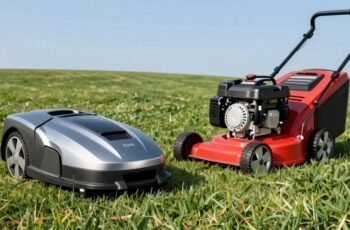
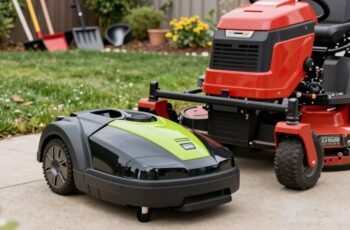
Last weekend, we spent hours pushing a heavy mower across uneven grass, feeling the strain in our arms and back. It made us wonder if there’s a better way to handle lawn care that doesn’t wear us out. With options like robot mowers emerging, it’s worth considering how much effort each method demands and whether technology can truly ease our workload. Curious to find out which approach might suit your lifestyle better?
Key Takeaways
- Manual mowing demands significant physical effort, especially on large or uneven lawns, requiring pushing, bending, and debris management.
- Robot mowers automate the process, reducing physical exertion and handling obstacles automatically, ideal for low-effort maintenance.
- Manual mowing takes longer and is more physically demanding, while robot mowers operate quietly and finish tasks more quickly.
- Setup and maintenance of robot mowers involve initial boundary setup and periodic blade sharpening, but they require less ongoing physical effort.
- Robot mowers are suitable for busy schedules and larger lawns, offering consistent results with minimal physical effort compared to manual mowing.
Should You Mow Manually or Use a Robot Mower?
Deciding whether to mow manually or invest in a robot mower depends on your priorities and lifestyle. If you enjoy outdoor work and want control over every cut, manual mowing might suit you. It allows flexibility and immediate results, especially for small or uneven lawns. However, it requires time, effort, and physical activity, which can become tiring or impractical for larger areas. On the other hand, a robot mower offers convenience and saves you from regular physical labor. It’s perfect if you prefer a hands-off approach and want a consistently neat lawn without daily effort. Consider your schedule, lawn size, and physical ability. Ultimately, choosing between manual and robotic mowing hinges on how much effort you’re willing to invest and what fits best into your routine.
How Do Robot Mowers Save You Effort?
Robot mowers handle grass cutting automatically, so we don’t have to lift a finger. They reduce physical strain by taking on the tough, repetitive tasks. Plus, they save us time and effort, giving us more freedom to focus on other things.
Automates Grass Cutting Tasks
Automated grass cutting considerably reduces the physical effort required for lawn maintenance. Robot mowers handle the entire mowing process without manual intervention, so we don’t need to push a mower or maneuver a trimmer. Once set up, they independently navigate your yard, recognizing boundaries and obstacles. They operate on scheduled times or when the grass reaches a certain height, ensuring consistent maintenance without us lifting a finger. This automation takes away the repetitive, time-consuming task of pushing a mower back and forth, especially in larger yards. Instead, we simply program the robot, and it does the work continuously. This not only saves effort but also guarantees a neat, evenly cut lawn without the physical exertion typically involved in manual mowing.
Reduces Physical Strain
Since manual mowing can be physically demanding, especially for larger lawns, robot mowers considerably reduce the strain on our bodies. With traditional mowers, we often bend, push, and carry heavy equipment, which can lead to fatigue or even injury over time. Robot mowers handle the work automatically, eliminating the need for strenuous physical effort. They navigate the yard smoothly, trimming grass without us needing to exert force or maintain balance. This shift means we avoid repetitive motions, back strain, and muscle fatigue associated with manual mowing. For those with mobility issues or joint problems, robot mowers provide a safer, less tiring alternative. Overall, they help us maintain our lawns without the physical toll that manual mowing often entails.
Saves Time and Effort
By taking over the continuous task of mowing, robot mowers free up our time and energy for other activities. Instead of spending hours pushing a mower, we can relax or focus on hobbies. Robot mowers operate automatically, requiring minimal setup and supervision. They mow regularly, preventing overgrown grass and maintaining a neat lawn effortlessly. This constant care means we don’t have to schedule or rush to complete yard work on weekends. Plus, their smart navigation adapts to our lawn’s shape, covering every inch efficiently. With a robot mower, we save the effort of pushing, pulling, and maneuvering a traditional mower. It’s a hands-free solution that keeps the yard tidy while giving us back precious time and energy.
Setting Up Your Robot Mower: What to Expect
Setting up your robot mower is an essential step that determines how smoothly it will operate. First, you’ll need to assemble any parts, like attaching the blades and charging station. Then, you’ll place the mower in your yard and connect it to the Wi-Fi or app for control. It’s important to map out boundaries by installing boundary wires or setting virtual zones if your model allows. You’ll also need to adjust the cutting height to suit your grass type. Expect to spend some time calibrating the mower’s sensors and scheduling its daily runs. Once everything is configured, your mower will be ready to start its work automatically. Proper initial setup ensures efficient mowing and minimizes issues, making the whole process more reliable and hassle-free.
Maintaining Your Robot Mower Made Simple
Keeping your robot mower in top shape is straightforward with a simple charging routine and regular blade checks. We find that charging it once a week keeps it ready to go, while inspecting and sharpening the blades every few weeks guarantees a clean cut. These easy steps make maintenance hassle-free and keep your mower working efficiently.
Easy Charging Routine
Fortunately, maintaining your robot mower’s charging routine is straightforward and hassle-free. Most models automatically return to their charging station when the battery runs low, so you don’t have to worry about remembering to plug in. To keep things smooth, just ensure the station is clean and unobstructed, and regularly check that the charging contacts are free of dirt or debris. Here are some tips to make the process even easier:
- Keep the charging station in a sheltered, accessible spot
- Trim grass around the station for clear access
- Check and clean charging contacts periodically
- Ensure the station’s power source is stable
- Schedule regular software updates for optimal performance
With these simple steps, your mower stays charged and ready to mow without fuss.
Regular Blade Maintenance
A clean and well-maintained charging station helps keep your robot mower ready to go, but to guarantee it performs at its best, regular blade maintenance is just as important. Dull blades can reduce cutting efficiency and stress the motor. We recommend inspecting and sharpening the blades every few weeks, depending on use.
| Task | Benefit |
|---|---|
| Check for wear and tear | Prevents uneven cutting and damage |
| Sharpen or replace blades | Ensures clean, precise cuts |
| Clean debris off blades | Maintains peak performance |
| Tighten blade bolts | Keeps blades secure and safe |
Regular maintenance keeps your mower cutting smoothly and prolongs its lifespan.
The Physical Effort of Manual Mowing
Manual mowing requires considerable physical effort, especially for larger lawns or uneven terrain. It’s not just pushing a mower; it’s a full-body workout. You’ll find yourself exerting energy to push, pull, and navigate tricky spots. The work can be tiring, particularly on hot days or hilly ground.
Manual mowing is a physically demanding full-body workout, especially on uneven terrain or hot days.
Some common struggles include:
- Pushing a heavy mower uphill or on uneven ground
- Maintaining a steady pace over large areas
- Bending and reaching to trim edges
- Dealing with fatigue after extended mowing sessions
- Managing tangled grass or debris clogging blades
All these factors make manual mowing physically demanding, often leaving you exhausted. It’s clear that this effort can be a real challenge, especially as your lawn grows bigger or terrain gets more rugged.
How Much Time Do You Need to Mow?
How long it takes to mow depends on the size of your lawn and the equipment you use. Manual mowing often takes more time, especially on larger areas, while robot mowers can finish faster with minimal effort. Several factors, like terrain and grass height, also influence how long the job will take.
Mowing Time Comparison
When comparing mowing times, it quickly becomes clear that robotic mowers can considerably cut down on the time we spend maintaining lawns. While manual mowing often takes anywhere from 30 minutes to over an hour, robotic mowers typically work quietly in the background, often completing the job overnight or during the day without our direct involvement.
Here’s what we notice:
- Manual mowing depends on lawn size and mower speed
- Robotic mowers usually finish a standard yard in 1-2 hours, often split into smaller sessions
- Larger lawns may take longer manually, but robots handle them consistently
- Manual effort increases with uneven terrain or obstacles
- Robotic mowers save us from repeated, time-consuming cuts
Factors Influencing Duration
Several key factors determine the time required to mow a lawn, and understanding these can help us better estimate our mowing efforts. The size of the lawn is the most obvious factor—larger areas naturally take longer. The shape and complexity of the yard also matter; irregular or obstacle-filled lawns slow down progress. Grass height and density influence mowing speed, as thicker or taller grass requires more effort. Equipment type plays a role too—robot mowers can be efficient for small to medium lawns, while manual mowing might be quicker for larger or more intricate landscapes. Weather conditions affect grass growth and cutting efficiency, impacting overall time. By considering these factors, we can better plan our mowing schedule and choose the right equipment for our needs.
Which Mowing Method Is More Convenient?
Choosing between a robot mower and manual mowing often comes down to convenience, and each method offers distinct advantages. Robot mowers are set-and-forget devices that save time and effort, allowing us to relax or focus on other tasks. Manual mowing, on the other hand, offers immediate control and flexibility, especially for detailed trimming.
The convenience of a robot mower includes:
- Automated operation, requiring minimal supervision
- Consistent cutting without fatigue
- Quiet performance, ideal for noise-sensitive areas
- Scheduled mowing, freeing up our time
- No physical effort needed, perfect for those with mobility issues
Manual mowing demands more physical work, but provides direct control. Ultimately, the choice depends on how much effort we’re willing to invest versus how much convenience we seek.
Effort Required for Handling Terrain and Obstacles
Handling uneven terrain and obstacles can considerably impact the effort required to mow your lawn, whether using a robot mower or manual tools. For manual mowing, obstacles like rocks, trees, or thick patches of grass can slow us down and sometimes require extra effort to navigate around or remove. Uneven ground makes pushing a mower more physically demanding, especially on slopes or rocky areas. Robot mowers, on the other hand, are designed to handle some obstacles automatically, but their effectiveness depends on the model. Large or complex obstacles may require manual intervention or adjustments to the mowing area. Overall, terrains with lots of obstacles or irregular surfaces tend to increase the effort for both methods, but manual mowing often demands more physical input and careful maneuvering.
Environmental Impact and Energy Use in Lawn Care
While traditional manual mowings often rely on gas-powered equipment, which can emit pollutants and consume significant energy, robotic mowers tend to be more environmentally friendly by running on rechargeable batteries. They produce no direct emissions, reducing air pollution and greenhouse gases. Additionally, robotic mowers often operate quietly, minimizing noise pollution. They also use energy more efficiently, cutting only when needed and avoiding excessive fuel consumption. Here are some key points:
- No exhaust emissions, better for air quality
- Lower noise levels, less disturbance
- Rechargeable batteries reduce reliance on fossil fuels
- Energy-efficient operation with smart scheduling
- Less waste from oil or gas spills
Choosing the Best Lawn Mowing Method for Your Lifestyle
Finding the right lawn mowing method depends on your lifestyle, priorities, and available time. If you enjoy spending weekends outdoors and prefer hands-on control, manual mowing might suit you best. It allows flexibility and immediate results, but it can be time-consuming and physically demanding. On the other hand, if you have a busy schedule or want a low-effort option, a robot mower offers convenience and consistent trimming without much input. Consider the size and terrain of your lawn—larger, flat areas work well with automated solutions, while irregular or hilly yards might require more traditional mowers. Think about your environmental values too—robot mowers tend to be more eco-friendly. Ultimately, choosing the best method balances your lifestyle, physical ability, time constraints, and environmental considerations.
Frequently Asked Questions
What Is the Initial Cost Difference Between Robot Mowers and Manual Mowing?
We find robot mowers generally cost more upfront than manual mowers, often ranging from a few hundred to over a thousand dollars, but manual mowers are usually cheaper initially, costing less but requiring more ongoing effort.
How Long Do Robot Mowers Typically Last Before Needing Replacement?
Robot mowers typically last between 3 to 8 years, like a reliable companion in your yard’s symphony. With proper care, they can serve as steadfast helpers, making your mowing chores much easier.
Are Robot Mowers Suitable for All Lawn Types and Sizes?
Robot mowers suit many lawn types and sizes, especially small to medium yards with even terrain. However, for very large or complex landscapes, manual mowing or specialized equipment might be more effective and practical for maintaining your lawn.
What Safety Features Do Robot Mowers Include to Prevent Accidents?
We believe robot mowers are quite safe, featuring sensors that gently sense obstacles and pause. They include emergency stop buttons and PIN codes, ensuring peace of mind while effortlessly maintaining your lawn without worrying about accidents.
Can Robot Mowers Handle Complex or Uneven Terrain Effectively?
Robot mowers can handle complex or uneven terrain reasonably well, thanks to their adjustable blades and sensors. However, extremely rough or steep terrain might still challenge them, so manual mowing remains necessary for some areas.
Conclusion
Ultimately, choosing between manual and robot mowing depends on our lifestyle and preferences. Did you know that robotic mowers can reduce physical effort by up to 80%? That’s a huge difference when it comes to saving time and energy. By opting for a robot mower, we can enjoy a well-maintained lawn without the sweat and strain of manual labor, making lawn care easier, faster, and more convenient for everyone.