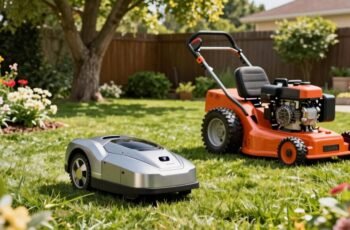
When it comes to maintaining a lawn, choosing between a robot mower and a zero-turn mower can seem overwhelming. Both options have distinct advantages and suit different needs, but understanding their key differences is essential for making the right decision. We’ll explore how each performs on various terrains, their costs, and which might fit your yard and lifestyle best—so you can confidently find the right lawn care solution.
Key Takeaways
- Robot mowers are fully automated, ideal for small to medium yards, while zero-turn mowers are manual and suitable for large, complex lawns.
- Zero-turn mowers offer faster, more precise edging and finishing, whereas robot mowers provide consistent maintenance with minimal effort.
- Initial costs are lower for robot mowers ($1,000–$3,000) but they may take longer to cover large areas; zero-turns are more expensive ($3,500–$8,000+).
- Robot mowers require less maintenance and are easier to operate, often controlled via smartphone; zero-turns need mechanical upkeep and skillful handling.
- Zero-turn mowers excel on uneven terrain and in trimming edges, while robot mowers are better for irregular or narrow spaces with less manual intervention.
Understanding the Key Differences Between Robot and Zero-Turn Mowers
When choosing between a robot mower and a zero-turn mower, it’s essential to understand their fundamental differences. Robot mowers are fully automated, small, and designed for continuous, low-effort lawn maintenance. They operate quietly, navigate using boundary wires or sensors, and are ideal for regular, light trimming. Zero-turn mowers, on the other hand, are powerful, highly maneuverable, and built for larger, more complex lawns. They feature adjustable steering controls that allow sharp turns and quick navigation around obstacles. While zero-turn mowers require manual operation and regular refueling, robot mowers run autonomously, requiring minimal supervision. The key difference is that one offers convenience through automation, and the other provides brute strength and precision for more demanding tasks. Understanding these core distinctions helps you pick the right mower for your needs.
Which Mower Is Best for Small, Medium, or Large Lawns?
Choosing the right mower depends heavily on the size of your lawn, as each type excels in different scenarios. For small yards, robot mowers are ideal—they’re compact, easy to set up, and require minimal maintenance, making them perfect for narrow or irregular spaces. Medium lawns benefit from zero-turn mowers, which offer speed, precision, and maneuverability, helping you mow efficiently without taking up too much space. Large lawns, however, often demand the power and coverage of a zero-turn mower, especially if you want quick results and a neatly cut lawn. Robot mowers can handle large areas too, but they may take longer and require more planning. Ultimately, your lawn size guides which mower will give you the best results with less hassle.
How Do Costs and Maintenance Compare?
When comparing costs, we find that robot mowers typically have a higher upfront price but lower ongoing maintenance, while zero-turn mowers are more affordable initially but may require more frequent repairs. Maintenance and repair needs also differ, with robot mowers needing less manual intervention, whereas zero-turns might demand regular servicing. Understanding these differences helps us decide which option fits our budget and maintenance preferences better.
Upfront Purchase Expenses
Initial costs for robotic and zero-turn mowers differ substantially, and understanding these differences helps us make informed decisions. Robotic mowers are generally more affordable upfront, often costing between $1,000 and $3,000, depending on features and coverage area. In contrast, zero-turn mowers tend to have a higher initial price, usually ranging from $3,500 to over $8,000. The larger investment in zero-turn mowers reflects their power, size, and versatility, making them suitable for more extensive or complex lawns. Robotic mowers require less setup and fewer accessories initially, while zero-turn models often come with additional attachments or upgrades that can increase the purchase cost. Ultimately, the upfront expense depends on your lawn size, terrain, and desired features.
Ongoing Maintenance Costs
Ongoing maintenance costs for robotic and zero-turn mowers vary considerably, influencing their long-term affordability. Robotic mowers generally have lower maintenance expenses, mainly needing occasional blade replacements and battery upgrades, which are relatively inexpensive. They lack complex parts like belts or hydraulic systems, reducing repair costs over time. Zero-turn mowers, on the other hand, often require regular oil changes, air filters, and belt replacements, which can add up. Their larger engines and mechanical complexity mean maintenance visits tend to be more frequent and costly. Additionally, zero-turn mowers may need tune-ups or parts replacement more often, especially with heavy use. Overall, while robotic mowers may have higher upfront battery costs, their ongoing maintenance tends to be more budget-friendly over the long run compared to zero-turn models.
Repair and Service Needs
Robotic mowers generally require less frequent repairs and servicing because of their simpler design and fewer moving parts. They tend to be more reliable over time, reducing unexpected expenses. When repairs are needed, they’re usually straightforward and less costly. Here are some key differences:
- Fewer Parts – Less wear and tear means fewer breakdowns.
- Simple Mechanics – Easier to troubleshoot and fix.
- Less Frequent Servicing – Regular blade sharpening and software updates are often all that’s needed.
- Lower Repair Costs – Parts and labor tend to be cheaper compared to zero-turn mowers.
Are Robot Mowers Easy to Use and User-Friendly?
While robot mowers are designed to be convenient, many users wonder just how easy they really are to operate. Typically, they feature straightforward setup processes, often involving simple app controls or minimal manual programming. Most models are intuitive, allowing users to schedule mowing sessions without much effort. To give you a clearer picture, here’s a quick comparison:
| Aspect | Robot Mower | Zero-Turn Mower |
|---|---|---|
| Ease of Use | Very user-friendly, minimal setup | Requires training and experience |
| Control Method | Smartphone app or onboard controls | Manual controls or steering wheel |
| Maintenance | Low, mostly software updates | Regular mechanical upkeep |
| Learning Curve | Short, mostly plug-and-play | Longer, needs skill development |
How Do the Mowers Perform in Cutting and Lawn Finish?
Both mower types aim for clean, precise cuts, but they do so differently. We notice that robot mowers often provide a more uniform finish across the lawn, while zero-turns excel at edge trimming and detailed shaping. Ultimately, their performance in cutting and lawn finish depends on your specific needs and yard layout.
Precision of Cuts
When it comes to cutting precision and the quality of the lawn finish, zero-turn mowers generally deliver more consistent and cleaner cuts than robot mowers. Zero-turns have a higher degree of control, allowing for sharp turns and precise edging. They tend to cut grass evenly, especially on uneven terrain, thanks to their powerful blades and adjustable speed. Robot mowers, while convenient, often produce a more patchy or uneven finish, especially around complex landscaping.
Here’s how they compare:
- Zero-turn mowers provide crisp, defined edges and clean lines.
- Robot mowers may leave uncut patches or inconsistent heights.
- Zero-turns excel on varied terrain due to better maneuverability.
- Robot mowers are better suited for steady, even surfaces for consistent cuts.
Lawn Uniformity Achieved
Lawn uniformity is a key factor in evaluating mower performance, and it reveals clear differences between robot mowers and zero-turn models. Robot mowers tend to produce a more consistent cut over time, thanks to their frequent, small trimming sessions. They navigate in a grid pattern, which helps create an even appearance, especially on irregular terrains. Zero-turn mowers, on the other hand, often deliver quicker, more aggressive cuts, but can leave uneven patches if not carefully operated. Their ability to cover large areas rapidly is an advantage, yet they sometimes result in variations in grass height, especially around obstacles. Overall, robot mowers excel at maintaining uniformity through consistent, precise trimming, while zero-turn mowers require more operator skill to achieve the same level of lawn finish.
Edge Trimming Effectiveness
Edge trimming is a crucial aspect of achieving a polished lawn finish, and the performance of robot mowers and zero-turn models varies considerably in this area. Robot mowers often struggle with precise edge trimming, leaving a noticeable gap along borders. Zero-turn mowers, however, excel in this task, thanks to their manual control and ability to maneuver close to edges. To compare:
- Robot mowers tend to leave uneven or missed spots along edges.
- Zero-turn mowers provide a clean, sharp finish with manual edging.
- Robot mowers require additional trimming for perfect edges.
- Zero-turn models can trim edges in a single pass, saving time.
What Are the Main Benefits of Choosing a Robot Mower?
One of the biggest advantages of choosing a robot mower is its ability to maintain your lawn effortlessly and consistently. It automatically schedules regular mowing sessions, ensuring your grass stays healthy and neat without your intervention. This saves you time and effort, especially during busy seasons. Robot mowers also operate quietly, so they won’t disturb your daily activities or neighbors. Their precise cutting patterns promote healthier grass growth and reduce the risk of overgrown or uneven patches. Additionally, many models feature smart sensors and terrain adaptation, allowing them to navigate complex yards safely. They require minimal maintenance compared to traditional mowers, and some are programmable via apps for added convenience. Overall, a robot mower offers a low-maintenance, efficient way to keep your lawn pristine year-round.
Pros and Cons of Robot Mowers vs. Zero-Turn Models
While both robot mowers and zero-turn models aim to keep your lawn in top shape, each has distinct advantages and drawbacks that can influence your decision.
Both robot mowers and zero-turn models offer unique benefits and challenges for maintaining your lawn.
- Efficiency: Robot mowers are great for regular maintenance, but zero-turns handle larger, complex lawns faster.
- Cost: Robots are often more affordable upfront, while zero-turns can be pricier but more versatile.
- Convenience: Robot mowers operate autonomously, reducing effort, but zero-turns require manual control.
- Terrain Handling: Zero-turns excel on uneven terrain and obstacles, whereas robots may struggle in challenging landscapes.
Understanding these pros and cons helps you choose based on your yard’s size, terrain, and your lifestyle preferences.
Which Lawn Mower Is Right for Your Yard and Lifestyle?
Choosing the right lawn mower depends largely on your yard’s size, terrain, and your preferences for convenience and effort. For small, flat lawns, a robot mower can be ideal—low maintenance and operated automatically. Larger properties with varied terrain might benefit from a zero-turn mower, offering speed and maneuverability. Consider your physical ability; zero-turns require more handling, while robot mowers are hands-off. Here’s a quick comparison:
| Yard Size | Terrain | User Preference |
|---|---|---|
| Small, flat | Smooth | Robot mower, minimal effort |
| Medium, hilly | Slightly uneven | Zero-turn, versatile |
| Large, varied | Rough, sloped | Zero-turn for efficiency |
| Small, uneven | Flat but bumpy | Robot mower possible |
| Large, flat | Large open space | Zero-turn for speed |
This helps match your yard and lifestyle with the right mower.
Frequently Asked Questions
How Long Do Robot Mowers Typically Operate on a Single Charge?
Robot mowers typically operate for about 60 to 90 minutes on a single charge, depending on lawn size and terrain. We find that their smart technology helps them efficiently complete tasks before needing a recharge.
Can Robot Mowers Handle Complex or Uneven Terrain Effectively?
Think of robot mowers as agile explorers traversing a rugged trail; they can handle complex or uneven terrain, but their effectiveness depends on the model’s design. Some excel on challenging ground, while others struggle.
What Safety Features Are Included in Modern Robot Mowers?
Modern robot mowers include safety features like obstacle detection, boundary sensors, automatic shut-off when lifted, and blade sensors that stop blades if something’s wrong, ensuring safe operation for everyone around your yard.
Are Zero-Turn Mowers Suitable for Multi-Purpose Landscaping Tasks?
Zero-turn mowers are highly suitable for multi-purpose landscaping tasks because they offer excellent maneuverability, speed, and precision. We find them ideal for managing large lawns, trimming edges, and tackling complex terrain efficiently.
How Do Weather Conditions Impact the Performance of Each Mower Type?
Weather can turn the performance of both mowers upside down like a house of cards. Rain, snow, or extreme heat hampers their efficiency, making us adapt and choose the right mower for each weather condition to keep lawns perfect.
Conclusion
Choosing between a robot mower and a zero-turn model is like selecting a trusted partner—either the silent, diligent guardian or the dynamic, powerful hero. Both have their strengths, fitting different lawns and lifestyles. By understanding their unique roles, we can find the perfect match to keep our lawns healthy and beautiful. After all, the right mower isn’t just equipment; it’s the key to a lush, well-tended yard that feels like home.