When it comes to maintaining large gardens, choosing between robot mowers and ride-on mowers can be challenging. Both options offer distinct benefits and limitations, depending on your landscape and preferences. We’ll explore how each performs in different settings, their ease of use, costs, and long-term reliability. Understanding these differences can help you make the best decision for your outdoor space, but there are details that might surprise you.
Key Takeaways
- Robot mowers are ideal for flat, obstacle-free gardens up to 1 acre, while ride-on mowers suit larger, uneven terrains over 2 acres.
- Robot mowers offer automation and lower upfront costs, whereas ride-on mowers provide higher power and faster coverage for extensive lawns.
- Ride-on mowers handle tough, overgrown grass and steep slopes better due to larger engines and wheels.
- Both require regular maintenance, but robot mowers need sensor and battery care, while ride-on mowers focus on engine and blade upkeep.
- Safety features like obstacle detection and boundary wires are common, but ride-on models often include safety switches and emergency stops.
What Are the Main Differences Between Robot Mowers and Ride-On Mowers?
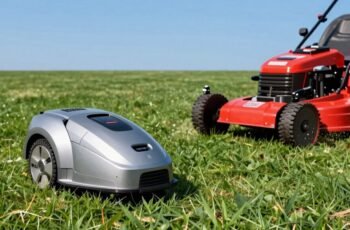
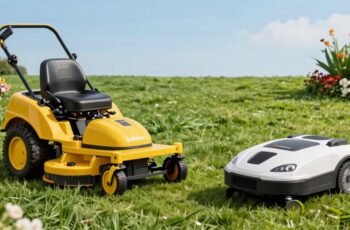
While both robot mowers and ride-on mowers are designed to keep large gardens well-maintained, they differ considerably in operation and design. Robot mowers are autonomous, small, and compact, moving around your yard on their own. They cut grass gradually and regularly, often steering via boundary wires or sensors. Ride-on mowers, on the other hand, are larger, require manual operation, and are driven like a small vehicle. They cover more ground quickly and are suitable for cutting thick or tall grass efficiently. Maintenance also differs: robot mowers need regular software updates and blade checks, while ride-on mowers require engine maintenance and fuel management. Overall, robot mowers are more about convenience and automation, whereas ride-on mowers focus on speed and power.
Which Large Gardens Are Best Suited for Robot Mowers?
Robot mowers work best on large gardens that are relatively flat and free of complex obstacles. They handle moderate terrain well but may struggle with steep slopes or uneven surfaces. Gardens with open spaces and minimal obstructions are ideal for maximizing their efficiency.
Garden Size Compatibility
Large gardens with expansive, flat, and obstacle-free lawns are ideal for robot mowers, as these conditions allow the machines to operate efficiently without frequent human intervention. Generally, robot mowers suit medium to large gardens up to about 1 acre, depending on the model’s battery life and cutting capacity. Smaller spaces may not justify the investment, while very extensive lawns might require multiple units or a ride-on mower.
| Garden Size | Suitability |
|---|---|
| Up to 0.5 acres | Excellent for most robot models |
| 0.5 – 1 acre | Suitable with high-capacity batteries |
| 1 – 2 acres | Possible, but may need multiple units |
| 2 – 5 acres | Less practical, better for ride-on mowers |
| Over 5 acres | Generally better served by ride-on mowers |
Choosing the right mower depends on your garden’s size and the machine’s capabilities.
Terrain and Obstacle Management
The success of a robot mower heavily depends on the terrain and obstacles present in your garden. Flat, even surfaces allow the mower to operate smoothly, while uneven ground can cause issues. Obstacles like trees, flower beds, and garden furniture require careful navigation or removal. Steep slopes might be challenging for some models, risking instability or inefficient cutting. Properly managing these factors ensures peak performance and longevity of the mower.
- Flat terrain enhances efficiency and safety
- Clear pathways prevent navigation issues
- Moderate slopes are manageable with the right model
How Easy Are Robot Mowers to Use and Maintain?
Robot mowers are generally straightforward to set up and program, often with user-friendly interfaces. Maintenance is minimal, mostly involving blade checks and battery care, but troubleshooting can sometimes be tricky. Overall, they’re designed to be easy to manage, even for those without technical experience.
Setup and Programming
Setting up and programming a robot mower is generally straightforward, especially with modern models designed for ease of use. Most come with simple instructions and intuitive interfaces, making initial setup quick and hassle-free. You usually start by installing boundary wires or configuring virtual boundaries via a smartphone app. Programming involves setting mowing schedules, which can often be done remotely or through a user-friendly display.
- Easy-to-follow setup guides reduce the learning curve
- Customizable schedules allow flexibility for your garden’s needs
- Smartphone apps offer remote control and real-time adjustments
These features make robot mowers accessible even for those less tech-savvy, ensuring a smooth start and efficient operation for large gardens.
Maintenance and Troubleshooting
Although robot mowers are designed for easy maintenance, they still require regular attention to keep them running smoothly. We find that cleaning the blades and undercarriage weekly prevents buildup and keeps cutting efficiency high. Battery management is straightforward—just keep an eye on charge levels and replace batteries when needed. Troubleshooting common issues, like connectivity or navigation errors, usually involves resetting the device or updating firmware, which is simple with the manufacturer’s app. Regular blade replacement ensures a clean cut and prevents strain on the motor. Overall, robot mowers are user-friendly; with minimal effort, they stay reliable. A bit of routine maintenance and quick troubleshooting keep these machines operating efficiently, making them a hassle-free option for large gardens.
What Power and Cutting Capabilities Do Ride-On Mowers Offer?
Ride-on mowers are known for their impressive power and versatile cutting capabilities, making them ideal for large gardens. They can handle thick grass, uneven terrain, and extended mowing sessions with ease. These mowers typically feature powerful engines that range from 12 to 25 horsepower, providing the strength needed for demanding grass conditions. Their cutting decks vary in size, from 42 inches to over 60 inches, allowing for faster coverage of large areas. This means less time mowing and more time enjoying your garden. Additionally, ride-on mowers often come with adjustable cutting heights, enhancing precision for different grass types.
- Larger decks for quicker mowing of big spaces
- Strong engines to manage tough, overgrown grass
- Adjustable heights for tailored cuts
Which Mower Type Is More Cost-Effective for Large Gardens?
When comparing the cost-effectiveness of robot mowers versus ride-on mowers for large gardens, it’s important to take into account upfront expenses, maintenance costs, and long-term savings. Robot mowers typically have a higher initial price but lower ongoing maintenance and fuel costs, making them more economical over time. Ride-on mowers often cost less upfront but can incur higher expenses for fuel, oil, and repairs. Additionally, robot mowers require minimal manual effort, saving you time and labor costs. For very large gardens, the ability of robot mowers to operate autonomously can lead to significant long-term savings, despite the higher initial investment. Overall, if you’re looking for a low-maintenance, cost-effective solution, robot mowers tend to be more economical in the long run.
How Do Robot and Ride-On Mowers Handle Obstacles and Uneven Terrain?
How effectively do robot and ride-on mowers navigate obstacles and uneven terrain? Robot mowers excel at detecting small obstacles like garden furniture or flower beds, adjusting their paths to avoid damage. However, they can struggle with tall grass, steep slopes, or large rocks, which might halt their progress. Ride-on mowers, on the other hand, handle uneven terrain better thanks to their larger wheels and more powerful engines, allowing them to climb slopes and traverse rough patches smoothly. Still, they require manual steering around obstacles, which can be time-consuming.
Robot mowers detect small obstacles and adjust paths, but may struggle with tall grass, slopes, or large rocks. Ride-on mowers handle rough terrain better but need manual steering around obstacles.
- Robot mowers rely on sensors, but may miss hidden objects or uneven spots.
- Ride-on mowers’ weight and size give them stability on rough ground.
- Both types need thoughtful planning to navigate complex landscapes efficiently.
What Safety Features Do These Mowers Include?
Safety features are essential considerations when choosing between robot and ride-on mowers, especially for households with children or pets. Robot mowers often come with obstacle detection sensors, which stop the blades or pause operation if something is in their path, preventing accidents. They also have boundary wires to keep the mower within defined areas, reducing the risk of unintended access. Ride-on mowers typically include safety switches that shut off the blades when the operator leaves the seat and emergency stop buttons for quick halts. Some models also feature rollover protection systems and protective shields. Both types prioritize safety, but it’s important to understand these features to guarantee peace of mind while maintaining your large garden. Proper use and regular maintenance further enhance safety for everyone involved.
Which Mower Is Better for Different Budgets and User Preferences?
Choosing between a robot mower and a ride-on mower ultimately depends on your budget and personal preferences, as each offers different advantages. If you’re looking for affordability and ease of use, a robot mower might be the best fit, especially for smaller or less complex gardens. On the other hand, ride-on mowers tend to come with higher upfront costs but are more powerful and suitable for larger, uneven terrains or demanding lawns.
Consider these factors:
- Initial investment: Ride-on mowers generally cost more upfront but can handle bigger jobs faster.
- Ease of use: Robot mowers are fully automated, while ride-on models require more manual control.
- Customization: Ride-on mowers often offer more features and attachments for varied tasks.
How Do These Mowers Perform Over the Long Term and How Reliable Are They?
While both robot mowers and ride-on mowers are designed to last, their long-term performance depends heavily on maintenance, build quality, and usage patterns. Robot mowers generally require less frequent maintenance but can face issues with sensors or batteries over time, especially if not cared for properly. Ride-on mowers tend to be more durable with sturdy engines, but they need regular oil changes, blade sharpening, and occasional repairs. Reliability varies by brand and model; high-quality units tend to perform better over the years. Proper upkeep is essential for both, ensuring longevity and consistent performance. Ultimately, choosing a mower built with durable components and committing to routine maintenance will maximize their lifespan, making them dependable tools for large gardens over the long haul.
Frequently Asked Questions
Can Robot Mowers Handle Steep Slopes Effectively?
Yes, robot mowers can handle steep slopes effectively, especially models designed for challenging terrains. We’ve found that choosing the right mower with good traction and a suitable incline capacity guarantees safe, efficient mowing on steep gardens.
How Long Does It Take for a Robot Mower to Finish Large Lawns?
It usually takes a robot mower several hours to finish large lawns, depending on size, terrain, and mowing schedule. We find they work efficiently overnight or during off-peak hours, providing consistent, hassle-free trimming without manual effort.
Are Ride-On Mowers Suitable for Hilly or Uneven Terrains?
Ride-on mowers can handle hilly or uneven terrains, but their effectiveness depends on the model. Picture a sturdy machine gripping slopes securely, providing smooth, consistent cuts, especially when equipped with features like adjustable decks and powerful engines.
Do Robot Mowers Require Wi-Fi or Internet Connectivity?
We find that most robot mowers don’t require Wi-Fi or internet connectivity to operate effectively. They typically rely on onboard navigation and boundary wires, making setup simpler and ensuring consistent mowing without needing an internet connection.
What Are the Storage Requirements for Each Mower Type?
Storage needs are straightforward—robot mowers require a compact, sheltered space, while ride-on mowers demand a larger, sturdy shed. We find that both fit comfortably in typical garden storage areas, saving space efficiently.
Conclusion
Ultimately, whether we choose a robot mower or a ride-on depends on our garden’s unique needs—sometimes, we find ourselves surprised by what fits best. We’ve seen how automation can simplify life, yet the power and control of a ride-on can be unmatched for tough terrains. It’s almost like finding that perfect tool we didn’t know we needed, just when we least expect it. Whatever we decide, the right mower makes gardening more enjoyable and less of a chore.