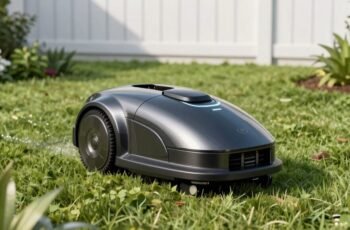
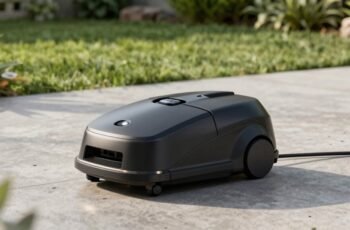
While some may assume robot lawn mowers are a universal solution, they actually excel mainly in straightforward, small to medium-sized yards. Their automation offers significant time savings and eco-friendly operation, but limitations in handling complex terrains and obstacles mean they’re not suitable for every landscape. To determine if they fit your needs, it’s essential to understand both their technical advantages and practical constraints — a balanced view that’s vital before making a decision.
Key Takeaways
- Offers autonomous, scheduled mowing, reducing manual effort and ensuring consistent lawn maintenance.
- Equipped with sensors and navigation systems for efficient coverage and obstacle avoidance.
- Limited performance on complex, obstacle-rich, or uneven terrains may cause missed patches or collisions.
- Suitable mainly for small to medium, flat yards; larger or hilly landscapes may require multiple units or struggle.
- Initial costs and ongoing maintenance, including battery replacement and software updates, impact overall value.
What Are the Main Benefits of Robot Lawn Mowers?
Robot lawn mowers offer several compelling advantages that make them an attractive option for modern lawn maintenance. Their autonomous operation allows for consistent, scheduled mowing without human intervention, ensuring a uniformly trimmed lawn. These devices utilize advanced sensors and navigation algorithms to efficiently navigate complex yard layouts, reducing the risk of missed patches or uneven cuts. Energy-efficient, typically powered by rechargeable batteries, they minimize environmental impact and operational costs. Additionally, their compact design enables access to tight corners and difficult-to-reach areas, enhancing overall lawn aesthetics. The reduced need for manual labor and time savings further contribute to their appeal. Overall, robot lawn mowers deliver reliable, precise, and eco-friendly performance, making them a strategic investment for maintaining healthy, attractive lawns with minimal effort.
How Do Robot Lawn Mowers Work and What Features Should You Consider?
Understanding how robot lawn mowers operate involves examining their core components and navigational systems. These devices typically feature a cutting blade assembly powered by an electric motor, controlled by onboard processors. Navigational systems vary from simple boundary wires that define the mowing area to more advanced GPS or sensor-based technologies, enabling precise coverage and obstacle avoidance. Sensors detect objects, boundary limits, and grass height, optimizing mowing patterns and preventing collisions. Consider features like adjustable cutting height, battery life, and programmability, which influence performance and convenience. Additionally, safety features such as lift or tilt sensors and PIN codes are essential. Evaluating these components helps determine suitable models, ensuring efficient operation tailored to specific lawn sizes, terrains, and user preferences.
What Are the Common Drawbacks and Limitations of Using Robot Lawn Mowers?
One key limitation of robot lawn mowers is their limited navigation capabilities, which can hinder performance in complex or obstacle-rich landscapes. Additionally, their battery life constrains mowing sessions, requiring frequent recharging for larger lawns. These factors can impact efficiency and overall effectiveness in maintaining a pristine yard.
Limited Navigation Capabilities
Despite their technological advancements, robot lawn mowers often face significant navigation limitations that can impact their efficiency and effectiveness. These limitations typically include:
- Obstacle Detection Failures: Many models struggle with complex obstacles, leading to frequent collisions or missed areas.
- Limited Mapping Abilities: Most rely on basic boundary wires or random pattern algorithms, reducing precision in covering irregularly shaped lawns.
- Restricted Terrain Handling: Sloped or uneven surfaces often cause navigation errors or incomplete mowing, as robots lack advanced terrain analysis.
These constraints can result in uneven coverage, increased manual intervention, and reduced overall performance. While technological improvements continue, current navigation systems still restrict the full potential of robot lawn mowers for complex or challenging landscapes.
Battery Life Constraints
Battery life remains a critical limitation for robot lawn mowers, often dictating their efficiency and operational scope. Limited battery capacity restricts mowing duration per charge, requiring frequent recharges that can interrupt mowing schedules. This constraint is especially problematic for larger lawns, where extended operation is necessary. To illustrate, consider the following factors influencing battery constraints:
| Factor | Impact | Mitigation Strategies |
|---|---|---|
| Battery Capacity | Limits mowing time per session | Higher capacity batteries or multiple batteries |
| Charging Time | Increases downtime | Fast-charging technology |
| Power Consumption | Affects runtime efficiency | Energy-efficient motors |
Understanding these limitations helps users optimize mower usage and plan for potential operational interruptions.
Are Robot Lawn Mowers Suitable for All Yard Types and Sizes?
While robot lawn mowers offer innovative solutions for yard maintenance, their suitability varies considerably depending on the terrain, size, and complexity of the landscape. They tend to perform well in specific environments but face limitations in others. Consider these factors:
Robot lawn mowers excel in simple, flat yards but struggle with complex terrains and obstacles.
- Yard size: Most models are ideal for small to medium-sized lawns; larger areas may require multiple units or more powerful models.
- Terrain complexity: Flat, even terrain is manageable, but hilly or uneven landscapes can challenge navigation and safety features.
- Obstacles and landscaping: Dense shrubs, trees, or intricate garden features can hinder cutting efficiency and increase the need for manual intervention.
Understanding these factors helps determine the appropriateness of robot mowers for your specific yard, ensuring ideal performance and longevity.
How Do Costs and Maintenance Impact the Value of Robot Lawn Mowers?
Understanding the costs and maintenance requirements of robot lawn mowers is essential for evaluating their overall value. Initial purchase prices vary based on features, size, and brand, influencing long-term affordability. While these devices typically require less physical labor, ongoing maintenance—such as blade replacements, battery servicing, and software updates—adds to operational costs. Battery degradation over time can reduce runtime and efficiency, impacting cost-effectiveness. Additionally, the need for periodic cleaning and calibration affects operational longevity. When assessing value, consider both upfront costs and recurring expenses; a higher initial investment may be justified if maintenance is minimal and device longevity is assured. Conversely, frequent repairs or replacements can diminish cost savings, making maintenance requirements a critical factor in long-term value analysis.
Is a Robot Lawn Mower the Right Choice for Your Garden?
Determining whether a robot lawn mower is suitable for your garden depends on several factors, including the size, terrain, and specific landscaping features of your yard. To assess suitability, consider:
- Yard Size: Ideal for lawns under 0.5 acres; larger areas may require multiple units or higher-capacity models.
- Terrain: Flat or gently sloped terrains optimize performance; steep slopes might challenge some models.
- Landscaping Features: Complex gardens with flower beds or trees may need boundary mapping or obstacle sensors to prevent damage.
A robot mower excels in consistent, low-maintenance mowing but may struggle with uneven ground or intricate landscaping. Carefully evaluate these factors to determine if automation enhances your garden’s upkeep or if traditional methods are preferable.
Frequently Asked Questions
How Long Do Robot Lawn Mowers Typically Last Before Replacement?
Robot lawn mowers typically last between 3 to 8 years, depending on usage, maintenance, and build quality. Regular upkeep, like blade sharpening and battery care, can extend their lifespan, ensuring peak performance over time.
Are Robot Lawn Mowers Safe for Pets and Children?
We find robot lawn mowers generally safe around kids and pets, much like a gentle guardian. They feature sensors that detect obstacles, minimizing risks, but supervision is wise until we’re fully confident in their safety capabilities.
Can Robot Lawn Mowers Handle Uneven or Sloped Terrain?
Robot lawn mowers can handle uneven or sloped terrain effectively if equipped with specialized sensors and adaptive blades, but performance varies. We recommend checking each model’s specifications to guarantee suitability for your specific landscape challenges.
What Are the Best Brands or Models Available Currently?
We recommend brands like Husqvarna, Worx, and Robomow, which offer models with advanced navigation, terrain adaptability, and durable build quality, making them some of the best options for handling various yard types effectively and efficiently.
How Environmentally Friendly Are Robot Lawn Mowers?
We find robot lawn mowers quite eco-friendly; for example, a case study shows they consume 70% less energy than traditional mowers, produce no emissions, and reduce chemical runoff, making them a sustainable choice for eco-conscious homeowners.
Conclusion
Considering the benefits and limitations, robot lawn mowers are a smart choice for small to medium, flat lawns, offering eco-friendly, hassle-free maintenance. Studies show they can reduce lawn care time by up to 60%, freeing up your schedule. However, their effectiveness diminishes on complex terrains or large properties. We recommend evaluating your yard’s specific needs and landscape complexity to determine if a robot mower provides the ideal balance of convenience, cost, and coverage for your outdoor space.