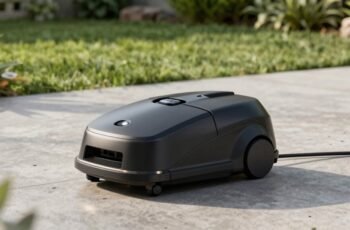
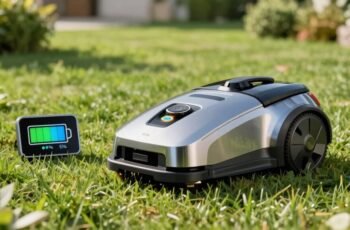
While the concept of automated lawn care has quietly evolved from basic robotic devices, the integration of smart features in lawn mowers now offers a compelling intersection of technology and efficiency. These advanced systems leverage sensors, GPS, and adaptive algorithms to optimize mowing patterns and terrain navigation, fundamentally changing traditional maintenance routines. Understanding the capabilities and limitations of such devices can reveal whether they truly meet the demands of modern landscape management, prompting us to explore what sets these smart mowers apart and how they might reshape our approach to lawn care.
Key Takeaways
- Smart robot lawn mowers utilize sensors, GPS, and software for autonomous, efficient, and obstacle-aware lawn maintenance.
- Key features include adjustable cutting heights, boundary detection, obstacle avoidance, and remote control via mobile apps.
- Advanced models offer real-time monitoring, terrain adaptation, and data analytics for optimized mowing performance.
- Easy installation involves boundary wire setup, charging station placement, and app-based programming.
- Future trends focus on AI, IoT connectivity, and environmental sensing for smarter, more sustainable lawn care.
How Do Robot Lawn Mowers With Smart Features Work?
Robot lawn mowers with smart features operate through a combination of sensors, GPS technology, and integrated software that collectively enable autonomous functioning. Sensors detect obstacles, boundary wires, and terrain variations, allowing precise navigation and obstacle avoidance. GPS technology maps the lawn, creating a detailed layout that guides efficient mowing paths and guarantees coverage without overlap or missed spots. The onboard software processes data from sensors and GPS inputs, optimizing movement patterns in real-time. Connectivity features facilitate remote monitoring and control via mobile apps, while algorithms adjust mowing schedules based on growth rates and environmental conditions. This integrated system assures efficient, safe, and accurate lawn maintenance, reducing manual effort and increasing operational reliability. The synergy of these components forms the core of smart, autonomous lawn care.
Key Benefits of Using a Smart Robot Lawn Mower
Smart robot lawn mowers considerably enhance lawn care efficiency by optimizing mowing patterns and adapting to changing terrain. Their automated operation offers consistent maintenance without manual intervention, reducing labor and time commitments. Analyzing these benefits reveals how integrating smart features can lead to more precise and reliable lawn management systems.
Enhanced Lawn Care Efficiency
How can integrating advanced automation features considerably enhance lawn care efficiency? By leveraging precise scheduling algorithms and sensor data, smart robot lawn mowers optimize mowing patterns, reducing overlap and missed patches. These machines adapt to variable grass conditions and terrain, ensuring consistent cutting quality without manual intervention. Automated boundary detection and real-time obstacle avoidance minimize downtime, allowing continuous operation during ideal periods. Additionally, intelligent zone management enables targeted maintenance, conserving energy and battery life. The integration of data analytics allows for ongoing performance assessment, identifying areas for improvement. Overall, these automation capabilities streamline the mowing process, decrease labor input, and enhance the uniformity and health of the lawn, delivering a more efficient and precise approach to lawn care than traditional methods.
Convenient Automated Operation
Automating lawn maintenance through advanced robot mower technology considerably enhances convenience by minimizing manual oversight. These systems utilize intelligent navigation algorithms, allowing them to independently plan mowing routes, avoid obstacles, and adapt to changing terrain. This automation guarantees consistent coverage, reducing the need for user intervention and scheduled maintenance. The mower’s ability to operate autonomously, based on pre-set schedules or real-time adjustments, optimizes lawn care efficiency while freeing up time for other tasks. Additionally, smart features such as remote control and app integration enable users to monitor and modify operations remotely, further streamlining lawn management. This combination of autonomous functionality and remote operability results in a highly convenient, reliable, and precise approach to maintaining a well-manicured yard with minimal effort.
Top Features to Look for in a Robotic Lawn Mower
When selecting a robotic lawn mower, it’s crucial to prioritize features that enhance both functionality and convenience. Key aspects include cutting width and deck size, which determine coverage efficiency and suitability for various lawn shapes. Intelligent navigation systems, such as GPS or boundary sensors, guarantee precise mowing patterns and prevent overlaps or missed spots. Adjustable cutting heights allow customization for different grass types and seasons. Safety features like obstacle detection, anti-collision sensors, and lift or tilt sensors are essential for secure operation. Connectivity options, including smartphone apps and Wi-Fi integration, enable remote monitoring and scheduling, boosting user control. Ultimately, battery capacity and runtime influence overall efficiency, ensuring the mower can complete mowing sessions without frequent recharges. These features collectively optimize performance and user experience.
Comparing Popular Smart Robot Lawn Mower Models
When comparing popular smart robot lawn mower models, we focus on their features and functionalities, evaluating how each enhances mowing efficiency and customization. We also analyze price and value to determine which offers the best return on investment. Finally, ease of use remains critical, as intuitive controls and setup influence overall user experience and satisfaction.
Features and Functionalities
How do the features and functionalities of popular smart robot lawn mowers compare? These models vary in navigation, connectivity, and adaptive capabilities. Some utilize GPS for precise boundary mapping, while others rely on boundary wires. Connectivity options include Wi-Fi and Bluetooth, facilitating app control and updates. Adaptive mowing systems adjust speed and pattern based on terrain and grass density. Safety features like obstacle detection and auto-stop are standard, but the sophistication differs.
| Model | Navigation | Connectivity | Adaptive Features |
|---|---|---|---|
| Model A | GPS-based | Wi-Fi | Terrain-adaptive |
| Model B | Boundary wires | Bluetooth | Grass density sensing |
| Model C | Visual sensors | Wi-Fi | Pattern optimization |
Price and Value Comparison
Evaluating the price and value of popular smart robot lawn mowers requires a detailed analysis of their features relative to their costs. We compare models based on initial purchase price, included features, and long-term savings. Higher-end models, such as the Husqvarna Automower and Worx Landroid, often command premium prices but offer advanced navigation, customizable mowing schedules, and integrated smart home compatibility. Mid-tier options like Gardena Sileno provide core functionalities at a more accessible price point, though they may lack some automation features. Lower-cost models tend to focus on basic mowing with limited smart features, impacting overall value. Ultimately, appraising each model’s feature set against its cost helps determine which offers the best return on investment, balancing upfront expense with long-term convenience and efficiency gains.
Ease of Use
Evaluating the ease of use of popular smart robot lawn mowers involves examining their setup processes, user interfaces, and overall intuitiveness. Devices like the Husqvarna Automower, Worx Landroid, and Gardena Sileno each offer varying levels of user-friendliness. The Automower’s app-based setup is detailed but complex, requiring multiple configurations. Worx Landroid emphasizes simplicity, with straightforward installation and minimal calibration. Gardena Sileno features an intuitive interface with visual indicators, easing daily operation. The following table compares these models:
| Feature | Husqvarna Automower | Worx Landroid | Gardena Sileno |
|---|---|---|---|
| Setup Complexity | High | Low | Moderate |
| User Interface | App + Manual | App + Physical Buttons | App + Visual Indicators |
| Calibration Required | Yes | Minimal | Minimal |
| Intuitiveness | Moderate | High | High |
This analysis highlights that simplicity and interface design considerably influence user experience.
Setting Up and Programming Your Smart Robotic Mower
Before operating your smart robotic mower, it’s essential to complete the setup and programming process to guarantee peak performance. This involves installing boundary wires accurately to define mowing limits and ensuring the charging station is correctly positioned for best navigation. Once physical installation is complete, programming begins through the device’s interface, typically via a dedicated app or onboard controls. Inputting specific parameters—such as mowing schedules, area size, and safety zones—ensures efficient coverage and minimizes overlaps or missed spots. Advanced models may include GPS integration, requiring precise calibration for mapping the lawn. Proper setup also involves updating firmware and testing sensors to confirm obstacle detection and boundary adherence. A meticulous approach to initial setup guarantees reliable operation, reducing maintenance needs and maximizing the mower’s smart features.
How Smart Features Improve Lawn Maintenance Efficiency
Smart features in robotic lawn mowers considerably enhance maintenance efficiency by automating complex tasks and optimizing performance. GPS and boundary sensors enable precise navigation, reducing overlap and missed patches, which conserves energy and time. Adaptive algorithms analyze mowing patterns, adjusting schedules based on grass growth rates and weather conditions, thereby ensuring consistent cutting without manual intervention. Intelligent obstacle detection minimizes stoppages and prevents collisions, maintaining continuous operation. Connectivity features like app control allow real-time monitoring and remote adjustments, streamlining maintenance routines. Overall, these smart capabilities reduce human oversight, improve coverage accuracy, and maximize operational uptime, leading to a more effective and efficient lawn care process. By leveraging data-driven insights, these mowers deliver consistent, optimized results with minimal manual input.
Troubleshooting Common Issues With Smart Robotic Mowers
Despite their advanced capabilities, smart robotic mowers can encounter specific issues that disrupt ideal performance. Connectivity problems often stem from weak Wi-Fi signals, causing navigation interruptions or failure to receive updates. Mechanical obstructions, like debris or overgrown grass, can hinder blade rotation or movement, leading to incomplete mowing cycles. Sensor malfunctions, such as faulty boundary or obstacle detection, may result in mower miscalculations, risking damage or incomplete coverage. Firmware glitches or outdated software can cause system crashes or erratic behavior, necessitating resets or updates. Additionally, battery degradation reduces runtime, impairing coverage efficiency. Diagnosing these issues requires systematic troubleshooting—checking network strength, cleaning sensors, updating firmware, and inspecting mechanical components—to restore ideal functionality and maintain the mower’s smart features.
Tips for Maintaining Your Robot Lawn Mower’s Smart Capabilities
Regular maintenance is essential to guarantee that your robot lawn mower’s smart features function reliably over time. Proper upkeep ensures ideal sensor performance, software accuracy, and connectivity. To maintain these capabilities, regularly inspect and clean sensor modules to prevent dirt or debris buildup that can impair navigation. Update firmware promptly to benefit from security patches and feature enhancements. Check Wi-Fi and Bluetooth connections to ensure consistent communication with your device network. Calibrate the boundary wire and cutting height settings periodically to prevent misalignments that could disrupt automated routines. Finally, monitor battery health and replace it as needed to sustain power efficiency.
- Clean sensors and camera lenses regularly
- Keep firmware and software up to date
- Verify and enhance wireless connections
- Calibrate boundary and height settings
- Monitor and replace batteries proactively
Future Trends in Smart Robotic Lawn Care
Advancements in sensor technology, artificial intelligence, and connectivity are poised to substantially shape the future landscape of robotic lawn care. We can expect enhanced environmental sensing capabilities, enabling robots to adapt dynamically to changing conditions such as weather, soil health, and grass growth patterns. AI algorithms will improve obstacle detection, path optimization, and energy efficiency, reducing maintenance needs and increasing mowing precision. Connectivity features like 5G and IoT integration will facilitate real-time data exchange, remote diagnostics, and predictive maintenance, minimizing downtime. Additionally, future models may incorporate machine learning to personalize mowing schedules based on user preferences and landscape changes. Overall, these technological trends will lead to more autonomous, efficient, and adaptive robotic lawn systems, transforming landscape management into a smarter, more sustainable process.
Frequently Asked Questions
Are Smart Robot Lawn Mowers Suitable for All Lawn Sizes?
Smart robot lawn mowers are suitable for most lawn sizes, but their efficiency depends on battery capacity and cutting area. We recommend evaluating your lawn dimensions and the mower’s specifications to guarantee ideal performance and coverage.
How Secure Are Smart Features Against Hacking or Unauthorized Access?
Smart features in robot lawn mowers are generally secure, but vulnerabilities exist. We recommend using strong, unique passwords, regularly updating firmware, and enabling two-factor authentication to minimize hacking risks and unauthorized access.
Do Smart Robotic Mowers Require Wi-Fi Connection?
Smart robotic mowers often need Wi-Fi for features like remote control and app access, but some operate offline for basic mowing. We analyze this connection’s necessity, balancing convenience with security risks, to guarantee ideal functionality and safety.
Can Smart Features Help Avoid Obstacles and Pets?
Yes, smart features enable robotic mowers to detect obstacles and pets using sensors and cameras, enhancing safety and efficiency. These systems analyze environmental data in real-time, allowing precise navigation and obstacle avoidance without relying solely on Wi-Fi connectivity.
What Is the Typical Battery Life of These Smart Mowers?
We find that typical battery life ranges from 60 to 90 minutes, much like a standard coffee break. Advanced models with smart features often include larger batteries, enabling more extensive mowing before needing a recharge.
Conclusion
As we embrace the future of lawn care with smart robot mowers, their advanced features optimize efficiency and precision like never before. These devices continuously adapt to terrain, obstacles, and weather, ensuring consistent results with minimal effort. But as technology evolves, are we truly maximizing its potential? By understanding and leveraging these smart systems, we can elevate our lawn maintenance strategies—transforming a routine chore into a streamlined, intelligent process that redefines outdoor care.