When selecting the best battery-powered robot mower, we consider a range of technical factors including navigation systems, battery longevity, and cutting precision. These devices are engineered to optimize lawn maintenance with minimal user input, but understanding their capabilities and limitations is essential for making an informed choice. As we explore the key features and top models, you’ll see how technology continues to shape efficient, sustainable lawn care solutions—an area worth analyzing thoroughly.
Key Takeaways
- Consider models with high-capacity lithium-ion batteries for longer mowing sessions and reduced downtime.
- Prioritize advanced navigation features like GPS and obstacle detection for efficient coverage.
- Match mower size and features to your yard’s dimensions for optimal performance and value.
- Ensure easy setup, maintenance, and software updates for reliable, long-term operation.
- Evaluate pros such as quiet, eco-friendly operation against cons like limited runtime and battery lifespan.
What Are Battery-Powered Robot Mowers and How Do They Work?
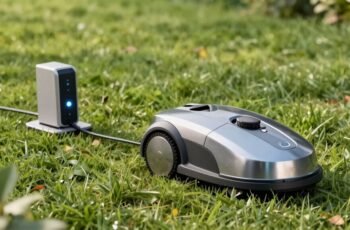
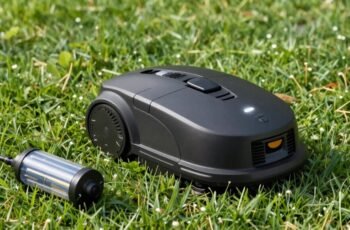
Battery-powered robot mowers are autonomous devices designed to maintain lawns by cutting grass efficiently without human intervention. They operate through embedded sensors and programmable algorithms that enable precise navigation and coverage. These mowers utilize rechargeable lithium-ion batteries, providing sustained power for extended mowing sessions. The devices rely on boundary wires or GPS systems to define the mowing area, ensuring complete coverage without overlap or gaps. Cutting mechanisms typically involve rotary blades that adapt to varying grass heights, maintaining consistency. The mowers incorporate sensor arrays to detect obstacles, slopes, and boundary limits, adjusting their path accordingly. Their intelligent scheduling systems optimize mowing frequency based on grass growth patterns, which reduces manual labor and enhances lawn health. Overall, these systems combine power management, navigation technology, and adaptive cutting to automate lawn maintenance efficiently.
Key Features to Look for in the Best Battery-Powered Robot Mower
When selecting a robot mower, understanding the features that contribute to its efficiency and reliability is essential. Key specifications include battery capacity, which determines runtime and mowing frequency; a high-capacity lithium-ion battery ensures consistent power output and longer cycles. Cutting system design, such as rotary blades versus reel blades, affects mowing precision and grass health. Navigation features like GPS, boundary sensors, and obstacle detection optimize coverage and prevent collisions, reducing downtime. Additionally, adjustable cutting heights and programmable schedules provide customization for diverse lawn types. Durability factors—water resistance, robust motors, and high-quality components—enhance longevity. Ultimately, user interface simplicity and remote control options improve usability and maintenance, ensuring the mower performs reliably over time with minimal intervention.
Top Battery Robot Mower Models for Different Yard Sizes and Budgets
Selecting the right robot mower depends heavily on your yard size and budget, as these factors determine the most suitable models to meet your needs. For small to medium yards, models like the Husqvarna Automower 315X offer reliable performance at a moderate price point, featuring efficient cutting and smart navigation. Larger properties require more robust units such as the Worx Landroid M, which can handle expansive areas with advanced boundary detection and longer battery life. Budget-conscious consumers might consider the Robomow RX12, providing essential mowing functions without extensive features. Conversely, premium models like the Gardena Sileno City are ideal for complex terrains and require higher investment, offering superior precision and customization. Evaluating these options based on yard dimensions and financial constraints ensures the most effective efficiency and value.
How to Set Up and Maintain Your Robot Mower for Optimal Performance
To guarantee your robot mower operates at peak efficiency, proper setup and ongoing maintenance are essential. Begin by ensuring the boundary wire is correctly installed, maintaining consistent tension to prevent misalignment. Calibration of cutting height and blade sharpness directly impacts mowing quality; regular inspection and blade replacement are necessary for best cut performance. Battery management is critical—monitor charge cycles and avoid complete discharges to prolong lifespan. Periodic cleaning of wheels, sensors, and the chassis prevents debris buildup that can hinder navigation. Software updates should be applied promptly to enhance functionality and security. Finally, scheduling routine diagnostics helps identify potential issues early, ensuring smooth operation. Diligence in setup and maintenance guarantees reliable performance, extending the lifespan and efficiency of your robot mower.
Pros and Cons of Using Battery-Powered Robot Mowers at Home
Battery-powered robot mowers offer a range of advantages and challenges that homeowners should carefully consider. Their benefits include reduced noise levels, environmentally friendly operation, and lower long-term maintenance costs. However, limitations such as battery life, cutting capacity, and initial investment can impact overall performance. The following table summarizes these pros and cons:
| Aspect | Advantage | Challenge |
|---|---|---|
| Noise Level | Quiet operation suitable for residential areas | Limited runtime on a single charge |
| Environmental Impact | Zero emissions, eco-friendly | Battery disposal concerns |
| Maintenance | Minimal mechanical parts, low upkeep | Battery degradation over time |
| Cost | Lower operational costs over lifespan | Higher upfront purchase price |
Understanding these factors helps us evaluate if a battery-powered mower aligns with our specific needs.
Frequently Asked Questions
How Long Does a Typical Battery Last on a Single Charge?
Typically, a battery on a robot mower lasts between 60 to 90 minutes per charge, depending on factors like grass density, mower size, and battery capacity. We recommend considering these variables for ideal performance and runtime planning.
Are Battery-Powered Robot Mowers Suitable for Uneven Terrain?
Battery-powered robot mowers are suitable for uneven terrain if equipped with adaptive suspension and robust wheels, allowing them to navigate slopes and irregular surfaces efficiently, though performance may vary based on terrain complexity and mower specifications.
What Safety Features Are Included to Prevent Accidents?
We include sensors that act like vigilant guards, detecting obstacles and humans to halt operation instantly. Emergency stop buttons and pin codes act as fail-safes, ensuring safety, while boundary wires precisely confine the mower, preventing unintended excursions.
Can the Mower Handle Thick or Tall Grass Effectively?
Yes, our robot mower handles thick or tall grass effectively thanks to high-torque motors, adjustable cutting heights, and reinforced blades. These features guarantee efficient mowing across various grass conditions, maintaining a clean, even cut for ideal lawn health.
How Eco-Friendly Are Battery-Powered Robot Mowers Compared to Gas Models?
Battery-powered robot mowers are considerably more eco-friendly than gas models, emitting zero tailpipe pollutants, reducing greenhouse gases, and conserving energy through efficient, rechargeable batteries, making them a sustainable choice for environmentally conscious consumers.
Conclusion
In conclusion, choosing a battery-powered robot mower offers a sophisticated balance of efficiency and sustainability. While their advanced features and quiet operation enhance lawn care, understanding the nuances of setup and maintenance ensures optimal performance. By carefully evaluating yard size and budget, we can leverage these intelligent devices to achieve consistent, high-quality results with minimal effort. Ultimately, their technological elegance makes them a prudent investment for modern lawn management, harmonizing precision with eco-consciousness.