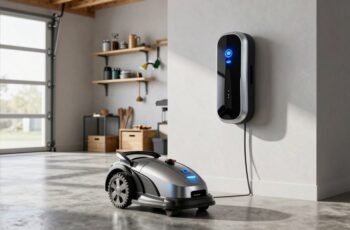
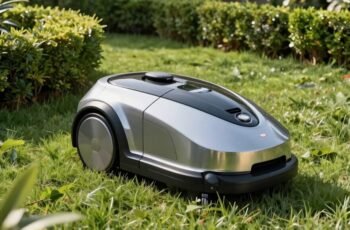
Protecting your robot mower’s charging station is essential for ensuring consistent performance and extending its lifespan. Proper covers shield the station from environmental factors like rain, snow, and UV rays that can cause corrosion and electrical issues. Choosing the right materials and features can be complex, but understanding these elements is key. As we explore the options, it becomes clear that a well-designed cover is a critical investment—one that warrants careful consideration.
Key Takeaways
- Choose weatherproof, UV-resistant materials like polyester or polyethylene for durability against outdoor elements.
- Ensure the cover fits securely with adjustable straps or elastic hems to prevent displacement.
- Incorporate ventilation features and access panels for maintenance and airflow.
- Regularly inspect and clean the cover to prevent mold, tears, and debris buildup.
- Use sealants and waterproof fasteners to prevent moisture ingress and enhance protection.
Why Protecting Your Charging Station Extends Mower Life
Have you considered how exposure to environmental elements can accelerate wear and tear on your charging station? Outdoor conditions such as rain, snow, and UV radiation can cause corrosion, material degradation, and electrical component failure over time. Moisture ingress compromises internal circuitry, leading to potential short circuits or malfunctions. Temperature fluctuations cause material expansion and contraction, weakening structural integrity. Dust, debris, and organic matter accumulation can obstruct ventilation and cooling systems, increasing the risk of overheating. Without proper protection, the station’s critical components face accelerated degradation, reducing operational lifespan and increasing maintenance costs. Implementing a cover shields the unit from environmental stressors, preserving its structural and functional integrity, ultimately extending the service life of both the charging station and the mower.
Key Features to Consider When Choosing a Robot Mower Cover
Selecting the right robot mower cover requires careful consideration of several key features to guarantee ideal protection and durability. First, material strength is vital; UV-resistant, weatherproof materials like heavy-duty polyester or polyethylene ensure longevity against sun, rain, and wind. Next, the cover’s waterproofing and breathability balance prevent moisture buildup while avoiding mold and corrosion. Proper fit is essential; a cover with adjustable straps or elastic hems ensures secure attachment, reducing movement in high winds. Additionally, UV protection layers shield underlying components from sun degradation. Ventilation features help prevent heat accumulation, which could damage electronics. Finally, ease of access and maintenance considerations, such as zippers or removable panels, facilitate inspections without compromising protection. Prioritizing these features guarantees thorough coverage that extends the lifespan of both the charging station and mower.
DIY Tips for Installing and Maintaining Your Cover
Proper installation and ongoing maintenance are essential to guarantee your robot mower cover provides maximum protection and longevity. Begin by precisely aligning the cover with the charging station, ensuring secure attachment points are properly fastened to prevent displacement during adverse weather. Use weather-resistant fasteners and sealant to prevent water ingress and corrosion. Regular inspections should focus on checking for cracks, tears, or signs of wear; promptly replace or repair any damage. Clean the cover periodically with mild, non-abrasive solutions to remove debris and prevent mold buildup. Confirm all fasteners remain tight and that the cover’s drainage features function correctly to avoid water pooling. Adhering to these precise installation and maintenance procedures will optimize the cover’s durability and protective performance over time.
Top Materials and Designs for Durable Charging Station Covers
When choosing materials and designs for durable charging station covers, it’s crucial to prioritize weather resistance, structural integrity, and ease of maintenance. Ideal materials must withstand environmental factors such as rain, UV exposure, and temperature fluctuations. Common choices include high-density polyethylene (HDPE), powder-coated metals, and UV-stabilized plastics, each offering specific benefits in durability and weatherproofing. Design considerations should include reinforced joints, proper drainage, and minimal maintenance features. The following table summarizes key material properties:
| Material | Weather Resistance | Structural Strength | Maintenance Ease |
|---|---|---|---|
| HDPE | Excellent | Moderate | Low |
| Powder-coated Metal | Good | High | Moderate |
| UV-stabilized Plastic | Very Good | Moderate | Low |
| Fiberglass | Excellent | High | Moderate |
| Polycarbonate | Very Good | Moderate | Low |
This approach guarantees longevity and reliable performance under diverse conditions.
Troubleshooting Common Issues With Mower Charging Station Covers
Despite using durable materials and thoughtful designs, charging station covers can still encounter common issues that compromise functionality. One frequent problem is inadequate sealing, which allows debris, moisture, or dirt to infiltrate the station, potentially damaging electrical components. To troubleshoot, inspect the seal integrity regularly and replace damaged gaskets or seals promptly. Another issue involves misalignment of the cover, impairing proper connection with the charging base or robot. Ensuring correct positioning and securing fasteners can resolve this. Additionally, cracks or warping due to environmental exposure may occur over time. In such cases, replacing the cover with a weather-resistant model is advisable. Regular maintenance and careful inspection are essential to prevent these issues and guarantee the charging station operates reliably.
Frequently Asked Questions
How Often Should I Replace My Robot Mower Charging Station Cover?
We recommend replacing your robot mower charging station cover annually or when it shows signs of significant wear or damage. Regular inspections guarantee protection against weather elements, maintaining ideal function and prolonging the lifespan of your charging station.
Can a Cover Prevent Theft or Vandalism of My Charging Station?
A cover alone doesn’t prevent theft or vandalism; it provides physical protection and concealment. To enhance security, we recommend combining covers with alarm systems, surveillance cameras, and secure anchoring to deter unauthorized access effectively.
Are There Covers Compatible With All Robot Mower Models?
Not all covers are universally compatible with every robot mower model; compatibility depends on specific dimensions and mounting features. We recommend consulting manufacturer specifications and compatibility charts to guarantee a proper fit for your particular model.
How Does Weather Impact the Longevity of the Cover Material?
Weather can be a relentless sculptor, gradually shaping and eroding cover materials. Extreme sun, rain, and snow accelerate degradation by causing material breakdown, UV damage, and corrosion, consequently shortening the lifespan of your robot mower cover.
Is It Safe to Use a Cover During Rainy or Snowy Seasons?
Using a cover during rainy or snowy seasons is safe if it’s waterproof and properly fitted, preventing water ingress. We recommend ensuring the cover’s material resists moisture and provides adequate ventilation to avoid condensation buildup.
Conclusion
Protecting your robot mower’s charging station is essential for guaranteeing reliable operation and extending its lifespan. While some might worry about the initial investment, the durability and reduced maintenance costs make it worthwhile. Properly selected and maintained covers shield against environmental damage, preventing costly repairs. By prioritizing protection, we can assure consistent performance, minimize downtime, and maximize the mower’s longevity, ultimately saving time and money while maintaining ideal lawn care.