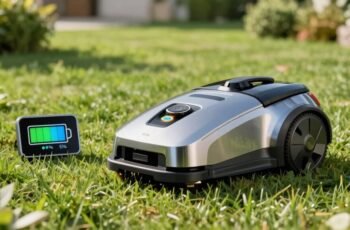
Extending the lifespan of your robot mower’s battery can be more complex than it seems, with improper habits potentially causing rapid degradation or safety risks. We recognize that managing charge cycles, maintenance routines, and storage conditions requires a precise approach. By analyzing these factors, we can uncover critical strategies that greatly improve battery longevity. Yet, the details behind these practices are often overlooked, making it essential to explore the core principles that underpin effective battery care.
Key Takeaways
- Maintain charging cycles between 20% and 80% to minimize battery strain and extend lifespan.
- Use manufacturer-recommended chargers and avoid overcharging or leaving the battery plugged in continuously.
- Schedule mowing during optimal weather conditions and peak sunlight hours to reduce battery stress.
- Regularly inspect and clean battery contacts and ports to ensure efficient power transfer and prevent corrosion.
- Store batteries in a cool, dry place at 50-70% charge, disconnect from the mower, and avoid exposure to heat or moisture.
How Proper Charging Habits Extend Your Mower’s Battery Life
Proper charging habits are essential for maximizing the lifespan and performance of your robot mower’s battery. Consistent, ideal charging prevents undue stress and capacity loss caused by overcharging or deep discharges. Maintaining a stable charge cycle, ideally between 20% and 80%, reduces the chemical strain on the battery’s cells, preserving its integrity over time. Using the manufacturer-recommended charger ensures proper voltage and current regulation, minimizing heat buildup and potential damage. Avoid leaving the mower plugged in continuously once fully charged, as prolonged high voltage exposure accelerates capacity decline. Regularly monitoring the charging process helps detect anomalies like overheating or incomplete charges, which can compromise battery health. Implementing these precise charging practices systematically enhances battery longevity and sustains consistent mowing performance.
Regular Maintenance Tips to Keep Your Battery Healthy
Maintaining clean and dry battery contacts is essential to prevent corrosion and guarantee efficient power transfer. Regular inspection and cleaning of charging ports can identify issues before performance declines. These proactive measures help preserve battery capacity and extend overall lifespan.
Keep Battery Clean and Dry
Ensuring that the battery remains clean and dry is essential for ideal performance and longevity. Moisture and debris can cause corrosion, leading to increased internal resistance and reduced capacity over time. Regular inspection for dirt, dust, and moisture buildup can prevent these issues. Use a soft, dry cloth to gently wipe the contacts and casing, avoiding abrasive materials that could damage protective coatings. If necessary, lightly dampen the cloth with isopropyl alcohol to remove stubborn grime, ensuring no residual moisture remains. Proper drying after cleaning is critical; residual moisture accelerates corrosion. Maintaining a dry environment minimizes the risk of short circuits and corrosion-related degradation, which are primary contributors to reduced battery lifespan. This disciplined approach to cleanliness directly supports best electrical performance and extended operational life.
Regularly Check Charging Ports
Regularly inspecting the charging ports on your robot mower prevents potential issues that can impair battery performance. Dirt, debris, and corrosion can accumulate over time, disrupting electrical contact and causing inefficient charging cycles. We recommend visually examining the ports after each mow and cleaning them with a soft brush or compressed air if buildup is evident. Ensuring the ports are free of obstructions maintains maximum conductivity and prevents charging errors that could strain the battery. Corrosion or oxidation should be carefully removed using a contact cleaner or isopropyl alcohol, avoiding abrasive materials that could damage the connectors. Consistent checks allow early detection of wear or damage, enabling timely maintenance. This proactive approach minimizes charging interruptions, reduces battery stress, and extends overall lifespan.
Optimizing Your Mowing Schedule for Battery Efficiency
Optimizing your mowing schedule can ensure battery efficiency by aligning operation with periods of lower energy demand. Scheduling during peak sunlight hours reduces energy consumption, while minimizing mowing frequency prevents unnecessary battery drain. Adjusting mowing times seasonally guarantees the mower operates under ideal conditions, conserving battery life across varying weather patterns.
Schedule Mowing During Peak Hours
Scheduling mowing sessions during peak sunlight hours can considerably enhance battery efficiency by aligning the mower’s activity with ideal power conditions. Solar energy availability peaks midday, providing prime conditions for battery performance. This timing reduces the strain on the battery by minimizing fluctuations caused by low light or temperature drops. To illustrate, consider the following factors:
| Factor | Impact on Battery Efficiency |
|---|---|
| Solar Intensity | Higher levels improve charging and operation efficiency. |
| Temperature | Warmer conditions reduce battery resistance. |
| Ambient Light | Consistent, bright light stabilizes power draw. |
Avoid Excessive Mowing Frequency
Have you considered how mowing too frequently can negatively impact your robot mower’s battery life? Excessive mowing causes the motor to operate unnecessarily, increasing overall energy consumption and accelerating battery degradation through repeated charge cycles. Frequent runs can lead to higher heat generation within the battery pack, which accelerates chemical breakdown and reduces capacity over time. Additionally, constant cycling prevents the battery from reaching full charge and discharge states, diminishing its lifespan. To optimize battery efficiency, it’s essential to balance mowing frequency with grass growth patterns. By scheduling mowings only when necessary, we reduce unnecessary motor activity and minimize stress on the battery. This strategic approach preserves battery health, extends runtime per charge, and ultimately prolongs the overall lifespan of the mower’s power system.
Adjust Mowing Times Seasonally
Adjusting mowing times according to seasonal variations plays a critical role in maintaining battery efficiency. During peak growing periods, increased vegetation density demands longer or more frequent mowing sessions, which can strain the battery. Conversely, in cooler months, grass growth slows, allowing for shorter, less frequent cuts that conserve energy. By tailoring the mowing schedule to seasonal growth patterns, we reduce unnecessary battery cycles and minimize overall wear. This targeted approach prevents overuse during periods of low growth and avoids excessive strain during high growth phases, maximizing battery longevity. Precise scheduling based on seasonal conditions ensures that the mower operates within ideal energy consumption parameters, ultimately extending battery life and maintaining consistent performance throughout the year.
Adjusting Settings to Save Power During Mowing
How can we enhance the mower’s settings to conserve battery power during operation? Adjusting parameters like cutting height, speed, and mowing schedule can greatly impact battery consumption. Lowering the cutting height reduces the mower’s load, while selecting a more conservative speed minimizes energy use during operation. Setting the mower to operate during ideal weather conditions ensures less strain and more efficient mowing. Additionally, configuring the mowing schedule to avoid unnecessary passes during rapid growth periods helps conserve power.
- Reduce cutting height to lessen motor strain
- Optimize mowing speed for energy efficiency
- Limit mowing frequency during slow grass growth
- Schedule mowing during favorable conditions to reduce power drain
Troubleshooting Common Battery Problems and When to Replace
When a robot mower’s battery begins to show signs of decline, troubleshooting can help identify underlying issues and determine whether a replacement is necessary. Common problems include rapid voltage drops, reduced run time, and difficulty charging. These symptoms often stem from degraded cells or electrical faults. To diagnose, verify charging connections, inspect for corrosion, and monitor voltage levels under load. If issues persist, it’s likely time for a replacement.
| Issue | Diagnostic Indicator |
|---|---|
| Rapid voltage decline | Cells are failing or damaged |
| Reduced run time | Battery capacity has diminished |
| Difficulty charging | Faulty charger or internal cell failure |
| Excessive heat during use | Internal resistance increase |
| Swollen or leaking cells | Severe cell degradation or safety risk |
Accurate troubleshooting ensures effective maintenance and safe operation.
Smart Storage Practices to Preserve Battery Performance
Proper storage is essential for maintaining a robot mower battery’s longevity and performance. When not in use, storing the battery correctly minimizes capacity loss and degradation over time. We recommend storing batteries in a cool, dry environment, ideally between 40-60°F (4-15°C), to reduce chemical activity that accelerates aging. Avoid high humidity areas that could cause corrosion or short circuits. Ensuring the battery is partially charged—around 50-70%—prevents capacity loss associated with full discharges or overcharging. Additionally, disconnect the battery from the mower to prevent parasitic drain. Regularly inspecting storage conditions and maintaining proper charge levels are key to preserving the best performance and extending overall battery lifespan.
Frequently Asked Questions
What Are the Best Types of Batteries for Robot Mowers?
Lithium-ion batteries are best for robot mowers due to their high energy density, long lifespan, and efficient charging cycles. They offer superior performance and durability, making them ideal for extended operation and minimal maintenance.
How Does Outdoor Temperature Affect Battery Longevity?
Outdoor temperature considerably impacts battery longevity; higher temperatures accelerate chemical reactions, causing faster degradation, while cold temperatures reduce capacity and efficiency, leading to shorter operational periods. Proper storage and operation in moderate climates help extend lifespan.
Can Using Third-Party Chargers Harm My Mower’s Battery?
Using third-party chargers can harm your mower’s battery if they supply inconsistent voltage or current, causing potential overheating, reduced capacity, or early degradation. Always verify compatibility and quality to guarantee safe, ideal charging performance.
How Often Should I Fully Discharge and Recharge the Battery?
We recommend fully discharging and recharging the battery once every 1-3 months to calibrate the battery gauge. Avoid frequent deep discharges, as they can stress the cells and reduce overall battery lifespan over time.
Are There Specific Brands Known for Longer-Lasting Robot Mower Batteries?
We find that brands like Husqvarna and RoboGARD excel in battery longevity, combining advanced cell chemistry with rigorous testing. While lesser-known brands may offer affordability, they often lack the durability and technological refinement essential for extended battery life.
Conclusion
By adopting these best practices, we can turn our robot mower’s battery into a well-oiled machine, maximizing its lifespan and efficiency. Proper charging, maintenance, and storage are the keys to preventing premature failure and ensuring peak performance. Think of the battery as the heart of your mower—taking good care of it keeps your entire system beating smoothly. With a strategic approach, we can extend battery life and keep our mowing routines running seamlessly.