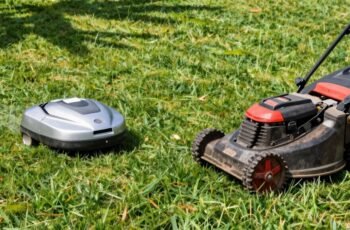
While some robot lawn mowers operate so quietly you might forget they’re working, others produce a noticeable hum that can disrupt a peaceful yard. This variation in noise levels often surprises homeowners, prompting questions about which models are best for quiet operation. Understanding what influences these differences can help you choose the right mower for your needs. Curious about which brands truly stand out for their quiet performance? Let’s explore what makes some models more peaceful than others.
Key Takeaways
- Husqvarna Automower 435X and Worx Landroid M WR140 are among the quietest, operating below 60 decibels.
- Brand differences: Husqvarna and Worx typically produce less noise than Gardena and Robomow models.
- Motor design and blade quality significantly influence noise levels across various robot mower brands.
- Higher-end models often feature noise reduction technologies, resulting in quieter operation.
- Mowing speed, terrain, and operational settings impact the noise output of different robot lawn mowers.
What Influences the Noise Levels of Robot Lawn Mowers?
The noise levels of robot lawn mowers are influenced by several key factors that determine how loud they sound during operation. One major element is the motor’s power; more powerful motors tend to produce more noise. The blade design also matters—sharper, well-balanced blades generate less vibration and noise. Additionally, the mower’s weight and build quality can influence sound levels, with sturdier models often operating more quietly. The surface being mowed impacts noise too; uneven terrain or thick grass can cause the mower to work harder and produce more sound. In conclusion, the mowing speed and operational settings affect noise output, with faster or aggressive settings generally being louder. Understanding these factors helps us make better choices for a quieter, more efficient mowing experience.
Compare Noise Levels of Different Robot Mower Brands
When comparing robot mower brands, we notice significant differences in noise levels that can influence our choice. Some brands, like Husqvarna and Worx, tend to produce quieter operation, often staying below 60 decibels, making them less disruptive. Others, such as Gardena or Robot Lawn Mowers, may be louder, reaching around 65-70 decibels, especially during intensive cutting. The materials used, motor design, and blade mechanisms all impact noise output across brands. We also observe that higher-end models usually incorporate noise reduction features, resulting in a quieter mowing experience. While some brands prioritize power and efficiency, they might compromise slightly on noise levels. Ultimately, understanding these differences helps us select a mower that balances performance with acoustic comfort.
Which Robot Mowers Are the Quietest?
While some robot mowers generate noticeable noise during operation, others stand out for their quiet performance. These quieter models are ideal for keeping peace in your yard and neighborhood. Typically, the quietest mowers feature advanced brushless motors and sound-dampening designs.
Here are a few of the quietest options:
- Husqvarna Automower 435X – Known for its low noise levels and efficient operation.
- Worx Landroid M WR140 – Designed for quiet mowing, perfect for small to medium lawns.
- Robomow RS630 – Combines power with minimal noise, suitable for larger lawns.
These models prioritize quiet operation without sacrificing cutting performance, making them excellent choices for noise-sensitive environments.
Tips for Choosing a Low-Noise Robot Lawn Mower
Choosing a low-noise robot lawn mower involves considering several key factors to guarantee it meets your quietness needs without sacrificing performance. First, look for models with advanced noise reduction features, such as sound-dampening housings or brushless motors, which operate more quietly. Next, check the mower’s decibel ratings—aim for models labeled as “quiet” or rated below 60 dB. Also, consider the mower’s cutting mechanism; fewer vibrations and smoother blades generate less noise. It’s helpful to read reviews focused on noise performance, as real-world feedback can reveal how quiet a mower truly is during operation. *Finally*, choose a mower with programmable schedules so you can run it during times that cause the least disturbance, enhancing the overall quietness of your lawn care.
How to Minimize Noise When Operating Your Robot Mower
To keep noise levels to a minimum during operation, it’s important to follow practical steps that reduce disturbance. First, schedule mowing during early mornings or late evenings when noise is less disruptive. Second, make certain your mower’s blades are sharp; dull blades require more effort and generate more noise. Third, maintain a smooth, flat lawn to prevent the mower from working harder on uneven terrain. Additionally, setting boundaries or using physical barriers around your yard can help contain noise. Regularly checking and servicing your mower’s motor also keeps it running quietly. By following these simple tips, you’ll minimize noise and enjoy a peaceful environment while keeping your lawn well-maintained.
Frequently Asked Questions
How Does Terrain Affect Robot Mower Noise?
Terrain impacts robot mower noise because uneven or rough surfaces cause the mower to work harder and become louder. We notice increased noise on hills or dense grass, making the mowing process less smooth and slightly louder overall.
Do Weather Conditions Impact Mower Noise Levels?
They say “a storm in a teacup,” and weather definitely impacts mower noise levels. Rain, wind, or humidity can make our robot mowers louder or quieter, so we always check weather forecasts before mowing.
Are There Legal Noise Restrictions for Robot Mowers?
Yes, there are legal noise restrictions for robot mowers in many areas. We recommend checking local regulations, as limits vary by region, and some places may require specific noise levels or operating hours to minimize disturbance.
Can Maintenance Reduce a Mower’s Noise Output?
Yes, maintenance can reduce a mower’s noise output. We guarantee blades are sharp, check for loose parts, and keep motors clean, which helps the mower operate smoothly and quietly, enhancing your outdoor experience.
How Does Blade Design Influence Noise Production?
Blade design considerably influences noise levels; we notice that blades with smoother edges and optimized shapes produce less vibration and sound. By choosing blades designed for quiet operation, we can make mowing much more peaceful for everyone.
Conclusion
So, here we are, marveling at how quiet these robot mowers are—almost too quiet, in fact. Who knew that a device designed to cut grass could become a stealthy ninja? While we’d love to enjoy a peaceful yard, perhaps we’ll miss the charming hum of traditional mowers. But hey, at least we won’t have to shout over noise anymore—just sit back and enjoy the serenity, silently wishing for a louder option.