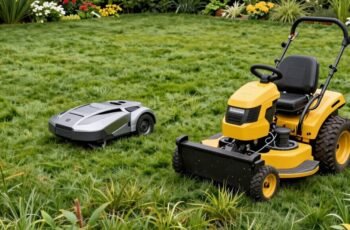
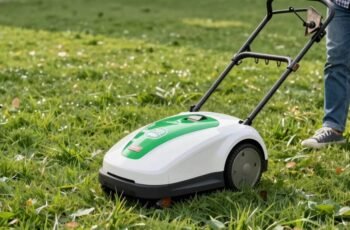
When choosing between a robot mower and a cylinder mower, we recognize it’s a decision that impacts your lawn’s health and your effort. Both options have their strengths and limitations, but what truly matters is how each fits your garden size, budget, and desired finish. You might find that the right choice can transform your lawn care routine — or complicate it — depending on your priorities. Let’s explore how these mowers compare in practicality and performance.
Key Takeaways
- Robot mowers offer automated, consistent cutting suitable for large or medium gardens, while cylinder mowers provide precise, manual cuts ideal for small lawns.
- Robot mowers are easier to operate and require less manual effort, whereas cylinder mowers demand more physical work and skill.
- Initial costs for robot mowers are higher but they have lower ongoing maintenance; cylinder mowers are more affordable upfront but may incur higher maintenance costs.
- Robot mowers depend on boundary setup and may struggle on uneven terrain; cylinder mowers are less terrain-sensitive and require minimal setup.
- For large, uneven, or hilly terrains, robot mowers are more practical; cylinder mowers excel in small, flat, or intricately landscaped gardens.
How Do Robot and Cylinder Mowers Differ in Design and Functionality?
While both robot and cylinder mowers are designed to trim grass, they differ markedly in their design and how they operate. Robot mowers are compact, autonomous devices that move around your yard using sensors and GPS. They cut grass evenly by randomly or systematically guiding your lawn, often returning to a charging station when needed. In contrast, cylinder mowers feature a traditional design with a horizontal cutting cylinder and a fixed or adjustable height. They are usually pushed manually or ride-on, requiring a person to operate them. The cylinder blade rotates against a stationary bedknife, creating a clean, precise cut. While robot mowers focus on automation and convenience, cylinder mowers emphasize traditional, high-quality cutting performance with a more manual approach.
Which Mower Is Easier for Beginners to Use?
For beginners, robot mowers generally prove easier to operate because they require minimal manual effort and setup. They’re designed with user-friendly features, so you don’t need technical skills to get started. Simply charge the mower, set the boundaries, and let it do the work. In contrast, cylinder mowers require more manual effort, such as pushing or pushing and maneuvering around obstacles.
Here are some reasons why robot mowers are beginner-friendly:
- Automatic operation with minimal supervision
- Easy-to-use control apps or simple buttons
- Self-charging docks eliminate manual recharging
- Adaptive mowing patterns reduce user input
How Do Maintenance and Operating Costs Compare?
When comparing costs, we look at both the initial purchase price and ongoing expenses. Robot mowers tend to have higher upfront costs but lower maintenance, while cylinder mowers are usually cheaper to buy but may require more frequent upkeep. Let’s examine how these factors balance out over time.
Initial Purchase Expenses
Initial purchase expenses for robot mowers and cylinder mowers differ considerably, with each offering distinct financial considerations. Robot mowers tend to have a higher upfront cost due to advanced technology, sensors, and automation features. In contrast, cylinder mowers generally require a lower initial investment but may need additional accessories or attachments. Here’s what to weigh:
- Robot mowers often cost between $1,000 and $3,000, depending on size and features.
- Cylinder mowers are usually priced from $300 to $1,000.
- Accessories, such as charging stations for robot mowers, add to the cost.
- Some cylinder mowers may require extra blades or maintenance tools, which can increase initial expenses.
Ongoing Maintenance Costs
While the upfront costs of robot and cylinder mowers differ significantly, their ongoing maintenance expenses can vary even more. Robot mowers generally need less regular upkeep but require battery replacements and occasional software updates, which can add up over time. Cylinder mowers, on the other hand, demand more frequent blade sharpening, oil changes, and belt replacements, leading to higher ongoing costs. Additionally, cylinder mowers often require more manual labor for maintenance tasks, increasing labor costs. Robot mowers tend to be more convenient, with fewer parts to service regularly, but their electronic components can be costly to repair if damaged. Overall, while robot mowers may have higher initial investment, their lower maintenance needs can make them more economical in the long run.
What Are the Main Benefits of Robot Mowers?
Robot mowers offer several compelling benefits that make lawn care easier and more efficient. They save time by autonomously tending to your yard, so you can focus on other tasks or relax. Their consistent mowing promotes a healthier, lush lawn, as they cut regularly and at ideal heights. Additionally, they are energy-efficient and eco-friendly, producing minimal noise and emissions. Maintenance is straightforward, often limited to simple blade replacements and software updates. Plus, they feature smart sensors to avoid obstacles and prevent accidents.
- Save time and effort with automated mowing
- Promote a healthier, greener lawn
- Operate quietly and eco-consciously
- Require minimal maintenance
Why Do Lawn Enthusiasts Prefer Cylinder Mowers for Precision?
Lawn enthusiasts often prefer cylinder mowers because they deliver unmatched precision in cutting. The sharp, horizontal blades rotate against a fixed bed knife, slicing grass cleanly and evenly. This design allows for a closer cut, resulting in a more uniform and aesthetically pleasing lawn. Unlike rotary mowers, cylinder mowers maintain a consistent height, making them ideal for fine lawns or sports fields where perfection matters. They excel at creating a crisp, striped pattern and give users better control over trimming detail. Additionally, the mechanical action reduces tearing and ripping of grass blades, promoting healthier growth. For those who value a perfectly manicured lawn and meticulous detail, cylinder mowers are the clear choice, offering an unmatched level of precision and finish.
How Do Robot and Cylinder Mowers Affect Lawn Quality and Finish?
Both robot and cylinder mowers influence lawn quality in different ways, especially regarding cutting precision and overall finish. While cylinder mowers excel in creating a uniform, sharp cut with meticulous detail, robot mowers often prioritize convenience over perfection. The time and effort required also vary, impacting how consistently the lawn looks and feels.
Precision Cutting Techniques
While traditional cylinder mowers have long been praised for their ability to produce a clean, precise cut, robotic mowers are quickly closing the gap with advanced technology that enhances lawn quality. Robotic mowers use sensors and GPS to navigate accurately, ensuring consistent cutting patterns and avoiding missed spots. Their blade systems often feature multiple cutting edges, allowing for a finer, more uniform finish. In contrast, cylinder mowers rely on sharp, rotating blades that shear grass at a precise angle, delivering a crisp cut.
- Robotic mowers maintain consistent height, reducing uneven patches
- They can adapt to changing grass conditions for ideal cut quality
- Advanced sensors prevent scalping and over-trimming
- Precise blade control results in a smoother, cleaner lawn finish
Lawn Uniformity Levels
When it comes to achieving a uniform, professional-looking finish, the type of mower used plays a crucial role. Robot mowers excel at creating consistent cuts across the entire lawn because they operate in small, overlapping passes and tend to mow more frequently. This regular trimming reduces the appearance of uneven patches and promotes healthy growth. In contrast, cylinder mowers typically produce a very clean, even cut, especially on well-maintained lawns. However, their effectiveness depends on precise blade adjustments and consistent operation. While both mower types can achieve high uniformity, robot mowers often provide a more uniform finish over time due to their frequent, incremental cuts. Ultimately, the choice influences the consistency and overall appearance of your lawn’s surface.
Time and Effort Investment
Achieving a high-quality lawn isn’t just about the final look; it also depends on the time and effort invested in maintenance. With a robot mower, you save significant time, as it operates autonomously and regularly trims the grass. This consistency improves lawn health and appearance with minimal manual effort. In contrast, a cylinder mower demands more hands-on work, including setup, manual operation, and frequent adjustments.
Here’s how they compare:
- Robot mowers require less ongoing effort but consistent programming
- Cylinder mowers need regular pushing and maintenance
- Robot mowers maintain a neat finish with minimal intervention
- Cylinder mowers can require more time for trimming difficult areas
Ultimately, robot mowers deliver convenience, while cylinder mowers demand more time but give precise control.
Which Mower Is Best for Small, Medium, or Large Gardens?
Choosing the right mower depends largely on the size of your garden. For small gardens, a cylinder mower is ideal because it’s simple, affordable, and easy to maneuver in tight spaces. It provides a clean cut, perfect for maintaining neat lawns. Medium gardens benefit from either mower, but a robot mower offers convenience, saving time with minimal effort. It can handle moderate areas efficiently and reduces manual work. For large gardens, a robot mower can be a game-changer, covering extensive ground automatically, but it requires careful planning and proper boundary setup. Cylinder mowers for large spaces might be impractical due to their size and effort needed for manual operation. Overall, our choice depends on garden size, with robot mowers excelling in medium to large areas and cylinder mowers suited for small to medium lawns.
What Factors Should You Consider When Choosing Between Them?
Deciding between a robot mower and a cylinder mower involves evaluating several key factors to guarantee you select the best fit for your garden. First, consider your lawn size—robot mowers excel in smaller to medium lawns, while cylinder mowers suit larger spaces. Next, think about terrain; uneven or hilly areas may challenge robot mowers. Cost is also important—robot mowers generally have higher upfront prices but lower maintenance. Finally, reflect on mowing frequency and finish; cylinder mowers provide a traditional cut, whereas robot mowers offer regular, automated trimming.
- Lawn size and terrain
- Budget and maintenance costs
- Desired mowing frequency
- Lawn finish and precision
Frequently Asked Questions
Are Robot Mowers Suitable for Uneven or Hilly Terrains?
We find robot mowers can handle uneven or hilly terrains well if they’re specifically designed for such conditions. They work best on moderate slopes, but very steep hills might still challenge them, so check the specifications first.
Can Cylinder Mowers Handle Thick or Overgrown Grass Effectively?
Cylinder mowers cut thick grass like a sharp knife through butter, making them highly effective for overgrown lawns. We find they handle dense, tall grass well, but regular maintenance is key to keep them performing at their best.
What Safety Features Do Robot Mowers Typically Include?
We find that robot mowers typically include safety features like obstacle detection, boundary sensors, emergency stop buttons, and blade shut-offs. These features guarantee safe operation around children, pets, and obstacles, giving us peace of mind while they’re working.
How Long Does It Take to Fully Charge a Robot Mower?
A robot mower typically takes about 60 to 90 minutes to fully charge. We find this quick recharge time convenient, allowing it to resume mowing efficiently and keep our lawns consistently maintained without long downtime.
Are There Environmental Benefits to Choosing One Mower Type Over the Other?
We believe robot mowers are more eco-friendly because they consume less energy and produce fewer emissions, while cylinder mowers, especially gas-powered ones, tend to emit more pollutants. Both options have environmental impacts worth considering.
Conclusion
Choosing between a robot mower and a cylinder mower is like selecting between a quiet stream and a sharp, precise blade. Each has its place in nurturing your lawn’s unique personality. Whether you’re seeking effortless, automated care or a meticulous, hands-on finish, understanding their differences helps you craft a lush, vibrant landscape. Ultimately, the right choice transforms your garden into a living canvas—an ongoing masterpiece shaped by your vision and the tools you trust.