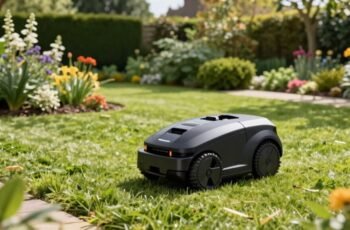
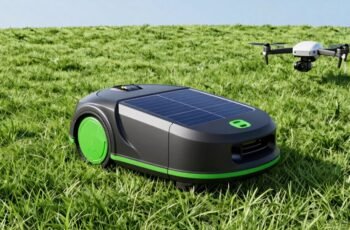
Many assume that a robot lawn mower is a simple convenience, but the truth is more nuanced; its true value depends on specific yard conditions and user needs. While it promises consistent, quiet maintenance and safety features, questions remain about its effectiveness on complex landscapes, costs, and long-term reliability. Considering these factors, it’s worth exploring whether this technology genuinely aligns with your outdoor space and lifestyle before making a decision.
Key Takeaways
- Robot lawn mowers save time and effort by automating regular mowing tasks, especially for larger or flat lawns.
- They promote healthier, even turf by providing consistent, scheduled cutting without manual intervention.
- Advanced safety features and obstacle detection minimize risks to children, pets, and nearby objects.
- Suitable for medium to large, open lawns; less effective on uneven terrain or complex landscaping.
- Initial costs are higher, but long-term savings on maintenance, fuel, and professional services can justify the investment.
How Do Robot Lawn Mowers Work and What Features Do They Offer?
While robot lawn mowers may seem like simple devices, they actually incorporate advanced technologies that enable autonomous operation. These mowers use boundary wires and sensors to define the mowing area, guiding their movements precisely. Equipped with GPS and mapping capabilities, they can navigate complex layouts and avoid obstacles efficiently. Their cutting systems typically feature rotary blades that adjust height automatically, guaranteeing consistent turf maintenance. Many models include sensors to detect nearby objects, preventing collisions and damage. Smart features like app control and scheduling allow users to customize mowing times remotely. Some also have rain sensors, which pause operation during bad weather to protect the mower and ensure ideal results. Overall, these integrated systems maximize efficiency and autonomy through detailed hardware and software integration.
What Are the Main Benefits of Using a Robot Lawn Mower?
Using a robot lawn mower offers numerous tangible benefits that can markedly enhance lawn care routines. First, it provides consistent mowing, leading to a healthier, more even turf by preventing overgrowth and reducing weed spread. Second, it saves time and physical effort, freeing you from manual mowing schedules. Third, it operates quietly, minimizing disturbance to household activities and neighbors. Fourth, its intelligent navigation and scheduling features optimize coverage, ensuring every part of your lawn is maintained efficiently. These benefits combine to deliver a well-maintained lawn with less hassle, enabling more flexibility and reliability in your yard care. Overall, the integration of automation, precision, and convenience makes a robot lawn mower a valuable asset for those seeking efficient, high-quality lawn maintenance.
Are There Any Common Drawbacks or Limitations to Consider?
Despite their many advantages, robot lawn mowers do have certain limitations that are important to take into account before making a purchase. One key issue is their effectiveness on uneven or complex terrains, where obstacles or steep slopes can hinder operation or cause wear. Additionally, they often require regular maintenance, such as blade replacement or cleaning sensors, which can be time-consuming. Battery life is another concern; longer mowing sessions may need multiple charges, impacting overall efficiency. Security features, such as anti-theft measures, vary by model, and some may be insufficient to prevent theft. Moreover, boundary setup can be intricate, especially for irregularly shaped lawns, potentially requiring more initial effort. Recognizing these limitations helps make certain that a robot mower aligns with our specific lawn care needs.
How Much Do Robot Lawn Mowers Cost, and Are They Worth the Investment?
Robot lawn mowers vary widely in price, typically ranging from around $300 to over $1,500 depending on features, size, and brand. To evaluate if they’re worth the investment, consider these factors:
- Initial Cost: Higher-priced models often include advanced navigation, longer battery life, and larger cutting areas.
- Maintenance Expenses: Expect to spend on replacement blades, batteries, or software updates over time.
- Efficiency Gains: They save time and reduce manual labor, especially for regular, small to medium lawns.
- Long-term Savings: Reduced gasoline use and less need for professional services can offset higher upfront costs.
Ultimately, whether they’re worth it depends on your yard size, budget, and willingness to invest in convenience.
Which Yard Sizes and Types Are Best Suited for Robot Mowers?
When considering whether a robot mower is a suitable investment, it’s important to match the device to your yard’s size and terrain. Robot mowers excel in medium to large, relatively flat or gently sloped lawns—typically up to half an acre. They are well-suited for lawns with open, unobstructed areas, as obstacles can hinder their navigation. For irregularly shaped or very large properties, multiple units or more advanced models with GPS and boundary mapping are necessary. Conversely, small gardens with complex landscaping, tight corners, or dense plantings may challenge robot mowers’ maneuverability. Steep slopes exceeding 20-30 degrees can reduce effectiveness or pose safety risks. Consequently, evaluating your yard’s dimensions, terrain, and landscaping complexity is essential in determining the suitability of robot mowers for your specific outdoor environment.
How Do Robot Mowers Compare to Traditional Gas or Electric Lawn Mowers?
When comparing robot mowers to traditional gas or electric models, we find that maintenance and operating costs differ considerably, with robots typically requiring less ongoing effort and expense. Regarding cutting performance and efficiency, robot mowers often provide more consistent results through automated, scheduled mowing patterns, but may struggle with complex terrains. Analyzing these factors helps us determine whether the convenience and long-term savings of robot mowers outweigh their initial investment.
Maintenance and Operating Costs
Although robot lawn mowers often have higher upfront costs, their maintenance and operating expenses tend to be markedly lower over time compared to traditional gas or electric models. First, they require minimal fuel, relying primarily on rechargeable batteries, which reduces ongoing costs. Second, maintenance typically involves cleaning sensors and blades, which is less labor-intensive and cheaper than engine repairs or oil changes. Third, they have fewer moving parts, decreasing the likelihood of mechanical failures and costly replacements. Fourth, energy consumption is more efficient—electric motors use less power than gas engines. Overall, while initial investment is higher, the long-term savings on fuel, repairs, and energy make robot mowers a financially prudent choice for many homeowners.
Cutting Performance and Efficiency
Robot lawn mowers often excel in consistency and precision, but their cutting performance can vary considerably when compared to traditional gas or electric mowers. They typically use rotary blades that cut grass into fine clippings, promoting a tidy appearance. While their small blades may struggle with thicker or taller grass, they excel in maintaining evenness through systematic, grid-like patterns. Electric mowers often deliver more powerful cuts, especially on dense or coarse grass, but may require longer charging times or cord management. Robot mowers operate efficiently by continuously trimming small sections, reducing the need for heavy-duty cuts and saving energy. However, their limited power can result in less effective performance on overgrown or uneven terrain. Overall, robot mowers are efficient for regular maintenance but may fall short in tackling challenging grass conditions.
What Maintenance and Troubleshooting Are Required for Robot Mowers?
Regular maintenance and troubleshooting are essential to guarantee a robot mower operates efficiently and lasts longer. Proper care minimizes breakdowns and maintains cutting quality.
Here are key tasks to focus on:
- Cleaning blades and undercarriage – Remove grass clippings and debris weekly to prevent clogging and ensure even cutting.
- Blade sharpening or replacement – Check blades monthly; dull blades impair performance and can damage grass.
- Battery management – Regularly charge, monitor for capacity loss, and replace batteries as needed to maintain runtime.
- Software updates and diagnostics – Keep firmware current and run diagnostic tests to identify and resolve issues proactively.
Consistent attention to these areas enhances reliability, extends lifespan, and guarantees ideal mowing performance.
Is Installing a Robot Lawn Mower Easy, and What Setup Is Involved?
Installing a robot lawn mower is generally straightforward, but it requires careful planning and precise execution to guarantee peak performance. The process begins with mapping out the mowing area, ensuring the boundary wire is correctly laid around the perimeter. Accurate measurement and secure placement of the wire are vital to prevent the mower from wandering or missing spots. Next, we set up the charging station in a location with easy access and minimal obstacles, which involves connecting it to a power source and ensuring it’s level. Once the boundary wire and station are in place, we program the mower with the desired mowing schedule and zone preferences. Proper calibration and initial testing are essential to confirm the mower navigates smoothly and covers the entire lawn efficiently.
What Safety Features Do Robot Lawn Mowers Have to Protect Your Family and Pets?
Robot lawn mowers are equipped with obstacle detection technology that actively senses pets, children, and objects, reducing the risk of accidents. Emergency stop features provide an immediate shutdown if the mower detects a threat or is manually triggered, ensuring safety in unpredictable situations. By analyzing these safety components, we can better assess how well they protect your family and pets during regular operation.
Obstacle Detection Technology
Since safety is a primary concern when deploying automated equipment around family members and pets, robot lawn mowers incorporate advanced obstacle detection technology to prevent accidents. These systems utilize various sensors to identify objects and respond accordingly. Specifically, they include:
- Infrared and ultrasonic sensors to detect nearby obstacles before contact.
- Bump sensors that trigger immediate stopping upon physical contact.
- Camera-based systems for real-time image processing of the surroundings.
- Edge detection sensors to identify lawn boundaries and avoid crossing into unsafe areas.
Together, these features create a layered safety approach. They ensure the mower halts, reroutes, or adjusts its path when encountering objects, reducing the risk of harm to children, pets, or fragile objects. This precision enhances overall safety and operational reliability.
Emergency Stop Features
Emergency stop features serve as a vital safety net, ensuring that the mower can be quickly halted if an unexpected hazard arises. These systems typically include physical stop buttons, remote controls, or automatic sensors that detect anomalies, such as accidental contact with humans or pets. Many models incorporate sensor-based responses that immediately cut power when sensing a lift or tilt, preventing injury if someone interacts with the mower unexpectedly. Some advanced mowers also feature app-controlled emergency stops, allowing remote halting from a smartphone. These safety mechanisms are designed to minimize risks, especially in environments with children or pets. While no system guarantees absolute safety, well-integrated emergency stop features markedly reduce the likelihood of accidents, making robotic mowers safer for family and pets alike.
Is a Robot Lawn Mower the Right Choice for Your Outdoor Space?
Determining whether a robot lawn mower suits your outdoor space requires careful assessment of your yard’s size, terrain, and landscaping complexity. First, evaluate your lawn’s size: smaller yards (up to 0.5 acres) generally benefit most from robotic mowers, while larger areas may require multiple units or traditional methods. Second, consider terrain: flat or gently sloped terrain is ideal, as steep inclines can hinder performance and safety. Third, analyze landscaping features: areas with many obstacles, flower beds, or trees demand mowers with advanced navigation and boundary recognition. Finally, assess accessibility: narrow pathways or tight corners might limit mower movement. By examining these factors, you can determine if a robotic mower will efficiently maintain your yard without frequent manual intervention, ensuring it’s the right choice for your outdoor space.
Frequently Asked Questions
How Long Does a Robot Lawn Mower Typically Last Before Needing Replacement?
Robot lawn mowers typically last between 3 to 8 years, depending on usage, maintenance, and brand quality. Regular upkeep, such as blade sharpening and battery care, can extend their lifespan, making them a worthwhile investment over time.
Can Robot Lawn Mowers Handle Uneven or Sloped Terrains Effectively?
Robot lawn mowers can handle uneven or sloped terrains effectively, especially models with adjustable cutting heights and robust tires; however, steep slopes over 20-30 degrees may challenge them, requiring specific models designed for rugged terrain.
Are Robot Lawn Mowers Suitable for Areas With Many Obstacles or Flower Beds?
A stitch in time saves nine; robot lawn mowers can handle obstacles with the right models, but complex flower beds might require manual trimming. We analyze terrain and obstacle types to determine the best fit for efficient mowing.
What Is the Typical Battery Life and Recharge Time for These Mowers?
Robot lawn mowers typically offer 60 to 90 minutes of runtime per charge and usually take 60 to 120 minutes to fully recharge. We analyze these figures to determine their suitability for your lawn size and mowing frequency.
Do Robot Lawn Mowers Work Well in All Weather Conditions?
Coincidentally, robot lawn mowers handle most weather conditions well, but heavy rain or snow can impair their performance or cause damage. We recommend monitoring weather forecasts and adjusting mowing schedules to guarantee ideal functionality and longevity.
Conclusion
In the end, deciding if a robot lawn mower is worth it depends on your specific yard and priorities. When the features align with your needs—such as consistent performance, safety, and convenience—it can be a game-changer, transforming lawn care from a chore into a breeze. However, it’s essential to weigh costs, terrain, and maintenance requirements carefully. Like a well-oiled machine, a robotic mower can keep your yard looking pristine—if it’s the right fit for your outdoor space.