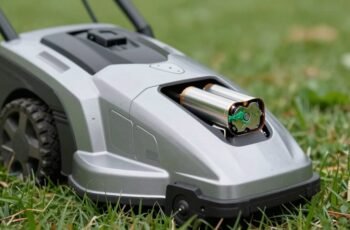
Understanding the factors that influence robot lawn mower battery life is essential for optimizing performance and avoiding unexpected failures. By examining typical lifespan, signs of decline, and maintenance strategies, we can develop an all-encompassing approach to prolonging battery efficiency. Recognizing how environmental conditions and usage patterns impact longevity allows for informed decisions on care and replacement timing. As we explore these aspects, you’ll gain insights that could considerably improve your mower’s operational reliability.
Key Takeaways
- Typical battery lifespan is 2-3 years, depending on usage, maintenance, and battery type.
- Regularly inspect and clean contacts, monitor voltage, and calibrate to extend battery life.
- Signs of declining battery health include shorter runtime, longer charging, and inconsistent performance.
- Proper storage in cool, dry environments during inactivity helps prevent capacity loss.
- Timely replacement of worn batteries with matching specifications maintains mower efficiency.
How Long Do Robot Lawn Mower Batteries Typically Last?
The lifespan of robot lawn mower batteries typically ranges from two to three years, depending on usage patterns, battery quality, and maintenance practices. High-frequency use accelerates chemical degradation within the cells, reducing overall longevity. Quality batteries with advanced chemistries, such as lithium-ion, tend to sustain capacity longer due to superior stability and fewer memory effects. Proper maintenance—including regular cleaning, avoiding complete discharges, and keeping batteries within recommended temperature ranges—can markedly extend operational life. Additionally, environmental factors like exposure to moisture or extreme temperatures can hasten capacity loss. By analyzing these variables, we can better predict battery performance over time, enabling more accurate planning for replacements and optimizing overall mower efficiency.
Recognizing Signs of Battery Wear and Decline
As a robot lawn mower’s battery ages, its performance begins to decline in measurable ways, signaling that replacement or maintenance may be necessary. Key indicators include reduced runtime, longer charging cycles, and inconsistent cutting performance. Tracking these signs allows us to evaluate battery health accurately.
| Sign | Effect |
|---|---|
| Decreased Runtime | Shorter mowing sessions, requiring more frequent charging |
| Increased Charging Time | Longer periods to reach full charge |
| Performance Fluctuations | Uneven cutting, missed patches, or mower stalling |
Recognizing these signs promptly helps prevent unexpected breakdowns and preserves overall mower efficiency. Regular monitoring ensures timely intervention, extending the battery’s useful lifespan and maintaining ideal mowing performance.
Tips to Extend Your Robot Mower’s Battery Life
To maximize battery longevity, we need to implement consistent maintenance routines, such as cleaning contacts and checking for corrosion. Establishing ideal cutting schedules minimizes unnecessary strain, while proper charging techniques prevent overcharging and thermal stress. Applying these strategies ensures sustained performance and prolongs the battery’s effective lifespan.
Regular Battery Maintenance
Regular battery maintenance is essential to maximizing your robot mower’s operational lifespan and performance. Consistent checks and proper handling prevent capacity loss and extend usable life. We recommend monitoring voltage levels and inspecting for corrosion or debris that could hinder connections. Implementing a structured maintenance schedule ensures early detection of issues, reducing downtime and repair costs. The table below summarizes key maintenance actions:
| Action | Frequency | Purpose |
|---|---|---|
| Voltage monitoring | Weekly | Detect early capacity decline |
| Connector cleaning | Monthly | Prevent corrosion and ensure conductivity |
| Battery calibration | Quarterly | Maintain accurate battery readings |
| Storage protocol | Annually or seasonal | Minimize degradation during inactivity |
Adhering to these practices sustains peak performance and prolongs battery life through precise, analytical oversight.
Optimal Cutting Schedules
Have you considered how your mowing schedule impacts your robot mower’s battery longevity? Frequent, shorter mowing sessions can reduce strain on the battery, preventing deep discharges that accelerate wear. Scheduling mowing during suitable conditions—such as moderate grass height and stable weather—enhances efficiency and minimizes power consumption. Avoiding overly aggressive cutting patterns reduces motor load and heat buildup, which directly affects battery health. Implementing a consistent mowing pattern prevents unnecessary energy expenditure from sudden direction changes or overlapping passes. Additionally, staggered mowing times ensure the battery operates within its ideal charge cycle range, avoiding deep discharges or overcharges. By maximizing your schedule based on grass growth rate and environmental conditions, you can considerably extend your mower’s battery lifespan while maintaining a healthy lawn.
Proper Charging Techniques
Effective charging practices are crucial for maximizing your robot mower’s battery lifespan. Proper techniques prevent capacity loss and extend operational life. First, avoid frequent partial charges; instead, aim for full charges when possible to maintain voltage stability and reduce stress on the battery. Second, do not leave the mower on the charger continuously after it reaches 100%, as prolonged overcharging accelerates capacity degradation. Third, store the mower in a cool, dry environment, especially if not in use for extended periods, since high temperatures accelerate chemical aging within the battery. Adhering to these practices guarantees ideal battery health, enhances cycle life, and maintains consistent performance over time. Precise charging protocols are crucial for long-term efficiency and cost-effectiveness.
How to Properly Maintain and Store Your Mower’s Battery
Proper maintenance and storage of your mower’s battery are essential for preserving its lifespan and performance. We focus on ideal charging techniques to prevent capacity loss and recommend storage temperatures that minimize degradation. Implementing these practices ensures your battery remains reliable and efficient over time.
Optimal Charging Techniques
To maximize your mower’s battery lifespan, it’s essential to adopt ideal charging practices that prevent unnecessary degradation. Proper charging minimizes capacity loss over time and maintains optimal performance.
Firstly, avoid frequent partial charges; instead, aim to fully charge the battery when possible to reduce voltage stress. Secondly, prevent overcharging by disconnecting the charger once the battery reaches 100%, as sustained high voltage accelerates chemical wear. Thirdly, implement a consistent charging schedule, ideally charging during periods of low ambient temperature to reduce thermal stress and electrolyte evaporation. These practices help maintain chemical stability within the cells, reducing the risk of capacity fade. By adhering to these techniques, you ensure your mower’s battery remains efficient and reliable over its service life, ultimately maximizing performance and longevity.
Storage Temperature Tips
Since temperature fluctuations profoundly impact battery health, maintaining a suitable storage environment is crucial for preserving capacity and preventing degradation, especially during extended periods of inactivity. Ideally, storage temperatures should be between 40°F (4°C) and 77°F (25°C), as exposure outside this range accelerates chemical degradation within the battery cells. High temperatures increase the rate of electrolyte breakdown and capacity loss, while low temperatures can cause internal resistance to rise, impairing performance upon reactivation. It’s necessary to store the battery in a cool, dry place, away from direct sunlight and sources of heat. Additionally, avoiding extreme temperature swings prevents material stress and prolongs overall lifespan. Regularly monitoring storage conditions guarantees consistent peak performance and minimizes long-term capacity decline.
When and How to Replace Your Robot Mower Battery
As batteries age and their capacity diminishes, recognizing the most suitable time for replacement becomes essential to maintaining your mower’s performance. Signs include reduced run time, increased charging cycles, and inconsistent mowing patterns. To determine if replacement is needed, consider these factors:
- Performance decline: Noticeable decrease in mowing duration or efficiency.
- Charging anomalies: Longer charging times or frequent recharges indicate capacity loss.
- Battery health diagnostics: Use manufacturer tools or tests to evaluate voltage and internal resistance.
When replacement becomes necessary, follow manufacturer guidelines for disassembly and installation to avoid damage. Confirm the new battery matches the mower’s specifications and dispose of the old unit according to local regulations. Regular monitoring and timely replacement are critical for peak mower operation and battery safety.
Comparing Battery Types and Their Impact on Longevity
Different battery technologies considerably influence the longevity and performance of robot lawn mowers. Lithium-ion batteries dominate the market due to their high energy density, long cycle life, and consistent power output. They typically last between 2 to 3 years with proper maintenance, maintaining capacity over numerous charge cycles. Lead-acid batteries, while more affordable, suffer from shorter lifespans—often around 1 to 2 years—and experience capacity degradation more rapidly. Lithium-polymer batteries offer similar benefits to lithium-ion but with slightly enhanced form factors, impacting durability and longevity positively. The choice of battery type directly affects operational lifespan and replacement frequency; understanding these technical distinctions helps us optimize mower performance and cost-effectiveness over time.
Frequently Asked Questions
Are There Specific Brands Known for Longer-Lasting Robot Mower Batteries?
We find that brands like Husqvarna, Worx, and Bosch are known for longer-lasting robot mower batteries due to advanced lithium-ion technology and higher capacity cells, making them reliable choices for extended operation and durability in demanding lawn maintenance tasks.
How Do Outdoor Weather Conditions Affect Battery Performance?
Outdoor weather profoundly impacts battery performance; studies show extreme temperatures can reduce efficiency by up to 30%. We analyze how heat accelerates battery degradation and cold diminishes capacity, emphasizing the importance of weather-resistant designs for ideal mower longevity.
Can Software Updates Improve Battery Efficiency?
Software updates can enhance battery efficiency by optimizing power management algorithms, reducing unnecessary energy consumption, and improving overall system performance. We analyze these improvements to guarantee your robot mower operates at peak efficiency, extending battery life effectively.
What Safety Precautions Should Be Taken When Handling Batteries?
We recommend wearing protective gloves and eye gear, avoiding punctures or short circuits, and working in well-ventilated areas. Always disconnect batteries before handling and follow manufacturer instructions to prevent hazards and guarantee safe, effective maintenance.
Is It Better to Buy a New Mower or Replace the Battery?
We believe replacing the battery is often more cost-effective and sustainable than buying a new mower, especially if the mower’s core functions are intact. Batteries are the heart, and renewing it can extend the machine’s life considerably.
Conclusion
By following these best practices, we can make certain our robot lawn mower batteries perform like well-oiled engines, delivering consistent results season after season. Regular maintenance, proper storage, and timely replacements act as the gears that keep this system running smoothly. Think of the battery as the heart of our mowing robot—caring for it diligently guarantees it beats strong and steady, ensuring our lawns stay pristine without unexpected breakdowns or downtime.