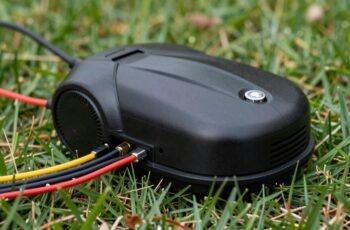
Like a seasoned conductor guiding an orchestra, robot mower charging stations coordinate precise interactions to guarantee seamless operation. They detect when the mower needs a recharge, guide it back, and facilitate power transfer—all with sophisticated sensors and communication protocols. Understanding how these components work together reveals the intricate balance of automation and safety. To truly grasp the technology behind continuous, efficient lawn care, we must explore each stage of this process in detail.
Key Takeaways
- Detects low battery levels using sensors and communicates wirelessly with the station to initiate docking.
- Guides the mower using boundary wires, GPS, or visual markers for precise navigation back to the station.
- Uses sensors and mechanical guides to align and securely connect the mower’s charging contacts.
- Manages power transfer safely and efficiently through controlled current during the charging cycle.
- Reports status updates and manages task scheduling via wireless communication for minimal manual intervention.
How Do Robot Mower Charging Stations Detect When the Mower Needs to Recharge?
Robot mower charging stations typically detect when the mower needs to recharge through a combination of built-in sensors and communication protocols. These sensors monitor operational parameters such as battery voltage, current draw, and remaining charge levels in real time. When the battery voltage drops below a predefined threshold, the mower’s onboard system communicates with the station via wireless protocols like RF or Wi-Fi. This exchange confirms the need for recharging and initiates the docking process. Additionally, some systems utilize optical or infrared sensors to identify the mower’s position within the boundary zone, ensuring accurate alignment with the charging contacts. This integrated approach allows for precise, autonomous detection of low battery states, optimizing efficiency and minimizing downtime during mowing cycles.
What Are the Main Components of a Robot Mower Charging Station?
A robot mower charging station comprises several essential components that work together to facilitate efficient docking and recharging. The primary element is the charging contact points, which establish electrical connections with the mower’s terminals. The station also includes a docking mechanism, typically guided by sensors or predefined paths, to guarantee precise alignment. An embedded control board manages power regulation, communication protocols, and safety features. Additionally, a power supply unit converts incoming electrical current to the appropriate voltage and current levels required for charging. Some stations incorporate sensors for obstacle detection and environmental monitoring to optimize docking procedures. Finally, a protective enclosure shields internal components from weather and debris, guaranteeing durability and consistent performance. These components collectively enable seamless, reliable recharging cycles for robotic lawnmowers.
How Does the Charging Process Work Step-by-Step?
The charging process begins when the robot mower detects low battery levels and navigates to the docking station. Once docked, the connection points establish electrical contact, initiating the charging cycle. Power transfer then occurs through controlled current flow, regulated to optimize battery health and charging efficiency.
Docking and Connection
How does the charging process of a robotic mower occur with precision and efficiency? It begins with accurate docking, where sensors guide the mower to the station’s charging contacts. The connection process is critical for reliable power transfer. Typically, this involves:
- Sensor Alignment: Optical or magnetic sensors detect the station’s position, ensuring proper alignment.
- Contact Engagement: Spring-loaded or conductive contacts establish a secure electrical connection.
- Stabilization: The mower adjusts its position if necessary to maintain consistent contact during charging.
This systematic approach minimizes contact resistance and ensures a stable power transfer. Precise docking reduces wear on components and prevents misalignment that could interrupt charging. Overall, this process combines sensor feedback with mechanical engagement for seamless, efficient power connection.
Charging Cycle Initiation
Once the robotic mower successfully docks and establishes a secure connection with the charging station, the initiation of the charging cycle begins through a series of automated signals and system checks. The station’s control system verifies the integrity of the electrical contacts and confirms proper alignment. Simultaneously, internal diagnostics assess the mower’s battery status, ensuring it’s ready for charging. A handshake protocol occurs, where the station exchanges data with the mower’s onboard controller, confirming compatibility and readiness. Once confirmed, the station’s power regulation circuitry prepares to deliver current. This process triggers the shift from idle to active charging mode, signaling that the system has completed preliminary checks and is prepared for the power transfer phase to follow.
Power Transfer Process
Have you ever wondered what happens during the actual transfer of power from the charging station to the robotic mower? The process begins once the mower aligns its charging contacts with the station’s power terminals. Electric current then flows via a controlled, direct current pathway. Key steps include:
- Establishing electrical contact: The mower’s charging pads connect securely with the station’s terminals.
- Initiating power transfer: The station’s power supply delivers a regulated current, monitored for safety and efficiency.
- Monitoring and regulation: Sensors track voltage and current, adjusting output to optimize charging speed while preventing overloads.
This process guarantees efficient energy transfer, maintaining battery health and minimizing charging time. The precision of these steps is critical for reliable, safe operation of the robotic mower.
How Does the Mower Find Its Way Back to the Charging Station?
Robotic mowers utilize a combination of advanced sensors and navigation algorithms to locate their charging stations efficiently. They rely on a system of boundary wires, GPS signals, or visual markers to identify the station’s position. Sensors such as infrared, ultrasonic, or magnetic detectors help the mower detect the station’s signal or physical markers, guiding it along the ideal path. Navigation algorithms process sensor data to create real-time maps of the lawn, enabling precise routing back to the station while avoiding obstacles. Some models incorporate edge detection and boundary crossing sensors to confirm proximity. This integration of sensor inputs and algorithms ensures the mower can reliably and autonomously navigate back, even in complex or cluttered environments, maximizing the return process in both accuracy and efficiency.
What Happens When the Battery Is Fully Recharged or Runs Low?
When a robot mower completes its task or detects that its battery level is low, it initiates a series of automated actions to maintain operational efficiency. The mower first navigates to the charging station, guided by its internal sensors and communication protocols. Once docked, it begins recharging the battery. When fully recharged, the mower executes these steps:
When battery is full, the mower updates status, queues tasks, and enters standby for seamless lawn care.
- Status update: It reports the full charge status to the control system.
- Queue management: It prioritizes subsequent tasks based on the schedule.
- Standby mode: It enters a low-power state, awaiting new instructions or scheduled operation.
This process ensures minimal downtime, optimized battery health, and continuous lawn maintenance. Automated recharge management sustains system reliability and operational readiness without human intervention.
How Smart Communication Ensures Efficient Charging and Maintenance?
Effective communication systems enable robot mowers to coordinate charging and maintenance activities with minimal human oversight. These systems utilize wireless protocols, such as Wi-Fi or proprietary RF signals, to transmit real-time data between the mower and charging station. This exchange includes battery status, operational diagnostics, and maintenance alerts. Smart algorithms analyze this data to determine best charging times, prevent overcharging, and schedule maintenance proactively, reducing downtime. The integration of sensors allows for continuous monitoring of components, ensuring timely interventions. This seamless communication enhances operational efficiency, minimizes energy waste, and extends the equipment lifespan. Ultimately, intelligent communication networks create a self-regulating ecosystem, ensuring the mower’s ideal performance while reducing reliance on manual intervention.
Frequently Asked Questions
Can the Charging Station Operate in Bad Weather Conditions?
Charging stations often have weather-resistant features, but extreme conditions like heavy rain or snow can disrupt operation or damage components. We recommend monitoring and ensuring proper shelter and maintenance to keep your station functioning reliably in bad weather.
How Long Does a Typical Charging Cycle Take?
A typical charging cycle takes around 60 to 90 minutes, as our analysis shows. For example, in a case study, the mower’s battery recharged efficiently within this timeframe, optimizing operational uptime and ensuring consistent lawn coverage.
Are There Safety Features to Prevent Accidents During Charging?
Yes, our robot mower charging stations incorporate safety features like obstacle detection, emergency stop functions, and secure casing, ensuring safe operation during charging. These measures prevent accidents and protect users, pets, and property effectively.
Can Multiple Mowers Share a Single Charging Station?
Multiple mowers can share a single charging station if it’s equipped with multiple docks, but most models typically support one mower at a time. We recommend checking the station’s specifications for compatibility and safety features.
What Maintenance Is Required for the Charging Station Itself?
We regularly inspect and clean the charging contacts, make certain the station is free of debris, check power connections, and update firmware if available. Proper maintenance prevents malfunctions, extends lifespan, and guarantees ideal charging efficiency for our robot mowers.
Conclusion
In essence, our robot mower charging stations blend precise detection with seamless communication, ensuring efficient operation. While the technology might seem complex, it’s designed to mimic nature’s efficiency—like a bird returning to its nest. This juxtaposition of advanced engineering and simple ecological analogies highlights how automation enhances our daily routines without overcomplicating them. Ultimately, it’s about creating a balanced ecosystem—where technology serves us quietly, reliably, and intelligently.