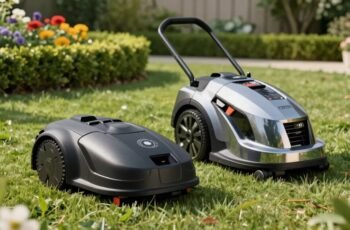
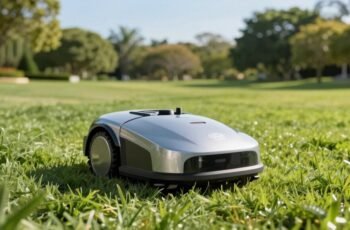
Imagine a homeowner with a medium-sized, irregularly shaped lawn struggling to keep up with traditional mowing. Selecting a robot mower requires understanding how different models handle complex terrain, battery capacity, and feature sets. These choices directly impact your lawn’s health and your maintenance routine. To make an informed decision that balances performance and budget, it’s essential to explore key factors like size compatibility, terrain adaptability, and operational features—details we’ll explore to help you find the best fit.
Key Takeaways
- Measure your lawn accurately to select a mower with appropriate size and features for optimal performance.
- Choose a model suited for your lawn’s size, terrain, and shape, considering features like navigation and obstacle detection.
- Understand installation requirements, including boundary wire setup and initial programming, for smooth operation.
- Prioritize ease of maintenance, such as blade checks and battery care, to ensure long-lasting performance.
- Set a realistic budget that balances features, reliability, and long-term savings for a satisfying first-time purchase.
Understanding How Robot Mowers Work and Their Benefits
Although robot mowers are increasingly popular for maintaining lawns with minimal effort, understanding their core functionality is essential for first-time buyers. These automated devices operate using a combination of sensors, cutting blades, and navigation systems. They rely on boundary wires or GPS technology to define the mowing area, ensuring precise coverage without overlap or gaps. The mower’s sensors detect obstacles, preventing collisions and guiding safe operation. The blades rotate at high speeds, trimming grass evenly to a set height. Benefits include consistent lawn maintenance, reduced manual labor, and improved turf health due to regular mowing. Additionally, most models incorporate programmable schedules and energy-efficient batteries, making them environmentally friendly and cost-effective over time. This understanding helps users optimize performance and select suitable models for their specific lawn needs.
Different Types of Robot Mowers: Which One Fits Your Lawn?
Different types of robot mowers are designed to suit a variety of lawn sizes, shapes, and terrain conditions. For small to medium lawns, compact models with integrated sensors provide efficient coverage and obstacle detection, ideal for residential gardens. Larger properties benefit from multiple-zone mowers with extended battery life and higher cutting capacities, ensuring continuous operation over vast areas. For uneven or hilly terrain, specialized models feature adjustable cutting heights and enhanced traction systems to maintain stability and effective mowing. Some mowers are equipped with boundary wires for precise perimeter control, while others utilize GPS navigation for complex layouts. Understanding these distinctions helps us select a mower that aligns with the specific demands of your lawn, optimizing performance and maintenance efficiency.
Key Features to Look for in a First-Time Robot Mower
When selecting a first robot mower, key features like cutting width and height determine coverage efficiency and lawn aesthetics. Battery life and charging capabilities impact operational duration and ease of maintenance, while advanced navigation systems and sensors guarantee precise mowing around obstacles. Evaluating these technical specifications helps us choose a model that ideally fits our lawn’s size and complexity.
Cutting Width and Height
Choosing a robot mower with the appropriate cutting width and height is essential for achieving a well-maintained lawn efficiently. The cutting width determines how much grass the mower can cut in a single pass, affecting overall mowing time and coverage. Larger widths are suitable for expansive lawns, reducing the number of passes needed, but may increase the mower’s size and complexity. The cutting height controls the grass length, allowing customization based on grass type and season. Look for models with adjustable height settings, typically ranging from 20mm to 60mm, to guarantee proper turf health. Precise control over these parameters helps prevent scalping and ensures an even cut, promoting a healthier, visually appealing lawn. Selecting the right combination optimizes mowing performance and lawn quality.
Battery Life and Charging
How long a robot mower’s battery lasts is a critical factor for guaranteeing it can complete its mowing cycle without interruption. Typically, battery life depends on battery capacity, mower size, and mowing conditions. High-capacity lithium-ion batteries generally provide longer operational times, reducing the need for frequent recharges. When evaluating battery performance, consider these key aspects:
- Run Time per Charge: Ranges from 45 minutes to 2 hours, depending on model and terrain.
- Recharge Time: Usually between 30 minutes and 2 hours, impacting overall mowing efficiency.
- Battery Capacity: Measured in milliamp-hours (mAh) or watt-hours (Wh); higher capacity indicates longer run times.
- Automatic Recharging: Many models return to the charging station when power is low, minimizing manual intervention.
Understanding these elements helps guarantee continuous mowing and ideal battery management.
Navigation and Sensors
Navigation and sensors are essential components that determine a robot mower’s efficiency and reliability. They enable precise boundary recognition, obstacle avoidance, and adaptive path planning, minimizing missed patches and collisions. Look for models with advanced navigation systems, such as GPS, gyroscopes, or visual sensors, which improve accuracy in complex terrains. Sensors like bumpers, infrared, or ultrasonic help detect obstacles and prevent damage. Properly integrated sensors guarantee smoother operation and extend the mower’s lifespan.
| Navigation Features | Sensor Technologies |
|---|---|
| GPS and mapping | Ultrasonic and infrared |
| Gyroscope-based routing | Bumper and cliff sensors |
| Boundary recognition | Obstacle detection sensors |
How to Measure Your Lawn and Determine the Right Size Model
To select the appropriate robot mower, we must first measure your lawn’s dimensions accurately using a tape measure or measuring wheel. Next, calculate the total mowing area to determine the model’s capacity, ensuring it can handle the entire space efficiently. Matching the mower’s cutting capacity to your lawn size guarantees the best performance and coverage without overloading the system.
Measure Lawn Dimensions Accurately
Accurately measuring your lawn’s dimensions is essential for selecting the appropriate robot mower model, as it guarantees peak performance and coverage. To achieve precise measurements, follow these steps:
- Use a reliable measuring tool—such as a tape measure or a surveyor’s wheel—to determine the length and width of your lawn.
- Map out irregularly shaped areas by segmenting the lawn into smaller, manageable sections, then measure each section individually.
- Record measurements in feet or meters, maintaining consistency for accurate area calculations.
- Double-check measurements to guarantee accuracy, especially in complex layouts or uneven terrain, to avoid under- or overestimating the mower’s capacity.
This precision guarantees you select a model that efficiently covers your entire yard without unnecessary overcapacity.
Calculate Total Mowing Area
Once you’ve measured the dimensions of your lawn, the next step is calculating the total mowing area to identify the appropriate robot mower size. To do this accurately, multiply the length by the width, guaranteeing measurements are in consistent units, typically meters or feet. For irregularly shaped lawns, divide the area into manageable geometric sections—rectangles, triangles, or circles—and calculate each section separately before summing the totals. Precise area measurement ensures you select a mower with sufficient battery capacity and cutting capacity. Avoid approximation errors by double-checking measurements and accounting for any obstacles or variations in terrain. Accurate total area calculation is critical for matching your lawn’s size with a mower’s specifications, ensuring efficient and reliable operation.
Match Model Capacity to Lawn Size
Determining the appropriate robot mower model begins with matching its capacity to the size of your lawn. To do this effectively, you need accurate measurements. First, measure the length and width of each section of your lawn, especially if it’s irregularly shaped. Second, calculate the total area by multiplying length by width for each section and summing the results. Third, consider any obstacles or narrow passages that could affect mowing efficiency. Fourth, review the mower’s specifications, focusing on its recommended maximum area. Matching these figures guarantees your mower can handle your lawn’s size without overworking or underperforming. Proper sizing optimizes battery life, mowing frequency, and overall maintenance, ensuring a smooth, efficient operation tailored to your landscape.
Budgeting Tips: How Much Should You Spend on a Robot Mower?
When setting a budget for a robot mower, it’s essential to take into account both the initial purchase price and ongoing maintenance costs. The upfront investment typically ranges from $800 to over $3,000, depending on features such as cutting width, battery capacity, and navigation technology. Higher-end models often include advanced sensors, GPS mapping, and weather adaptability, which can reduce long-term operational costs by improving efficiency. Maintenance expenses—like blade replacements, battery upgrades, and software updates—should also factor into your budget, generally amounting to 10-15% of the initial cost annually. Establishing a clear budget helps prioritize feature requirements and guarantees the mower’s functionality aligns with your lawn’s size and complexity, optimizing both performance and value over its lifespan.
Setting Up Your Robot Mower: Installation and Initial Programming
After selecting the appropriate mower within your budget, the next step is to properly install and program it to guarantee peak performance. First, position the charging station on a flat, open surface, avoiding obstacles within 3 feet. Next, install boundary wires around the perimeter and any restricted zones, ensuring secure connections. Third, connect the mower to the charging dock and verify it powers on correctly. Fourth, access the control panel to run the initial setup: set mowing schedules, define cutting height, and map out mowing zones if applicable. Proper installation involves precise wire placement and secure connections, while initial programming ensures the mower operates effectively and safely, reducing the need for adjustments later. Accurate setup is essential for top-tier performance and longevity.
Maintenance and Troubleshooting Common Robot Mower Issues
Regular blade checks are essential to maintain cutting efficiency and prevent jamming, while proper battery maintenance guarantees consistent performance and prolongs lifespan. When issues arise, referencing error codes can quickly identify problems, enabling targeted troubleshooting. Understanding these key maintenance and troubleshooting steps helps keep your mower operating reliably.
Regular Blade Checks
How often should we inspect the blades on our robot mower to guarantee peak performance? Regular blade checks are vital for optimal cutting efficiency and mower longevity. We recommend inspecting blades every 2 to 4 weeks, depending on usage and grass conditions. During these inspections, we should:
- Remove the blades carefully using appropriate tools.
- Examine for signs of dullness, chips, or cracks.
- Sharpen or replace blades if they show wear or damage.
- Clean debris and grass buildup around the blade area to prevent imbalance.
Maintaining sharp, intact blades ensures cleaner cuts, reduces strain on the motor, and prevents uneven mowing. Consistent checks are a fundamental component of proper mower upkeep, ensuring steady performance and minimizing troubleshooting needs.
Battery Maintenance Tips
Maintaining the battery health of your robot mower is essential for consistent performance and avoiding unexpected downtime. To optimize battery longevity, regularly inspect for corrosion on terminals and clean them with a mixture of baking soda and water, ensuring connections are secure. Avoid deep discharges; instead, recharge the battery when it reaches approximately 20-30% capacity to prevent capacity loss. Store the mower in a cool, dry environment during off-season periods, as high temperatures accelerate battery degradation. Use the manufacturer-recommended charger to prevent overcharging, which can damage cells. Periodic calibration—fully charging and discharging the battery—helps maintain accurate state-of-charge readings. By following these guidelines, you guarantee the battery remains efficient, prolongs its lifespan, and maintains the mower’s reliable operation.
Troubleshooting Error Codes
When your robot mower displays an error code, it signals that something requires attention within the system. Identifying and addressing these codes promptly ensures peak performance and prevents further damage. Here are common steps to troubleshoot:
- Check the user manual for the specific error code and recommended actions.
- Inspect the charging contacts and ensure the battery is properly seated and charging correctly.
- Examine the blades and cutting mechanism for obstructions or debris that could trigger errors.
- Reset the system by turning the mower off, waiting a few seconds, then restarting to clear temporary glitches.
Understanding these codes helps in diagnosing issues quickly and maintaining dependable operation of your mower. Always refer to manufacturer guidelines for precise troubleshooting procedures.
Comparing Popular Robot Mower Brands and Models
Choosing the right robot mower requires an understanding of the leading brands and their key models, as each offers distinct features tailored to different lawn sizes and terrains. For instance, Husqvarna’s Automower series provides advanced navigation with GPS and obstacle detection, suitable for complex landscapes. Worx Landroid models emphasize customizable mowing patterns and smart home integration, ideal for medium-sized lawns. Robomow models excel in handling uneven terrain with robust cutting mechanisms and larger blades. Gardena’s Sileno series offers compact design and efficient edge trimming, perfect for smaller, flatter lawns. When comparing these brands, consider factors like cutting width, battery capacity, and terrain adaptability to select a model that aligns with your lawn’s specific requirements and maintenance preferences.
Tips for Maximizing Battery Life and Lawn Coverage
To maximize your robot mower’s battery life and guarantee thorough lawn coverage, it’s essential to refine mowing schedules and settings based on your lawn’s size and terrain. Proper adjustments improve efficiency and extend operational lifespan. Consider these key tips:
- Schedule mowing during ideal weather conditions to reduce power drain caused by wet or windy weather.
- Set appropriate cutting height to prevent unnecessary strain on the motor and enhance coverage consistency.
- Divide large lawns into zones for targeted mowing, reducing navigation complexity and battery consumption.
- Regularly maintain blades and wheels to ensure smooth operation and prevent energy wastage caused by mechanical resistance.
Implementing these strategies enhances battery efficiency and guarantees comprehensive lawn coverage, maximizing your investment.
Is a Robot Mower Right for Your Yard? Pros and Cons to Consider
Determining whether a robot mower suits your yard requires a careful analysis of your landscape’s size, terrain, and maintenance needs. While they excel in small to medium lawns with flat terrain, challenging slopes or irregular shapes may hinder performance. Consider the following pros and cons:
| Pros | Cons |
|---|---|
| Efficient, time-saving mowing | Limited handling of complex terrain |
| Consistent cutting for a healthy lawn | Initial investment can be high |
| Quiet operation, less disturbance | Requires regular maintenance and monitoring |
If your yard is relatively simple, a robot mower offers convenience and precision. However, for larger, uneven, or obstacle-rich lawns, traditional mowers might be more practical. Evaluate these factors carefully to determine the best fit.
Frequently Asked Questions
Can Robot Mowers Handle Uneven or Hilly Terrain Effectively?
Yes, robot mowers can handle uneven or hilly terrain effectively, especially models with adjustable cutting heights, robust motors, and high-torque wheels. We recommend choosing those designed specifically for challenging landscapes to guarantee superior performance and safety.
Are Robot Mowers Safe for Children and Pets?
Robot mowers are generally safe for children and pets when equipped with safety features like obstacle detection, PIN codes, and lift sensors. We recommend supervising initial use and setting boundaries to guarantee a secure environment for your loved ones.
How Do Robot Mowers Perform in Heavy Rain or Wet Conditions?
Robot mowers in heavy rain are like a fish out of water; they struggle with wet conditions. Most models pause or reduce efficiency, so it’s best to avoid mowing during rain to prevent damage and guarantee safety.
What Warranty and Customer Support Options Are Typically Available?
We find that warranties usually cover manufacturing defects for one to three years, while customer support options often include online chat, phone assistance, and troubleshooting guides, ensuring prompt help for technical issues or setup questions.
Can Robot Mowers Be Integrated With Smart Home Systems?
Robot mowers can seamlessly join your smart home ecosystem, acting like a diligent gardener’s apprentice. They integrate via Wi-Fi or smart home hubs, allowing you to control mowing schedules and monitor performance through compatible apps or voice commands.
Conclusion
Choosing the right robot mower is like planting a seed for effortless lawn care; with proper selection and maintenance, it blossoms into a seamless, reliable partner. By understanding your yard’s unique landscape, you guarantee this technological tool becomes a steady guardian of your green space. When aligned with your needs, a robot mower not only maintains your lawn but symbolizes a smarter, more efficient future—turning routine chores into a well-orchestrated harmony of innovation and nature.