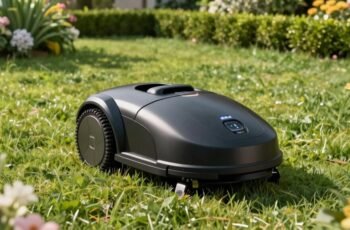
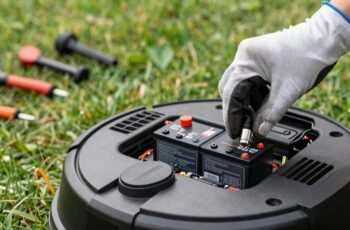
Understanding the relationship between robot mower batteries and lawn size is essential for optimizing performance and efficiency. As lawns grow larger or more complex, selecting the appropriate battery capacity becomes a critical factor. We recognize that mismatched batteries can lead to subpar results or unnecessary costs. To truly maximize your mower’s potential, it’s important to analyze how battery specs influence runtime and power across different yard dimensions, prompting a closer look at the key factors involved.
Key Takeaways
- Larger lawns require higher voltage and capacity batteries for longer mowing sessions without frequent recharges.
- Battery capacity (amp-hours) should match lawn size to ensure sufficient runtime and efficient coverage.
- Oversized batteries add weight and cost, so proper matching minimizes interruptions and maximizes efficiency.
- For lawns over ½ acre, batteries of 4 Ah or higher are recommended for optimal performance.
- Proper calibration and maintenance of batteries extend mower runtime and ensure consistent lawn care.
How Does Battery Capacity Impact Mowing Time for Different Lawn Sizes
Battery capacity directly influences the mowing time of robot mowers, especially when considering varying lawn sizes. Larger capacity batteries store more energy, enabling extended operation before needing recharge. This relationship is vital because a higher capacity allows the mower to cover more ground continuously, reducing downtime. Conversely, smaller batteries limit mowing duration, requiring more frequent recharges, which can disrupt scheduled mowing cycles. The relationship between battery capacity and mowing time is linear, assuming constant power consumption; however, terrain complexity, grass density, and mower efficiency also affect actual runtime. For larger lawns, higher-capacity batteries provide a significant advantage by maintaining consistent mowing without interruptions. Understanding this dynamic enables better alignment of battery specifications with your lawn’s dimensions, optimizing operational efficiency.
Matching Battery Voltage and Amp-Hours to Your Lawn’s Dimensions
Matching the right battery voltage and amp-hours to your lawn’s dimensions guarantees ideal mower performance and efficiency. Higher voltage provides increased power for larger areas, while amp-hours determine runtime, directly affecting mowing duration. Careful alignment of these specifications with your lawn size helps maximize cutting time and prolong battery life.
Battery Voltage and Power
When selecting a robot mower, ensuring that the battery voltage and amp-hours align with your lawn’s size is crucial for ideal performance. Battery voltage directly influences the mower’s power output, affecting cutting efficiency and ability to traverse varied terrains. Higher voltage batteries typically offer increased torque and motor strength, suitable for larger or denser lawns. The following table summarizes the relationship:
| Battery Voltage | Lawn Suitability |
|---|---|
| 18V | Small, Flat Lawns |
| 24V | Medium, Slightly Hilly Lawns |
| 36V | Large, Complex Terrains |
| 48V | Very Large, Challenging Lawns |
Matching voltage ensures sufficient power, minimizing downtime and maximizing coverage efficiency.
Amp-Hours and Runtime
How do amp-hours influence a robot mower’s runtime relative to your lawn size? Amp-hours (Ah) directly measure the battery’s capacity to store energy, determining how long the mower can operate before recharging. A higher Ah rating means more stored energy, extending runtime, which is crucial for larger lawns. For example, a 4 Ah battery can provide more mowing time than a 2 Ah battery under identical conditions. However, runtime isn’t solely dependent on Ah; it also depends on the mower’s power draw during operation. When matching battery capacity to lawn size, it’s vital to consider the mower’s energy consumption rate. Properly aligned Ah ratings ensure the mower can complete a full pass without frequent recharges, optimizing efficiency and minimizing downtime on larger properties.
Lawn Size Compatibility
Selecting the appropriate battery voltage and amp-hour rating is fundamental to ensuring your robot mower effectively covers your lawn without frequent interruptions. Proper matching prevents underperformance and maximizes efficiency. For larger lawns, higher voltage batteries (e.g., 24V or 36V) provide greater power, enabling the mower to handle dense grass and uneven terrain. Amp-hours determine runtime; larger amp-hour ratings extend mowing sessions, reducing recharge frequency.
Key considerations include:
- Ensuring voltage aligns with motor requirements for consistent power delivery
- Matching amp-hours to lawn size for sustained operation
- Avoiding oversized batteries that add unnecessary weight and cost
How to Estimate Your Robot Mower’s Battery Needs Based on Yard Size
Accurately estimating your robot mower’s battery capacity begins with understanding the relationship between yard size and energy consumption. Larger areas require more mowing cycles, increasing total battery drain. To quantify this, we analyze the mower’s average power consumption per hour under typical conditions, factoring in variables like grass density and terrain. By determining the mower’s average runtime per charge, we can estimate the total area covered, since each cycle’s coverage depends on cutting speed and width. For example, if a mower consumes a specific wattage and covers 0.25 acres per full battery cycle, then a larger yard necessitates either multiple batteries or a higher-capacity model. Precise calculations involve dividing the total yard size by the mower’s effective coverage per charge, ensuring energy needs align with lawn dimensions.
The Role of Mower Efficiency and Cutting Frequency in Battery Life
The efficiency of mower components directly influences battery consumption, with high-performance blades and motors reducing energy waste during operation. Cutting frequency increases overall battery drain, as more frequent mowing sessions demand additional power cycles. Understanding how these factors interact allows us to optimize mowing schedules and component selection to extend battery life effectively.
Impact of Cutting Frequency
Since more frequent cutting sessions demand increased energy expenditure, the efficiency of a robot mower considerably influences its battery lifespan. Higher cutting frequency results in repeated motor operation, accelerating battery drain. This relationship emphasizes that enhancing cutting schedules can reduce energy use and prolong battery life.
Key considerations include:
- Increased wear on components, leading to potential maintenance issues.
- Reduced overall runtime between charges, limiting daily coverage.
- Elevated energy consumption, which can strain the battery and decrease its capacity over time.
Understanding this dynamic helps in balancing lawn maintenance with battery longevity. Strategically adjusting cutting frequency, aligned with mower efficiency, enables users to maximize operational lifespan while maintaining ideal lawn health.
Efficiency of Mower Components
While cutting frequency directly influences battery drain, the efficiency of a mower’s components plays a essential role in determining overall energy consumption. High-quality motors, optimized gear systems, and low-friction blades reduce power losses during operation, extending battery life. For instance, brushless motors convert electrical energy more efficiently than brushed variants, minimizing heat and energy waste. Additionally, precise blade alignment and durable cutting mechanisms lower mechanical resistance, decreasing motor workload. Power management systems that intelligently regulate motor output based on grass density further enhance efficiency. These components collectively determine how effectively energy is used during mowing, impacting battery longevity, especially for larger lawns. Optimizing component efficiency is, therefore, fundamental in balancing mowing performance with minimal energy expenditure.
Battery Drain Factors
Efficient operation of a robot mower hinges on both its component quality and the frequency at which it cuts grass. Battery drain is notably impacted by mower efficiency and cutting schedules, influencing overall runtime. Higher efficiency components reduce energy consumption, while frequent cutting increases power demands due to repeated motor activation. Factors affecting battery drain include:
- Motor load during extended mowing sessions, which accelerates battery depletion.
- Cutting frequency, with more frequent trims increasing overall energy use.
- Grass density and height, impacting motor strain and energy requirements.
Understanding these factors helps optimize mowing patterns, selecting components with lower power draw, and adjusting schedules to extend battery life. Proper calibration ensures the mower operates within energy-efficient parameters, minimizing downtime and maximizing coverage.
Tips for Extending Battery Life When Mowing Larger Lawns
To maximize battery life during mowing sessions on larger lawns, it’s essential to adopt strategic operational practices. Enhancing mowing schedules to avoid peak heat hours reduces battery drain caused by thermal stress. Implementing zone-specific mowing sequences minimizes unnecessary travel, conserving energy. Regularly maintaining the mower—cleaning blades, ensuring proper wheel traction, and checking sensor calibration—prevents inefficiencies that increase power consumption. Utilizing programmable mowing patterns tailored to lawn topology ensures consistent coverage with minimal overlap, reducing runtime. Additionally, pre-conditioning the battery through partial discharges before extended mowing sessions can help maintain peak capacity. Incorporating these practices allows us to enhance battery longevity, ensuring the mower operates efficiently over larger areas without premature power depletion, ultimately improving overall system reliability and reducing operational costs.
Common Battery-Related Challenges for Large or Complex Lawns
Large or complex lawns often pose significant battery-related challenges for robotic mowers, primarily due to increased operational demands. These lawns require longer mowing sessions, frequent navigation around obstacles, and handling varied terrain, all of which strain the mower’s power system. Common issues include:
- Rapid battery depletion, causing incomplete coverage and increased charging cycles.
- Extended downtime during recharging, risking uneven mowing patterns.
- Navigation difficulties on uneven terrain or around obstacles, leading to inefficiencies and additional energy consumption.
These challenges highlight the importance of understanding battery capacity limitations and operational constraints. Without proper management, battery performance can decline rapidly, compromising the mower’s ability to maintain large or complex lawns efficiently.
Choosing the Right Robot Mower Battery to Keep Your Lawn Perfectly Trimmed
Selecting the appropriate robot mower battery is essential for maintaining a consistently well-manicured lawn, especially when dealing with varying sizes and terrains. To maximize performance, we analyze battery capacity, runtime, and recharge time. Larger lawns demand higher capacity batteries to ensure uninterrupted mowing, while complex terrains may require batteries with quicker recharge cycles. Consider this table:
| Factor | Impact | Recommendation |
|---|---|---|
| Battery Capacity | Determines mowing duration before recharge | 4 Ah+ for lawns over ½ acre |
| Runtime | Length of continuous mowing | 45-60 minutes for efficient coverage |
| Recharge Time | Time to fully recharge | Less than 2 hours for minimal downtime |
Matching these parameters ensures peak operation, minimizes downtime, and maintains a pristine lawn.
Frequently Asked Questions
How Often Should I Replace My Robot Mower’s Battery?
We recommend replacing your robot mower’s battery every 2 to 3 years for peak performance, especially as capacity diminishes over time. Regular battery health checks can help determine when a replacement is necessary for efficiency.
Do Battery Types Affect Mowing Performance on Large Lawns?
Different battery types, like lithium-ion versus NiMH, influence mowing efficiency on large lawns by impacting power output, runtime, and recharge cycles. We find lithium-ion batteries generally provide more consistent, longer-lasting performance suitable for extensive mowing tasks.
Can I Upgrade My Mower’s Battery for Bigger Yards?
Yes, upgrading your mower’s battery can extend runtime and cover larger yards, but guarantee compatibility with your model’s voltage and capacity specifications to maintain peak performance and avoid potential damage or warranty issues.
How Do Weather Conditions Impact Battery Performance?
Weather conditions, surprisingly, play a significant role in battery performance. Cold temperatures reduce chemical reactions, decreasing runtime, while heat accelerates degradation. We analyze these impacts to optimize mower efficiency and extend battery lifespan, ensuring reliable yard maintenance.
Are There Eco-Friendly Battery Options for Robot Mowers?
Yes, eco-friendly batteries like lithium iron phosphate (LiFePO4) are available for robot mowers. They offer reduced environmental impact, longer life cycles, and safer chemistry, making them a sustainable choice for environmentally conscious users.
Conclusion
In summary, selecting the right robot mower battery is crucial for maintaining ideal lawn coverage. Studies show that properly matched batteries can increase mowing efficiency by up to 30%. For larger or complex terrains, investing in higher-capacity batteries reduces downtime and enhances performance. By analyzing your yard’s size and terrain, we can guarantee the battery’s capacity aligns with your needs, ultimately delivering a consistently well-manicured lawn while maximizing battery longevity and operational efficiency.